Exchange Ranking
 Top Exchanges
 24h Volume Ranking
 Popularity Ranking
 Exchange BTC Balance
 Proof of Reserves
 Decentralized Exchanges
 Funding Rate
 Funding Heatmap
 Liquidation Data
 Max Pain
 Long/Short Ratio
 Whale L/S Ratio
 Binance/Okex/Huobi L/S
 Bitfinex Margin L/S
 ETF Tracker
 Solana ETF
 XRP ETF
 Hong Kong ETF
 Bitcoin Treasuries
 Crypto Reversal
 Ethereum Reserves
 HyperLiquid Wallet Analysis
 Hyperliquid Whale Watch
 Large Transactions
 On-chain Movement
 Bitcoin ROI
 Stablecoin Market Cap
 Options Analysis
 News
 Articles
 Economic Calendar
 Features
 Wallet
 Contract Calculator


 Security
 Collections
 Watchlist
 Following
 BTC
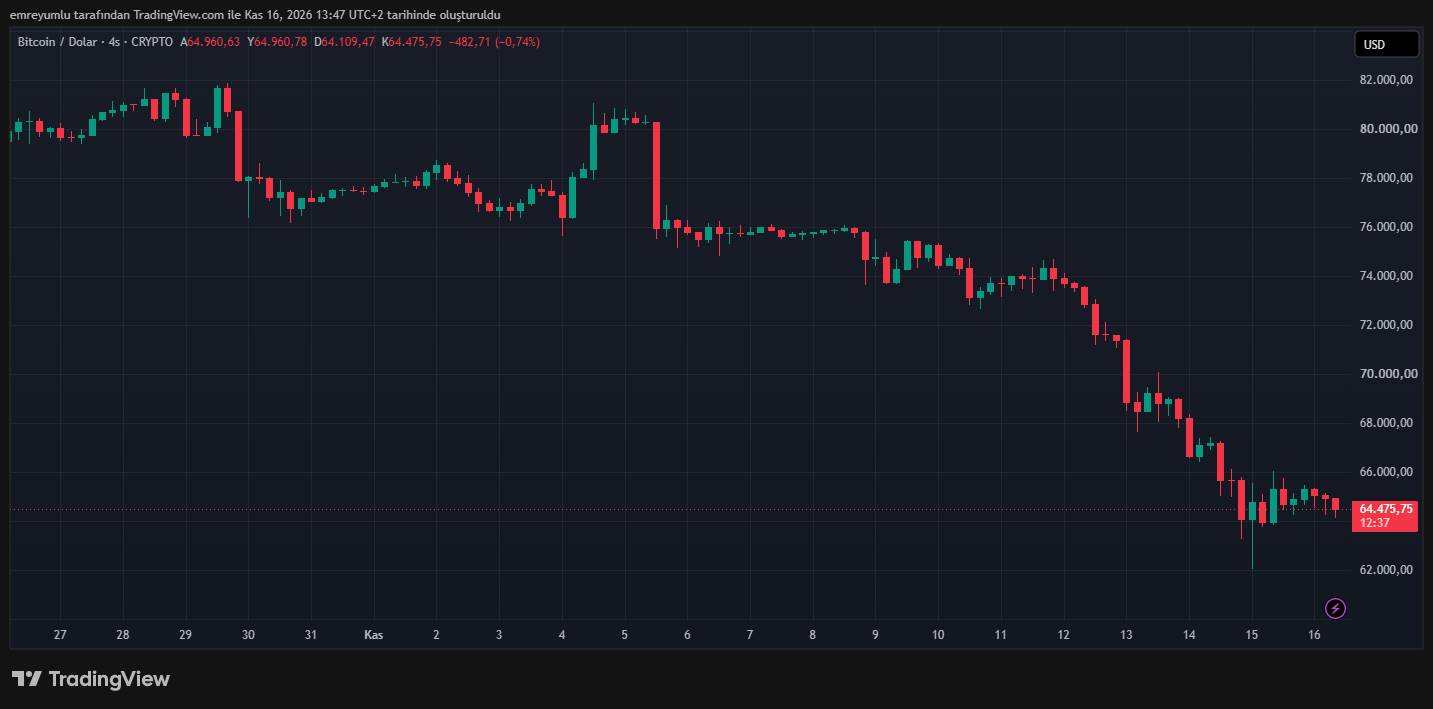
Bitcoin rebounded to over $64,000, but three risks remain outstanding.
Bitcoin, after falling to $62,000, has recovered to more than $64,000, giving investors a short wave of breathing. However, it is too early to assert that the pressure on sales has been completely eliminated.
After last week’s sharp fall, investors are closely following whether the BTC will regain the power of the rise. However, available data suggest that new inflows to the cryptocurrency market may be weakening.
 What are the three risks of rising Bitcoin?
The first indicator highlighted by Wise Cripto is the contraction of the stockcoin market. According to the analyst, the supply of stockcoin has declined by $17.1 billion over the past 30 days. This is the fastest recorded decline since June 2022.
Stablecoin is usually the main vehicle for investors to inject capital into the cryptocurrency market. The decline in the total supply of these assets suggests that potential funds for new purchases are also declining.
The second risk lies in a shift in investor trade preferences. Data show that DEX (DEX) has dropped 18% in spot transactions, while the volume of trades has increased by 7%.
The increased use of leverage also magnifies the risk of liquidation when prices fluctuated sharply. As analysts Ted Billows have pointed out, Bitcoin fell down on weekends to overleverage behind $65,000, where he observed that some $200 million of the warehouse had been forced to level.
The third risk comes from institutional pressure. The publicly listed companies sold a total of 11,647 Bitcoin in a week, achieving about $896 million net outwork. Meanwhile, spot Bitcoin ETF has been operating on seven consecutive trading days since 5 November.
So far, the total outflow of spot Bitcoin ETF in November has reached $2.35 billion. This progress has heightened concerns about the intensity of demand during the price downturn.
Could $57,000 be the bottom of Bitcoin?
Despite negative signals, not all analysts predict a new fall. Market commentator Mr. Wall Street interprets the fall of Bitcoin to $62,000 as a sign of a search for liquidity.
According to this view, the current decline is more likely to be related to the clean-up of market liquidity than to a deeper wave of sales. However, data from stockcoin supply, ETF flows and leverage suggest that markets may remain vulnerable in the short term.
How does Nvidia's financials and US economic data affect Bitcoin?
By the time the article was written, Bitcoin had slightly exceeded $64,000, and had increased by more than 1 per cent in the past 24 hours. Nevertheless, the weekly drop had exceeded 12 per cent, the week had dropped by 17 per cent, and the 30-day drop had exceeded 20 per cent.
Economic data and corporate news published this week may increase the volatility of risky assets. On Tuesday, Nvidia will publish quarterly financial reports.
The same day, United States retail sales data will also be released. If the outcome is higher than expected, it may be a reason for Federal Reserve to maintain a tightening of monetary policy.