Exchange Ranking
 Top Exchanges
 24h Volume Ranking
 Popularity Ranking
 Exchange BTC Balance
 Proof of Reserves
 Decentralized Exchanges
 Funding Rate
 Funding Heatmap
 Liquidation Data
 Max Pain
 Long/Short Ratio
 Whale L/S Ratio
 Binance/Okex/Huobi L/S
 Bitfinex Margin L/S
 ETF Tracker
 Solana ETF
 XRP ETF
 Hong Kong ETF
 Bitcoin Treasuries
 Crypto Reversal
 Ethereum Reserves
 HyperLiquid Wallet Analysis
 Hyperliquid Whale Watch
 Large Transactions
 On-chain Movement
 Bitcoin ROI
 Stablecoin Market Cap
 Options Analysis
 News
 Articles
 Economic Calendar
 Features
 Wallet
 Contract Calculator


 Security
 Collections
 Watchlist
 Following
 BTC
Bitcoin Daily Overview of the United States Market: 22 November 2026
This review covers the period between 12 noon and 23:59 of World Time, 22 November 2026, and contains seven major stories. The headlines point out that, according to the Glassnode data cited by CoinDesk, more than 6 million Bitcoin (31.2 per cent of the supply in circulation) is stored after the key to the chain of open exposure, while the anti-quantification proposal to address this security risk is still at an unadopted stage of the draft and does not have a clear timetable for activation.
Summary of core elements
- Quantum safety risk:As of October 2026, Glassnode data showed that more than 6 million Bitcoin (31.2 per cent of the supply in circulation) were theoretically vulnerable to future quantum computer attacks after publicly exposed keys.
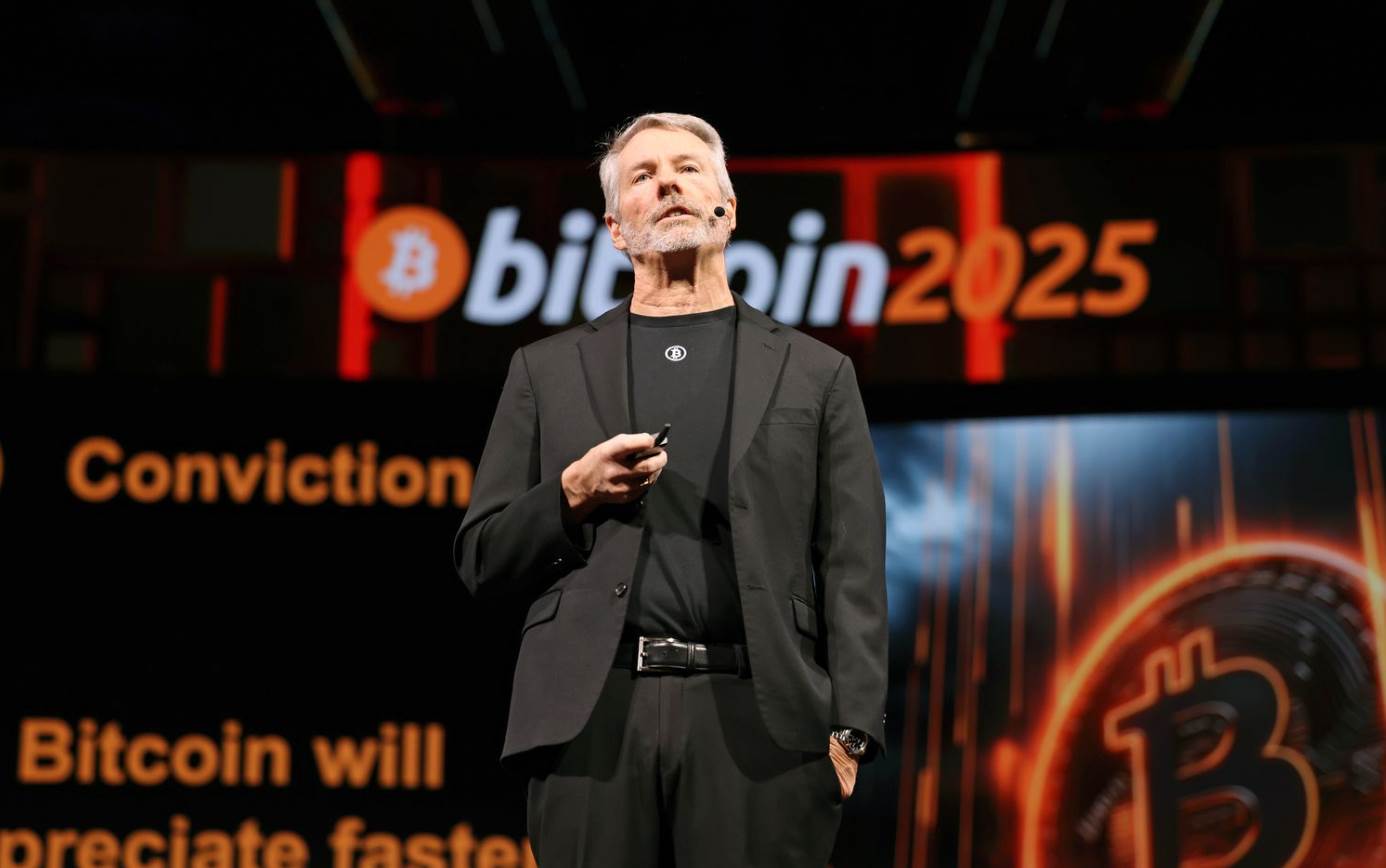
- Strategy adds:Between 9 and 15 November 2026, Strategy purchased 485 Bitcoin at a price of approximately $33.4 million, bringing the total to 850,849; Michael Saylor published the “The dots aren't done” on social media, implying that it would continue to buy.
- Price rebound:On 20 November 2026, Bitcoin fell to approximately US$ 55,130, and subsequently recovered to over US$ 60,300, due to futures, which were specific to Bitcoin, over US$ 1 billion in size, and about 9 per cent of the day.
- Short-term holders surrender:According to the chain data quoted by Cripto Briefing, more than 113,000 Bitcoin was transferred to the exchange in the 48 hours of early November 2026, with a loss-to-profit inflow ratio of 27 to 1.
- Market sentiment:On 22 November 2026, Bitcoin feared and greed index recorded 11 points (extreme fear); QCP Capital stated that the stability of the macro-environment and new ETF inflows were prerequisites for a real recovery.
- Change in large household holdings:According to Santiago, the number of addresses holding at least 10 Bitcoin climbed to 150,770, the highest level since January 2026, but these holders sold more than 10,000 Bitcoin in the last four weeks.
- Hardware Wallet security event:It has been established that there have been incidents in Berlin and Dubai in which Ledger hardware was tampered with, and that two Dubai clients lost a total of US$ 604,000 in tampering activities targeting distribution channels in South-East Asia.
Quantum exposure puts more than 6 million Bitcoin in focus.
According to the Glassnode data reported by CoinDesk on 22 November 2026, as of October 2026, more than 6 million Bitcoin (31.2% of the supply in circulation) had been stored after publicly exposed chain keys. Another estimate by Cripto Briefing shows that this range ranges between 6 million and 7 million, of which about 1.7 million Bitcoin is located at a traditional P2PK address, constituting the most structurally vulnerable subset. In theory, these assets are under threat from a quantum computer with a cryptography capability, although there are currently no quantum computers that can break the signature of Bitcoin ' s elliptical curve.
Two Bitcoin improvement proposals (BIPs) are designed to reduce this risk. BIP-360 proposes a new Bitcoin output type to limit quantum risk; BIP-361 was drafted in April 2026 by five people such as Jameson Lopp, and will phase out vulnerable signatures and limit undisplaced Wallet. As of November 2026, neither of these proposals was adopted and still exists as unactivating drafts. Blockstream CEO Adam Back publicly supports voluntary upgrades and opposes the mandatory freezing of undisplaced Wallet.
The challenge is not limited to basic protocol. Bitgo and Silence Laboratories completed a simulated post-quantitative multi-compute transaction in May 2026, but have not yet announced their deployment. Chief Executive Officer Cysic Leo Fan states: “The post-quantitative signature of a single signatory has been standardized, but the threshold and multiple-signature versions are still at the research stage.” Rootstock (Bitcoin Side Chain) plans to achieve resistance signature, including the PowerPeg Bridge upgrade by 2028, but it is still a proposal.
Fan also states: “The key is to move. The unmoveable coin is a social issue, not a technical one. If the old path is always open, the attackers will use it.” In its November 2026 report, IOSCO included the complexity of the antiquator upgrade as a focus for digital asset infrastructure regulation. The core governance issue — whether Bitcoin's voluntary upgrading model can mobilize migration at the speed that threatens the ultimate time line demands — remains unresolved during this round of meetings.
Strategy, after completing the $33.4 million buy-in, suggested more buy-in.
According to the SEC 8-K form submitted on 16 November and a report by Cripto Briefing, Strategy purchased 485 Bitcoin at an average cost of $68,887 per Bitcoin between 9 and 15 November 2026, for a total value of approximately $33.4 million. The company ' s current stock of Bitcoin is 850,849, or 4.05 per cent of the maximum supply of 21 million Bitcoin, at a total cost of approximately $64.2 billion, at an average cost of $75,452 per item. At the same time, the acquisition disclosed, the company also bought back a priority stock worth $228.1 million, which was well above the amount procured by Bitcoin.
According to Cripto Briefing, Bitcoin’s price was about $60,939. Based on the disclosed data, Strategy faced an estimated unrealized loss of approximately $9.61 billion. Michael Saylor posted “points are not running out” in social media after submitting the document, following his pattern of sending a signal before the release of the additional SEC document.
After cleaning, Bitcoin recalibrates over $60,000.
On 20 November 2026, Bitcoin fell to about US$ 55,130, the lowest level since September 2024, and then rebounded about 9 per cent in the day, rising to over US$ 60,300. According to Crypto Briefing, Bitcoin exclusive futures liquidation was over US$ 1 billion in size, cryptocurrency total futures liquidation was between US$ 1.8 billion and US$ 2.7 billion in 24 hours, and over 340,000 traders were liquidation. Coin Telegraph ' s summary confirmed that the low point on Coinbase was about US$ 55,111, and that the recovery over the weekend raised Bitcoin to US$ 61,034, with a low point increase of 11 per cent, but at the time of the report it was still about 6.5 per cent.
Glassnode has determined that the most heavy leverage long positions are concentrated between $59,000 and $62,000; once these positions are cleaned, downward pressure is reduced, short positions accelerates the rebound. During Bitcoin’s restoration window, the Ethereum rose by 3 to 5 per cent, and Solana rose by about 2 per cent. This rebound cleared the overbuilt derivatives market, but institutional demand remains uncertain.
Short-term holders surrendered, over 113,000 Bitcoin in the exchange.
According to Crypto Briefing, the chain-based data cited at the beginning of November 2026, more than 113,000 Bitcoin was transferred to the exchange in 48 hours, with a loss inflow exceeding profit inflows by 27:1. In a single 24-hour window, the total exchange inflow was about 48,500 Bitcoin, equivalent to about $3.6 billion, of which only about 2.5 per cent was in a profit-making state. According to Cripto Briefing, this was the third lowest profit-inflow since 2021.
Cripto Briefing notes that the average cost benchmark for short-term holders is about $75,700, well above the current time range of Bitcoin between $60,000 and $61,000. By mid-November, some 706,000 Bitcoin had been sent to five major exchanges within 30 days; chain analysis shows that long-term holders did not promote sales. Historically, 27:1 losses to profit inflows marked an extreme surrender, but Cripto Briefing was seen as a data signal, not an identified inverse indicator.
In a state of panic, Bitcoin recovered the $60,000 mark.
According to BeInCrypto, on 22 November 2026, Bitcoin, after falling to a low 24-hour point of $55,130, fluctuated by about 9 per cent in the day and recovered to over $60,300. Fear and greed index recorded 11 points (extreme fear) on 22 November, with two days of readings of 10 and 12, respectively. BeInCrypto quoted QCP Capital ' s argument that a meaningful recovery requires three preconditions: stability of the science and technology unit, a reduction in interest rate volatility, and a re-inflow of institutional funds. Moreover, Bitcoin had accumulated a decline of about 20 per cent in November.
Macro background deteriorated in tandem with Bitcoin: Coin Telegraph summarized that the NASDAQ index fell by about 20 per cent from its peak in October, the Standard 500 index fell by 8.6 per cent last week, the gold fell by 4.3 per cent in 24 hours and 21.6 per cent since September.
Large holders have strong signals, but whale supply shares continue to decline.
According to the Santiago data quoted by CryptoPotato, the number of addresses with at least 10 Bitcoin reached 150,770, the highest level since January 2026. Despite the increase in the number of addresses, these holders have collectively sold more than 10,000 Bitcoin over the past four weeks, reducing their total hold to approximately 16.666 million, or 82.85 per cent of the supply. The supply of long-term holders (LTHs) is close to 16.24 million at high points over many years, and the LTH-SOPR indicator has fallen to 0.90, indicating that the slight realized losses, rather than positive gains, have been closed.
The short-term holder, NUPL, touched -0.27 on November 21 and was better than the bottom of April, but still on November 22, about -0.14, still in the surrender zone. Analyst Ali Martinez marked Tom De Mark Sequental’s purchase signal on Bitcoin’s three-day map, determining that $61,000 was the key support for maintaining the facility.
Berlin and Dubai confirmed the tampered-up Ledger hardware walklet incident
According to a weekly summary released by Coin Telegraph on 22 November 2026, Berlin and Dubai have confirmed that there have been Ledger hardware and Wallet manipulations. The Berlin incident affected equipment purchased since January 2026, and two customers in Dubai lost a total of $604 million in tampering activities targeting distribution channels in South-East Asia. Ledger linked the two incidents to the same distributional manipulations first discovered in South-East Asia in October 2026. The company provided physical inspection services at the Verzon factory in France, including X-ray analysis.
These events added a layer of hardware security concern to the market that had dominated the Quantum Exposure Debate in Bitcoin Quantum. Both risks point to the same question about self-custody holders: the security of the key is the security of the asset, whether the attack vector is a future quantum algorithm or a tampering device in retail outlets. Users who purchased the Ledger hardware equipment through unofficial channels should contact Ledger to arrange a physical inspection.
Meeting perspectives: a comprehensive reading
Read it all:Mix.
Bitcoin has recovered the US$ 60,000 mark after the largest cleanup in weeks, providing a technically advantageous base. At the same time, quantum security increases structural medium-term concerns, and extreme fear persists.
- Quantum security challenges (negative):More than 6 million Bitcoins are stored after publicly exposed keys, and there is no established schedule for antiquator upgrades.
- Strategy suggests more purchases (positive):Although prices are much lower than their cost base, the continuing business accumulation shows the needs of large holders.
- Bitcoin goes back to over $60,000 (positive):The rebound is attributed to the removal of excess positions and subsequent shuffles.
- Short-term holders surrender (neutral):The ratio of losses to profit inflows of 27:1 is a historic and extreme sign of surrender, but does not in itself recognize the bottom of the price.
- Price recovery in fear signals (neutral):The recovery above $60,300 was accompanied by an extreme reading of fear, which obscured the signal of a continuing direction.
- Large holders have strong signals but sell supplies (neutral):The increase in the number of addresses of more than 10 holders contradicts the reduction of more than 10,000 in net supply within four weeks.
- Confirms the tampered Ledger hardware wallet (negative):A geographically expanded supply chain alteration has increased the risk of self-cussion and may discourage the use of hardware walklet.
Of the seven stories, two were positive, two negative and three neutral.
Connect Threads
The main theme of this round is the Bitcoin market, which is responding to multiple concurrent risk layers. The price rebound after cleaning suggests that short-term pushes may be running out, consistent with data on surrenders by extreme short-term holders who show 27:1 losses versus profit inflows.
Possible follow-up
- If Bitcoin maintains above $61,000 and the US shoot ETF is reversed, while the technology stock is stable, leverage cleaning may mark the bottom of the failure, as shown by the three-day signal of Tom DeMark buy-in by Crystal Potato, a higher level of recovery may become feasible in future rounds.
- If Bitcoin loses another $60,000, or the macro conditions deteriorate (near 20% below the peak in October), it could retest the low of $55,100 in the coming weeks.
- If BIP-360 or BIP-361 were to be activated, it would clarify the migration path of more than 6 million Bitcoin currently at theoretical quantum risk, although the governance process made it unlikely to be adopted in the near future.
- If new Ledger manipulations are confirmed in other regions, self-cussion of risk may be exacerbated by independent price trajectories of Bitcoin.
This outlook is based on the editorial analysis of the above-mentioned reports and does not constitute a financial recommendation.
It's a matter of concern.
- According to CoinDesk, Rootstock's planned antiquantular signature implementation (including the PowerPeg Bridge upgrade) target time is 2028. Progress on this schedule will be on how Bitcoin's sidelink ecosystem addresses the quantum exposure before any base level protocol changes.
- The call for a multi-threshold encryption proposal issued by NIST in January 2026 is in progress; the publication or draft criteria submitted by finalists will have a direct impact on the feasibility of post-quantum hosting and multiple signature solutions.