Exchange Ranking
 Top Exchanges
 24h Volume Ranking
 Popularity Ranking
 Exchange BTC Balance
 Proof of Reserves
 Decentralized Exchanges
 Funding Rate
 Funding Heatmap
 Liquidation Data
 Max Pain
 Long/Short Ratio
 Whale L/S Ratio
 Binance/Okex/Huobi L/S
 Bitfinex Margin L/S
 ETF Tracker
 Solana ETF
 XRP ETF
 Hong Kong ETF
 Bitcoin Treasuries
 Crypto Reversal
 Ethereum Reserves
 HyperLiquid Wallet Analysis
 Hyperliquid Whale Watch
 Large Transactions
 On-chain Movement
 Bitcoin ROI
 Stablecoin Market Cap
 Options Analysis
 News
 Articles
 Economic Calendar
 Features
 Wallet
 Contract Calculator


 Security
 Collections
 Watchlist
 Following
 BTC
If you hold an account with HTX, EXMO, BitPapa, Rapira or another trading platform on the list, there are only two days left before the deadline. Starting from Sunday, August 23, 2026, individuals and businesses in the EU will no longer be allowed to conduct any business with these providers. It is based on the 21st round of EU sanctions against Russia adopted by the European Council on July 23, 2026.
This article does not involve price trend analysis, nor does it contain any platform recommendations. There is a legal consequence that will take effect whether you know it or not. If anyone still holds a balance on a listed platform after the deadline, they will no longer be able to retrieve the balance through regular channels. This article will explain what the consequences are, which providers are affected, and what other actions you can take in the remaining time.
What activities are prohibited by the EU transaction ban starting from August 23, 2026?
The transaction ban is a sanction that prohibits individuals and businesses within the EU from doing any business with any provider listed on the list. It is different from traditional asset freezing: the platform's own assets will not be completely confiscated, and the platform can continue to operate. What is prohibited is business relationships with platforms, as long as one of the parties is governed by EU law.
Its legal basis is Regulation (EU) No. 2026/1848 passed on July 23, 2026. The regulation amends Regulation (EU) No 833/2014-the core regulation of EU economic sanctions against Russia. At the same time, Foreign Policy Decision (CFSP) 2026/1849 has also been adopted. The European Council added the providers to the list on the grounds that they helped circumvent financial restrictions imposed on Russia . The assessment comes from the European Council; some companies involved have disputed it.
For investors, this means in practice: from the deadline, deposits, withdrawals, transactions, payments, and the provision of funds or crypto assets to listed platforms are prohibited. This rule applies to individuals and businesses, regardless of the country in which the platform is located.
Who does this rule apply to
The key lies in your own connection to the EU, not the platform's place of business. Objects subject to jurisdiction include: nationals of EU member states, individuals living in the EU, companies registered in the EU and their branches. For example, a German citizen holds an account with a provider in Panama or Georgia, and the account is subject to this rule even if the platform has no intention of communicating with the EU.
Which cryptocurrency platforms are included in the EU sanctions list?
This round of sanctions covers 14 cryptocurrency trading and service platforms. Some analyses point to 18 because they also count payment service providers listed in the same annex. Noerr Law Firm pointed out that annex XLV has added 17 entries, mainly for encryption service providers. Therefore, numerical differences stem from statistical methods rather than information contradictions.
Starting from August 23, 2026, the following 11 providers will be subject to a trading ban:
HTX (Huobi Global SA)
EXMO Ltd
Rapira
Aifory Pro (Sooty Ltd.)
ABCeX (Nueva Cryptologia S.A.S. de C.V.)
WhiteBird
NoOnecrypto INC.
Tradex (Brightum LLC)
Monase Ltd
BitPapa
Exnode and Exnode Pay (Arvix)
These providers are registered in Georgia, Panama, the United Arab Emirates, the Marshall Islands, Kyrgyzstan and White Russia . Neither of them is authorized under the European Union Cryptographic Asset Markets Regulation (MiCA), which governs access to European markets. This is what distinguishes them from regulated cryptocurrency exchanges: the latter have European licenses and are not subject to such restrictions.
Among the list, only HTX has attracted much attention because the platform is more popular in Europe than several other companies. The other ten names are the real blind spots, because anyone holding an account there often only knows about it through the platform itself.
Payeer has been previously blocked
Payment service provider Payeer was on the ban list before the 21st round of sanctions. This is important because some overviews still regard Payeer as a new entry. If you see 12 or more names on the August 23 list, check if old entries are included.
The deadline for the 21st round of sanctions is implemented in phases: three restrictions will take effect on August 13, and eleven others will take effect on August 23.
Why have A7 Nigeria, A7 Africa and PilotFinance been blocked since August 13?
This plan is not fully effective at one time. Three of the 14 entries are in effect from August 13, 2026: A7 Nigeria, A7 Africa and PilotFinance Ltd. This phased entry into force is common in sanctions laws and aims to allow the relevant counterparties to exit in an orderly manner.
Phased implementation has a disturbing consequence for you. Anyone who still holds a balance among the three providers is now in prohibited territory, not just starting on Sunday. As a result, subsequent withdrawals are no longer allowed, even though the platform still technically provides the operation.
Actual operation of transfer ban: Impact on transfer-in transactions
The daily operation of the ban is more reflected in the help page of the exchange that needs to enforce the ban than in the text of the regulation itself. Kraken publicly documented his handling and described two different processes.
Transfers to prohibited platforms will be rejected. This is a harmless situation: the transfer has not been sent and your balance is still in your hands. Conversely, incoming transactions from prohibited platforms are intercepted and frozen. Freezing means that funds will neither be returned to the sender nor paid into your wallet unless explicitly permitted by sanctions laws.
This subverts the usual logic. One instinctive response is to send balances from listed platforms to European exchanges at the last minute, but after the deadline this could have the exact opposite effect: funds would get stuck rather than rescued. Kraken itself advised clients to seek independent legal advice before engaging in any transactions with banned platforms and did not specify a period for which such situations might be resolved.
Binance blocks 11 platforms: What exchange users need to know now
On August 14, 2026, Binance announced that it will block transactions with 11 crypto platforms starting August 23, including HTX and EXMO. The exchange attributed the move to recent regulatory developments but did not specify which measure.
Binance has previously cut connections to five small providers: Shelbit, Aban Tether Exchange, A7 Nigeria, A7 Africa and PilotFinance. Combining the two rounds of operations, the analysis shows that as many as 16 platforms are affected. Differences from the EU list are Shelbit and Aban Tether Exchange, which were added to the list by the U.S. Treasury Department on August 7 and therefore based on different legal grounds.
In practice, what is important is the description of the consequences by currency security. Anyone who sends funds to or receives funds from an affected address through Binance after the deadline will enter the compliance review process, which, according to the exchange, could result in wallets being restricted. Limiting your account due to a single transaction is costly, not to mention that the transaction will not succeed at all.
Why large exchanges enforce stricter requirements than bans
Binance is not obligated to apply the same rules to users outside the EU in every case. Multiple analyses point out that this restriction applies over an unlimited geographical range. For global trading platforms, unified blockade is easier to operate and has lower risks than differentiated processing by place of residence. So don't expect to end up being spared by having an account in a non-EU country.
Article 5bc and Annex LVII: How the EU will block entire third countries in the future
In addition to the platform-specific list, this round also includes a mechanism to go beyond the current date. The new Article 5bc allows a trading ban on crypto service providers and crypto trading platforms established in certain third countries. Which countries fall into this category are defined by the same new Annex LVII. These countries refer to countries that the EU believes have systematically failed to prevent the use of crypto assets to circumvent sanctions.
The innovation is that the EU no longer needs to list every provider individually. It can tie rules to the country of establishment of the provider. For investors, this means a structural shift: the platform's location of business (previously mainly related to tax and investor protection issues) is now a risk factor that could change overnight due to a European Council decision.
It is unknown when this mechanism will be used. There are currently no application cases for any specific country. But anyone opening an account with a provider outside the European legal framework today should take this possibility into account.
What changes have been made to Article 5b (2a) for EU cryptographic service providers from August 25?
Another rule comes into effect two days after the main deadline. According to Article 5b (2a), as of August 25, 2026, Russian nationals and individuals residing in Russia will no longer be allowed to own or control a cryptographic service provider within the EU, nor will they be allowed to serve in its regulatory bodies. This rule applies to all crypto asset services under the definition of EU crypto asset regulations.
This regulation is for the company, not you as a customer. But it may still affect you indirectly if the provider you use needs to urgently restructure its ownership structure. Please pay attention to announcements on shareholder changes from European small trading platforms in the coming weeks.
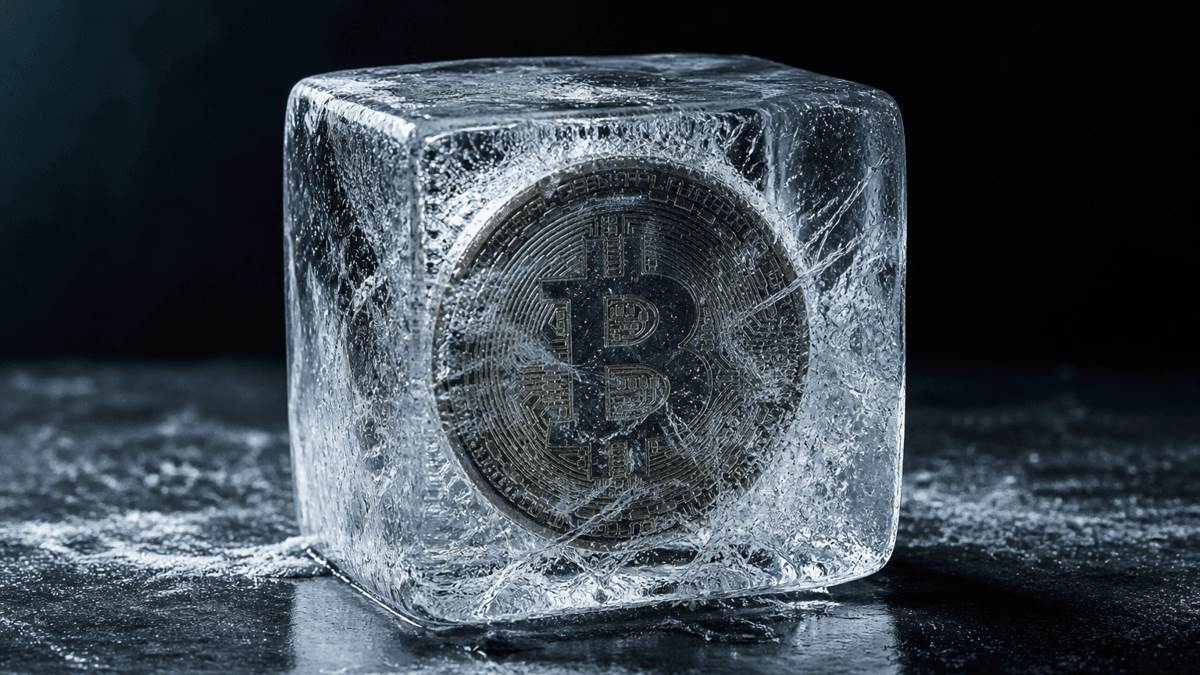
Frozen funds are not temporary: they will neither be returned to the sender nor reach the recipient's wallet.
Which accounts and transfers you should check before August 23
The check takes less than half an hour, and it's worth it even if you are sure you don't recognize the names. Accounts registered in the early years may be forgotten, and some listed providers operate under a different company name than when you registered.
Four-step operation process
1. Search your inbox. Find these 11 names in your email account, as well as the company names Huobi, Sooty, Nueva Cryptologia, Brightum, and Arvix. Registration and confirmation emails are often longer lasting than account changes and your memory.
2. Confirm balance. Log in to an account and record assets held, including small balances due to transaction fees or rewards.
3. Make withdrawals before the deadline. Withdrawal is allowed as long as the ban has not yet taken effect for the relevant provider. A7 Nigeria, A7 Africa and PilotFinance are no longer allowed as of August 13.
4. Record everything. Save withdrawal vouchers, timestamps, and transaction ID. If you have doubts about the source of the funds in the future, proof of the withdrawal time is much more valuable than memory.
One tip on withdrawal destinations: Withdrawing funds into European provider accounts may attract attention during compliance reviews because the sending address is associated with the listed platform. This is allowed until the relevant deadline, but may raise follow-up issues. Please anticipate delays and do not schedule withdrawals on the last night.
Which ways are still open to withdraw funds from listed platforms
For the 11 providers listed since August 23, all regular ways will remain open until Sunday: Withdraw funds to your own address with crypto assets, withdraw funds to a bank account in euros, or sell first and transfer money. Which approach is better depends on the speed of settlement.
Withdrawing money from a crypto asset to a self-custody address is usually the fastest way because it does not rely on a bank weekday. Self-hosting means you control the private key yourself, with no provider between you and your balance. Bitcoin can be transferred in this way in minutes. In contrast, withdrawing money from a bank account in euros usually takes one to three bank working days. August 23, 2026 is Sunday, and August 21 is Friday. If you initiate a SEPA withdrawal today, it is expected that the funds will arrive after the deadline. Whether such payments initiated before the deadline but completed subsequently can still be passed is a legal question that depends on the circumstances, and we cannot give an answer here.
What happens to frozen assets
There is no automatic unfreezing mechanism for balances remaining on listed platforms after the deadline. The platform itself has no obligation to retain your balance, and recipients in Europe may not allow them to receive. In effect, this means that assets will be inaccessible indefinitely. Under the sanctions law, exemptions can in principle be applied, but the application must be made to the competent national authority, in Germany to the Bundesbank or the Federal Office for Economic Affairs and Export Controls. Whether such applications have prospects for success depends on the specific case.
What happens if you miss the trading ban deadline?
Anyone who transacts with a listed platform after the deadline violates applicable sanctions laws. In Germany, violations of EU sanctions regulations are punished under the Foreign Trade and Payments Act and may be characterized as administrative violations or criminal offences depending on the circumstances. Whether there are violations in specific cases and how to assess them are themselves legal issues; this article cannot replace legal advice.
In practice, what is more likely than litigation is silent losses: transfers cannot be completed, funds are frozen on the receiving trading platform, and the clarification process is delayed for months. This is why the remaining two days are so important.
If you are unsure
If you find out that you have traded with A7 Nigeria, A7 Africa, or PilotFinance after August 13, it is best to document the entire process and seek legal advice before any subsequent transactions. A second attempt to transfer the balance does not improve the situation.
EU ban on trading on cryptocurrency platforms: Your key points
·Check today to see if you have registered with any of the 14 providers. Search your inbox for the above names and company names. If you find an account with a balance, please make the payment on Sunday and record the payment voucher.
·Suitable withdrawal destinations are European licensed trading platforms.
·Choose the fastest withdrawal path rather than the most convenient one. Withdrawing from crypto assets to a self-custody address does not depend on a bank working day.
·Check the location of your trading platform, not just the fees. With Article 5BC, the EU can in the future link rules to the country of establishment rather than individual providers. Anyone holding assets through an entity with a European mandate is not affected by such restrictions.
·The official communiqué of the Council of Europe on the 21st round of sanctions is available on the Council's website. Kraken described how European trading platforms enforced the ban and how transferred transactions were handled.
(As of August 21, 2026. This article does not constitute investment advice. Price and fee structures are subject to change; please check terms with your provider before purchasing.)