Exchange Ranking
 Top Exchanges
 24h Volume Ranking
 Popularity Ranking
 Exchange BTC Balance
 Proof of Reserves
 Decentralized Exchanges
 Funding Rate
 Funding Heatmap
 Liquidation Data
 Max Pain
 Long/Short Ratio
 Whale L/S Ratio
 Binance/Okex/Huobi L/S
 Bitfinex Margin L/S
 ETF Tracker
 Solana ETF
 XRP ETF
 Hong Kong ETF
 Bitcoin Treasuries
 Crypto Reversal
 Ethereum Reserves
 HyperLiquid Wallet Analysis
 Hyperliquid Whale Watch
 Large Transactions
 On-chain Movement
 Bitcoin ROI
 Stablecoin Market Cap
 Options Analysis
 News
 Articles
 Economic Calendar
 Features
 Wallet
 Contract Calculator


 Security
 Collections
 Watchlist
 Following
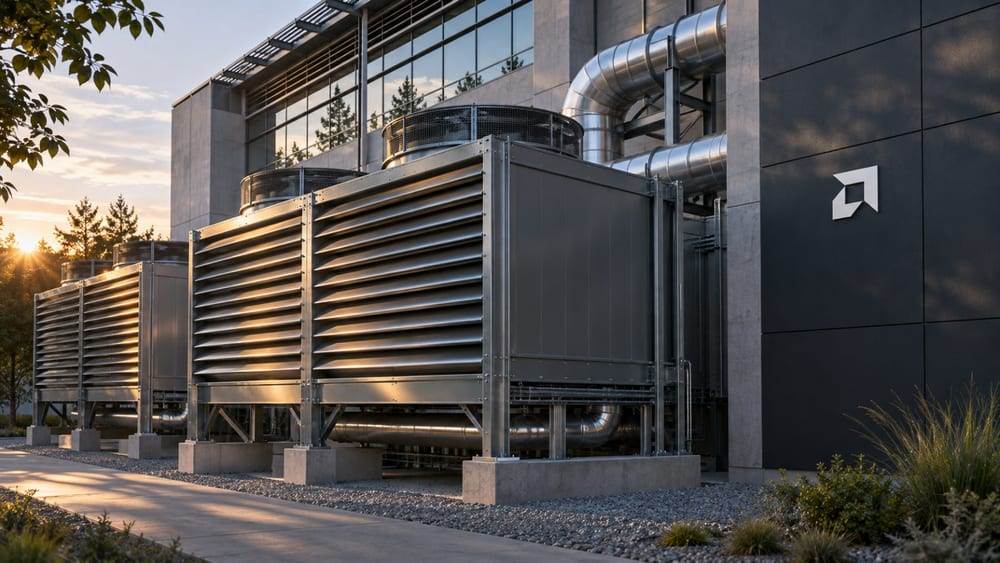
AMD, working with Unsloth, adds support for AMD XD DNA 2 NPU to Unsloth Desktop
On 19th, AMD and Unsloth announced the addition of support to the AMD XDNA 2 Neural Network Processor (NPU) in Unsloth Desktop. On this occasion, more than 100 proxy AI applications combined with workstreams can be connected to the NPU-based local reasoning environment through OpenAI-compatible API.
In an official statement, AMD stated that XDNA 2 NPU was the first NPU to receive the support of Unsloth Desktop. It needs to be clarified that “first-time support” refers to the scope of support for the application, not to the local reasoning techniques driven by the NPU itself being the first global initiative.
The equipment that is now being accessed includes Hermes Agent, OpenClaw, Open WebUI, Cline, LangChain, GitHub Copilot, and others.
Operational structure and range of support
AMD has published a demonstration of the Qwen3.6 35B-A3B hybrid expert model on XDNA 2 NPU using Unsloth Desktop and FastFlowLM. When using the full context, NPU memory needs about 28GB; with Windows default shared memory settings, RAM is recommended for 64GB. AMD emphasizes that 64GB is only recommended configuration, not mandatory.
The equipment supported included the AMD Ryzen AI 300 series (Strix Point/Kraken Point), Ryzen AI Max series (Strix Halo) and Ryzen AI 400 series (Gorgon Point). The operating systems support Windows 11 and Linux x 64. In Linux, the amdxdna driver with kernel 7.0 and above is required, while the old core uses amdxdna-dkms, with the latest NPU fixes and unlimited memlock settings.
The NPU model uses a 4-bit Q4NX format for FastFlowLM optimization. Since the standard GGF model cannot run directly on NPU, the user must convert the supported model to Q4NX to use it.
Performance data and power consumption claims
Unsloth documents show that the size of the Qwen3.6-35B-A3B-NPU2 model is 20.6GB, and the system RAM is recommended to be 64GB, while AMD states that the full-run context requires about 28GBNP memory. The data represent the storage size of the model and the running memory needs, respectively.
Test data show a processing rate of 17.2 tokens (tokens) per second, with a lead sign delay of 3.13 seconds. Because the test environment is not disclosed in detail, it is difficult to compare performance directly with other models or GPUs.
Unsloth claims that NPU was two to four times less energy-intensive than the traditional GPU at the time of the generation of each token, but this was only a development claim and had not been validated by an independent benchmark test.
AMD explains that X-DNA uses a spatial data stream NPU structure, using AI engine blocks and film memory to reduce cache access. NPU is not intended to replace GPU, but to undertake local reasoning as a auxiliary computing device, thus allowing CPU and GPU to focus on other tasks.
The performance and energy efficiency experienced may vary depending on model formats, memory capacity, context length, and power supply patterns. The Q4NX conversion and the memory bandwidth of large models also affect operating conditions.
Scope of cooperation and industry response
Some Reddit users expressed a positive assessment of the energy efficiency and support equipment released. However, users also raised issues related to the speed comparison of integration of GPUs, support for XDNA 1 and the big model memory bandwidth bottlenecks.
Users shared cases of NPU and integrated GPU token processing speeds in the same system, but acknowledged that this was a “very rough comparison.” Such unofficial data should be treated in a different way from official performance indicators.
In July this year, Unsloth announced support for AMD Radeon, Instinct, and Ryzen GPU for model training and reasoning. In the country, the Ministry of Science, Technology, and Communications and AMD discussed an AI computing infrastructure program that combines CPU, GPU, and the national production NPU.
Phoronix reports that this feature, verified to AMD, is not only available on Windows, but is also effective in Linux construction versions. Official support is currently limited to XDNA 2 and above, and the support and timetable for XDNA 1 has not yet been confirmed.