Exchange Ranking
 Top Exchanges
 24h Volume Ranking
 Popularity Ranking
 Exchange BTC Balance
 Proof of Reserves
 Decentralized Exchanges
 Funding Rate
 Funding Heatmap
 Liquidation Data
 Max Pain
 Long/Short Ratio
 Whale L/S Ratio
 Binance/Okex/Huobi L/S
 Bitfinex Margin L/S
 ETF Tracker
 Solana ETF
 XRP ETF
 Hong Kong ETF
 Bitcoin Treasuries
 Crypto Reversal
 Ethereum Reserves
 HyperLiquid Wallet Analysis
 Hyperliquid Whale Watch
 Large Transactions
 On-chain Movement
 Bitcoin ROI
 Stablecoin Market Cap
 Options Analysis
 News
News Articles
 Economic Calendar
 Features
 Wallet
 Contract Calculator


 Security
 Collections
 Watchlist
 Following
With the development of blockchain technology, projects aimed at digitally migrating Real World Assets (RWA) are increasing rapidly. One of the projects active in this field, Shift (SHFT), is an ecosystem aimed at developing Asset-Referenced Tokens (ARTs), which represent the value of traditional financial products such as stocks and exchange-traded funds (ETFs) on the blockchain. With its decentralized governance model, transparency-oriented approach, and emphasis on regulatory compliance, Shift aims to bridge the gap between traditional finance and decentralized finance (DeFi).
The platform is not only focused on creating tokenized assets, but also aims to build a sustainable infrastructure so that these assets can be used in decentralized applications (dApps). In this article, we will explore what Shift (SHFT) is, how it works, what SHFT tokens are used for, token economics, and all the details that a project team needs to know.
What is the purpose of Shift (SHFT)?
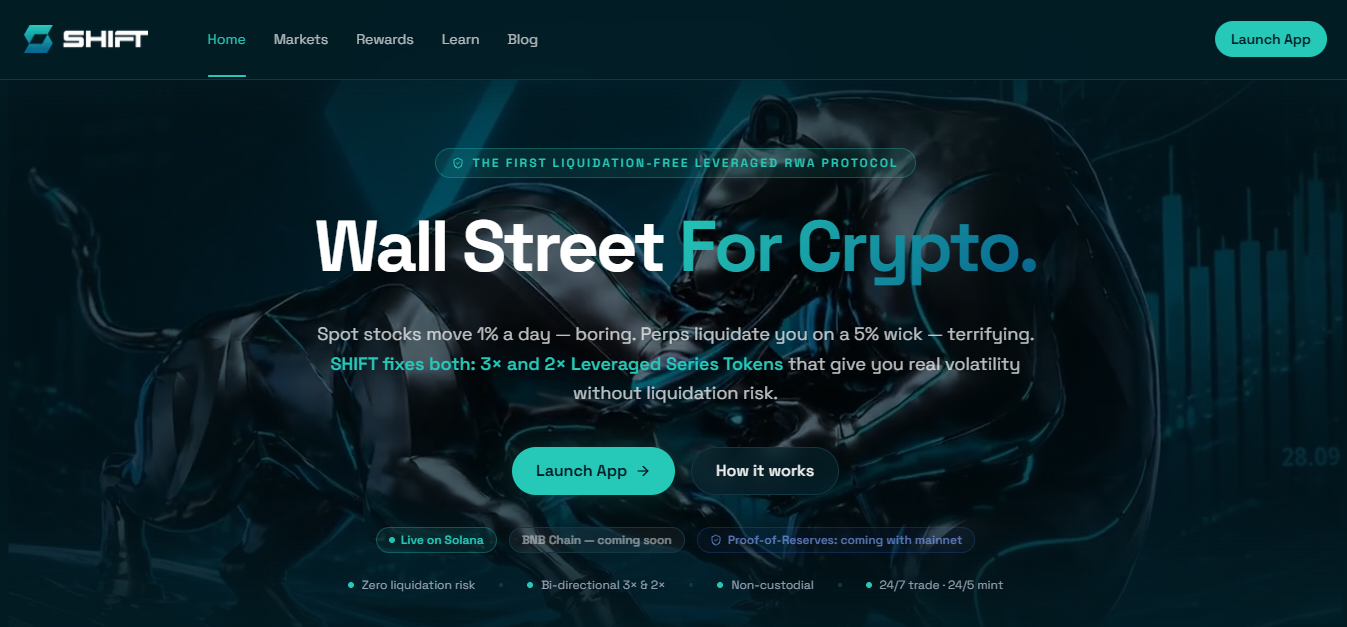
Shift (SHFT) is a decentralized platform designed to develop an asset reference token (ART) ecosystem that transfers the value of traditional financial assets such as stocks and ETFs to blockchain.
The ARTs that the platform plans to create are on-chain digital assets that track the value of traditional financial products. These tokens are not designed as securities, but as blockchain assets that reference the value of specific assets.
Shift's main goal is to enable users to continuously, permission-free access to real-world assets through blockchain and pave the way for the use of these assets in decentralized financial applications.
Shift's Vision
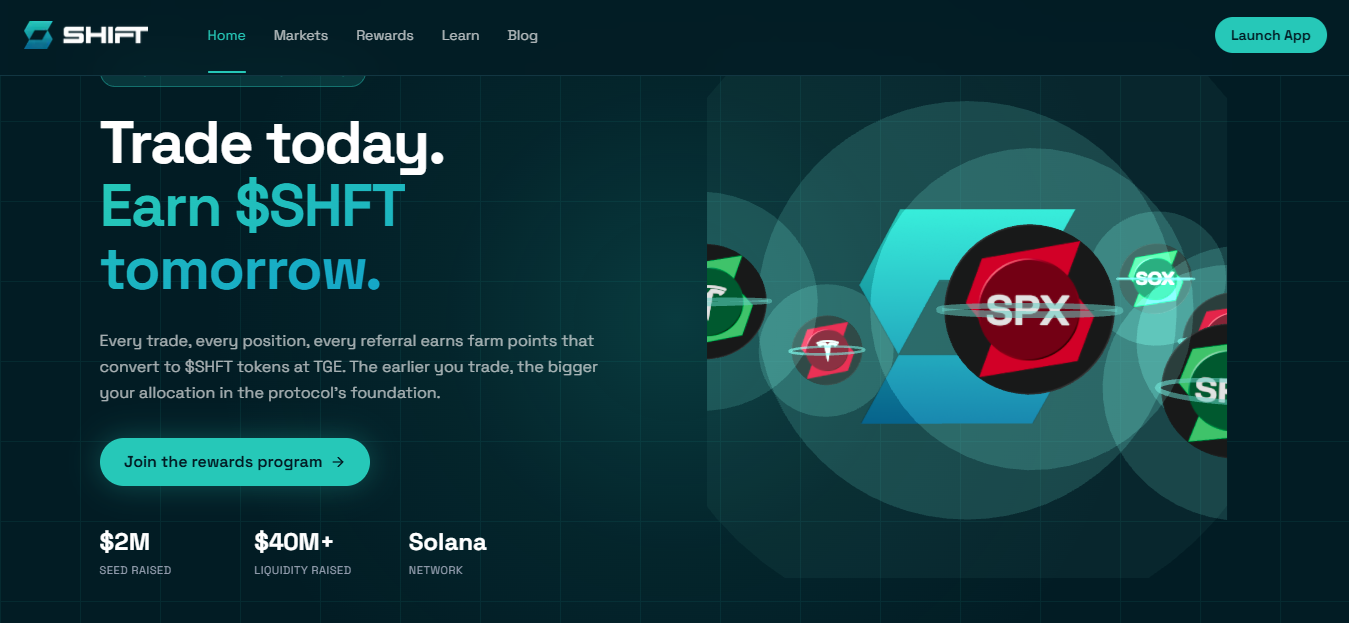
Shift has a long-term vision to promote tokenization of real-world assets. The project aims to narrow the distance between traditional finance and the Web3 ecosystem by promoting the use of asset reference tokens.
In this context, the core goals of Shift DAO include:
Promote the development of a 100% supported asset reference token structure,
Increase adoption of RWA-based tokens,
Develop solutions that comply with regulatory frameworks,
Enhance transparency and trust on the blockchain,
Integrate real-world assets with the DeFi ecosystem,
Expand financial inclusion on the chain.
What is a Shift DAO?
The governance of the Shift ecosystem does not adopt a centralized structure, but is achieved through the DAO (Decentralized Autonomous Organization) model.
With the DAO structure, community members can make suggestions on ecosystem development, evaluate new projects, and vote in various governance processes. In this way, the aim is to make the decision-making mechanism operate as decentralized as possible.
At the same time, there are some rules in the system to prevent conflicts of interest. Users cannot directly vote to allocate resources to themselves. But they can propose services to the community, and other DAO members will decide whether the proposals are accepted.
Shift (SHFT) DAO Activity Areas
Shift DAO not only manages governance mechanisms, but also plans to carry out activities in multiple different areas to support ecosystem growth.
These areas include:
Carry out educational activities to increase awareness of asset reference tokens,
Support innovative blockchain projects,
Develop smart contracts,
Manage DAO treasury,
Establish strategic partnerships,
Manage intellectual property processes,
Organize community events and marketing activities,
Supports the integration of ART with the existing DeFi ecosystem, and
develops decentralized protocols and dApps.
Core Values Adopted by Shift (SHFT)
The Shift ecosystem is built on five fundamental principles.
Accessibility
The platform aims to increase the participation of individual and institutional users in the tokenized ecosystem by simplifying the access process to real-world assets.
Transparency
leverages the immutable nature of blockchain and attaches importance to the verifiability and auditability of transactions.
Innovative
aims to develop new tools and solutions that support the development of asset reference token technology.
Inclusive
aims to enable a wider user base to access real-world assets.
Sustainability
aims to create an infrastructure that is growing, secure and scalable over the long term.
How does Shift (SHFT) work?
Instead of directly migrating real-world assets onto the blockchain, Shift focuses on the asset reference token model that represents the value of these assets.
With this structure, the value of financial products such as stocks and ETFs can be represented on the blockchain, while users can access these assets through decentralized applications.
The platform also stated that tokens that it attaches great importance to development will be created in accordance with relevant regulations. This approach is seen as one of the key elements in building trust in the process of migrating real-world assets to blockchain.

Technological infrastructure of the Shift (SHFT) ecosystem
Shift DAO plans to leverage various blockchain technologies to improve the reliability and transparency of the ecosystem.
Technologies highlighted by the platform include reserve verification mechanisms, open source code methods, and untamperable blockchain records.
Proof of Reserves
In the Shift ecosystem, the proof of reserves system is one of the most important mechanisms designed to build trust.
With this structure, the purpose is to ensure that the assets supporting the asset reference token are verifiable. In this way, users can trade in an ecosystem that can transparently verify the reserves behind the tokens.
Open Source Code
Shift aims to release the smart contracts it develops as open source code whenever possible.
This way, developers can review code, conduct security audits, and the community can contribute to the ecosystem.
Untamperable blockchain records
All transactions conducted on the blockchain will be permanently recorded.
Shift also leverages this structure, aiming to preserve transactions with untamperable records and establish a reliable audit history.
What is the Shift Governance Interface?
Governance operations in the Shift ecosystem will be carried out through a specially developed Governance Interface.
Through this interface, SHFT token holders can:
create new proposals,
discuss community suggestions,
participate in voting,
contribute to the research and development process, and
have a say in strategic decisions about the future of the DAO.
The platform states that standards such as EVM compatibility, low transaction costs, scalability, user experience and industry standards will be considered when building governance infrastructure.
What is a Shift (SHFT) token?
SHFT is a utility token used in the Shift DAO governance process.
The main purpose of the SHFT token is to enable users to access the Shift Governance Interface. Token holders can obtain DAO membership, participate in the governance process, and access various functions provided by the platform.
The important point to note here is that SHFT is not an asset reference token.
In addition, SHFT:
is not a payment token.
cannot be used to purchase asset reference tokens.
Its main uses are governance and platform access.
Shift (SHFT) Token Economics
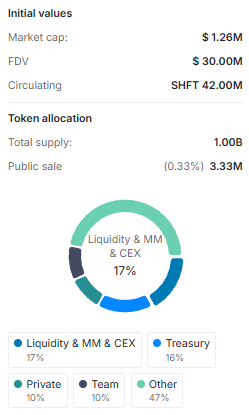
The token economy announced by Shift is as follows:
Other 47%
Liquidity, Market makers and centralized exchanges (CEX) 17%
Treasury (Treasury) 16%
Private Equity 10%
Team 10%
Public Offer 0.33%(3.33 million SHFT)
Shift (SHFT) team
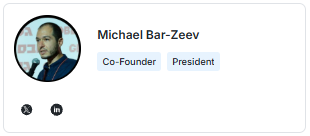
Shift aims to achieve representation of real-world assets on blockchain and is moving towards a long-term vision. Among the team information disclosed by the project to the public, the founding team is at the core, and the ecosystem development plan continues in a community-oriented manner through the DAO model.
Michael Bar-Zeev-Co-Founder, President