Exchange Ranking
 Top Exchanges
 24h Volume Ranking
 Popularity Ranking
 Exchange BTC Balance
 Proof of Reserves
 Decentralized Exchanges
 Funding Rate
 Funding Heatmap
 Liquidation Data
 Max Pain
 Long/Short Ratio
 Whale L/S Ratio
 Binance/Okex/Huobi L/S
 Bitfinex Margin L/S
 ETF Tracker
 Solana ETF
 XRP ETF
 Hong Kong ETF
 Bitcoin Treasuries
 Crypto Reversal
 Ethereum Reserves
 HyperLiquid Wallet Analysis
 Hyperliquid Whale Watch
 Large Transactions
 On-chain Movement
 Bitcoin ROI
 Stablecoin Market Cap
 Options Analysis
 News
News Articles
 Economic Calendar
 Features
 Wallet
 Contract Calculator


 Security
 Collections
 Watchlist
 Following
 BICO
BICO User challenges in the Web3 ecosystem and Bonomy's solutions
Although the Web3 ecosystem continues to evolve, one of the biggest obstacles facing blockchain-based applications remains user experience. How to pay Gas fees, execute transactions between different networks, manage wallets, and authorize each transaction individually can be quite complex for new users entering the Web3 world.
What does Biconomy (BICO) offer?
Biconomy (BICO) is a modular blockchain infrastructure protocol designed to make technical challenges as transparent as possible to users and help developers create a more convenient user experience. The core goal of the platform is to allow users to have as little exposure to the technical details of blockchain as possible when using Web3 applications. In a traditional Web3 experience, users may need to calculate their own Gas fees, hold native tokens for the corresponding network, or repeatedly authorize wallets for multiple transactions. Bonomy provides an infrastructure solution to manage these processes in the application background. In this way, developers can more easily build complex transaction processes in multi-chain applications, and users can complete operations through a simpler interface. According to data released by the platform, Biconomy's infrastructure has so far supported more than 70 million transactions and achieved a 99.9% uptime. 
How does Biconomy (BICO) work?
Biconomy's infrastructure integrates multiple mechanisms designed to reduce the complexity of Web3 applications on the user side. The solutions it provides are mainly built around the abstraction of Gas fees, the simplification of multi-chain transactions, account abstraction and acceleration of development processes. Outstanding areas of work for Bonomy Infrastructure include Gas abstraction, single-signature multi-chain transactions, account abstraction, transaction automation, and developer infrastructure. These features work together to help developers build more user-friendly Web3 applications on different blockchains.
Gas Abstract
Transaction fees are one of the core elements that affect the user experience in Web3 applications. In addition to paying the expected transaction fees, users also need to bear the Gas fees of the corresponding blockchain. Through Gas, Bonomy aims to make it easier for users to respond to this need. The infrastructure provided by the platform eliminates the need for users to rely solely on native tokens from the relevant network to pay Gas fees. Users can pay Gas fees using more than 10,000 ERC-20 tokens, and developers can also bear Gas costs for specific transactions for users. This model is designed to help reduce the mandatory requirement to "buy Gas tokens" in Web3 applications.
No Gas Trading
A high-profile application area for Biconomy is Gas-free transactions, which allows users to perform transactions without paying transaction fees. The disappearance of transaction fees mentioned here does not mean that the blockchain does not charge fees, but that the developer or application party bears the corresponding Gas costs for the user. In this way, users do not need to hold additional tokens to pay Gas fees when executing transactions. For new users, this pattern constitutes an important application scenario in promoting wider adoption of Web3 applications. 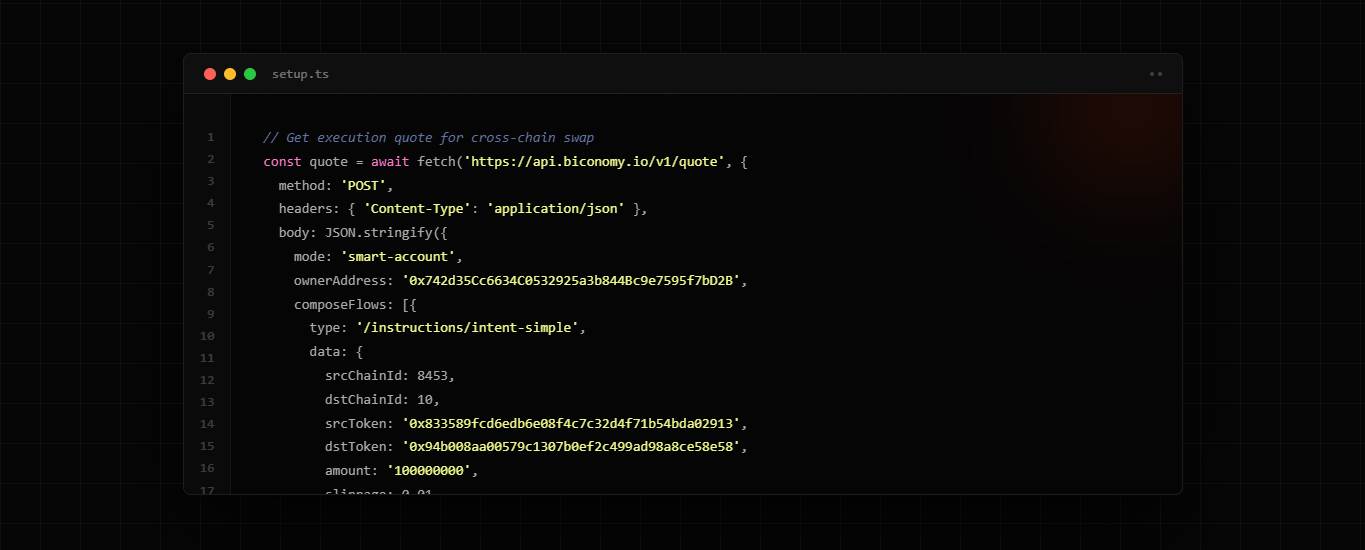
Single-signature multi-chain transactions
One of the infrastructures provided by Bonomy is that allows complex multi-chain transaction processes to be completed with a single signature. In a traditional Web3 experience, multiple authorizations may be required when users perform transactions on different networks. This not only lengthens the transaction process, but also increases the complexity of the user experience. Bonomy aims to consolidate these transactions under a single signature, making it easier for users to complete complex transaction processes that require execution on multiple chains. The platform provides an infrastructure designed to manage complex workflows that can be performed on an unlimited number of chains with a single user authorization.
Account Abstract
Another important area for Biconomy in improving the Web3 user experience is account abstraction. The account abstraction approach is designed to make traditional usage models of Web3 wallets more flexible. Bonomy's infrastructure supports a solution for users to create Web3 wallets through their social accounts. This approach helps reduce the technical obstacles users encounter in the creation process of traditional wallets. Especially for newbies to Web3, issues such as wallet settings, seed phrase management, and transaction authorization can pose important entry barriers, and account abstraction is designed to simplify the experience.
Infrastructure for developers
Bonomy not only focuses on the end-user experience, but also aims to help Web3 developers integrate multi-chain capabilities into their applications more quickly. According to information released by the platform, Biconomy's infrastructure aims to reduce the time required to develop multi-chain capabilities by up to 90%. In this way, developers can reduce the time spent on different network technical details and focus more on the user experience and core functions of the application. 
Biconomy (BICO) Highlights
Biconomy provides a variety of infrastructure solutions designed to improve the experience of Web3 applications for both users and developers.
Web2-like user experience
Bonomy's overall approach is to make the experience of Web3 applications closer to traditional Internet applications. The goal is to allow users to handle less technical details such as Gas fees, network selection and multiple transaction authorizations. Therefore, Bonomy optimizes the user experience of Web3 applications not only from the visual interface, but also from the way transactions are executed in the background.
Multi-chain transaction support
In the Web3 ecosystem, using different blockchains may require users to manage their assets and transactions on multiple networks. Biconomy attempts to simplify the process by consolidating the multi-chain transaction process under a single signature. In this way, developers can gain the infrastructure to provide their users with a smoother transaction experience across different networks.
Paying Gas Fees with Alternative Tokens
With a solution provided by Bonomy, Gas Fees no longer have to be paid with only blockchain native tokens. The platform allows users to use more than 10,000 ERC-20 tokens to pay for transaction fees. Within this range, users can use stablecoins such as USDC and USDT, as well as other ERC-20 assets, to make Gas payments. This feature is designed to reduce the mandatory requirement to purchase additional network-native tokens in order to use an application.
Transaction automation
Biconomy's infrastructure is not limited to simplifying single transactions. The platform also provides infrastructure that allows developers to automatically execute specific transactions through authorization. This structure is designed to allow users to perform the transaction process within the set authority range without having to continuously manually authorize the same transaction.
Enterprise Reliability
According to data released by Bonomy, the platform's infrastructure provides 99.9% of uptime. In addition, it is said that more than 70 million transactions have been processed through its infrastructure to date. Trading capabilities of this scale suggest that Bonomy's goal is to provide infrastructure not only for small applications, but also for Web3 projects that require higher transaction volumes.
What does Biconomy (BICO) offer developers?
An important application area for Bonomy is to simplify the application development process for Web3 developers. Building a multi-chain application may require managing transaction models, Gas mechanisms, and user authorization across different networks. This may lead to extended development cycles and increased technology costs. By managing a large portion of these processes at the infrastructure level, Bonomy aims to allow developers to build multi-chain functions with less technical burden. With the infrastructure provided by the platform, developers can integrate functions such as paying Gas fees for users, paying Gas with alternative tokens, and performing multi-chain transactions with a single signature into their applications.
What are the purposes of Biconomy (BICO) tokens?
BICO is a native token of the Bonomy ecosystem. Application scenarios for BICO include economic structures that support protocols and incentives for various activities within the ecosystem. In Biconomy's token economy, BICO has established different allocation categories, including communities, teams and advisers, foundations, private equity, and ecosystem-related allocations.
Bonomy (BICO) Tokenology
Bonomy's total token supply is distributed among different investment and ecosystem categories. The total supply allocation is as follows: Community: 37.92%; Teams and Consultants: 22%; Foundations: 10%; Private Equity Round: 12%;Pre-seed Round: 6%;Seed Round: 6.38%; Main Sales Option 1: 4%; Main Sales Option 2: 1%; Strategic Round: 0.50%; Public Sales (Huobi Prime IDO): 0.20%. 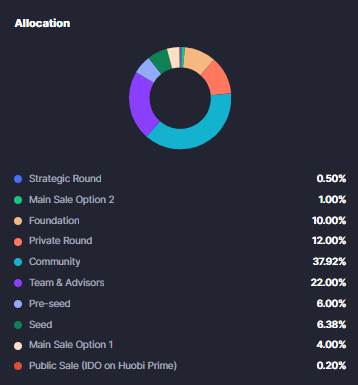
In token allocation, the community category accounted for the largest proportion, at 37.92%. Secondly, teams and consultants accounted for 22%, private equity rounds accounted for 12%, and foundation allocations accounted for 10%. Other allocations are distributed among early financing rounds and main sales categories.
Biconomy (BICO) Investors
Biconomy has the support of many investors active in Web3 infrastructure and decentralized finance. Investors in the project include venture capital firms, investment funds focused on cryptocurrencies, and well-known individual investors in the industry. Investors announced by the platform include: YZi Labs (formerly Binance Labs), Fenbushi Capital, Zee Prime Capital, Outlier Ventures, Digital Asset Capital Management (DACM), Woodstock Fund, Coinbase Ventures, Stani Kulechov -founder, Mechanism Capital, CoinFund, Genblock Capital, Bain Capital Crypto, HTX Ventures, Rarestone Capital, LedgerPrime, Chorus One, Primitive Ventures, True Ventures, Balaji Srinivasan -founder, Consensus Sys, Jump Capital, Borderless Capital, Blockchain Founders Fund, Manifold, Side Door Ventures, Taisu Ventures, Jordi Alexander -founders. 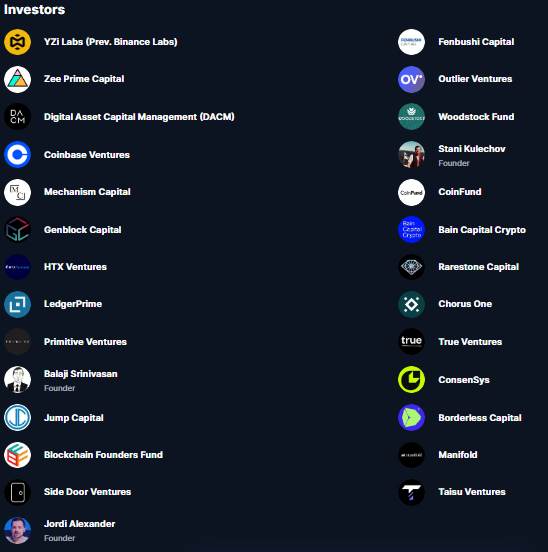
Bonomy (BICO) Team
The Bonomy team is composed of members with expertise in blockchain infrastructure, product development, engineering and business development. The project's management structure includes founding team members and managers responsible for product, engineering and business development processes. The team members and their positions announced by the platform are as follows: Ahmed Al-Balaghi -Co-Founder and CEO;Aniket Jindal -Co-Founder and Chief Operating Officer;Mislav Javor -Vice President of Products;Filip Dujmusic -Director of Engineering;Ivan Piton -Director of Business Development;Sachin Tomar -Co-Founder and Chief Technology Officer. 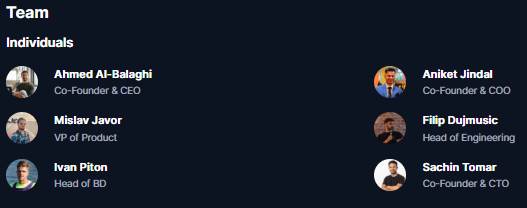
Official Link
Website- X (Twitter) -White Paper