
 Exchange Ranking
 Top Exchanges
 24h Volume Ranking
 Popularity Ranking
 Exchange BTC Balance
 Proof of Reserves
 Decentralized Exchanges
 Funding Rate
 Funding Heatmap
 Liquidation Data
 Max Pain
 Long/Short Ratio
 Whale L/S Ratio
 Binance/Okex/Huobi L/S
 Bitfinex Margin L/S
 ETF Tracker
 Solana ETF
 XRP ETF
 Hong Kong ETF
 Bitcoin Treasuries
 Crypto Reversal
 Ethereum Reserves
 HyperLiquid Wallet Analysis
 Hyperliquid Whale Watch
 Large Transactions
 On-chain Movement
 Bitcoin ROI
 Stablecoin Market Cap
 Options Analysis
 News
News Articles
 Economic Calendar
 Features
 Wallet
 Contract Calculator


 Security
 Collections
 Watchlist
 Following
 ETH
ETH  UNI
UNI Key insights
Despite Uniswap's good performance, UNI prices have fallen more than 14% since Monday. The protocol's buy-and-destroy mechanism is in operation, but traders compare it to other DeFi protocols. Although UNI prices fell more than 14% this week, Uniswap's on-chain activity remains strong. Uniswap recorded transaction volume of US$53.4 billion in July. The agreement also incurred more than $98.37 million in fees over the past 30 days and maintained its status as the largest DEX for the entire month. There were no hacking, exploit, regulatory action or delisting behind this sharp sell-off. Instead, the pressure comes from concerns among traders and DeFi users that UNI token holders are not benefiting as much from fees and activities generated by the agreement as their competitors.
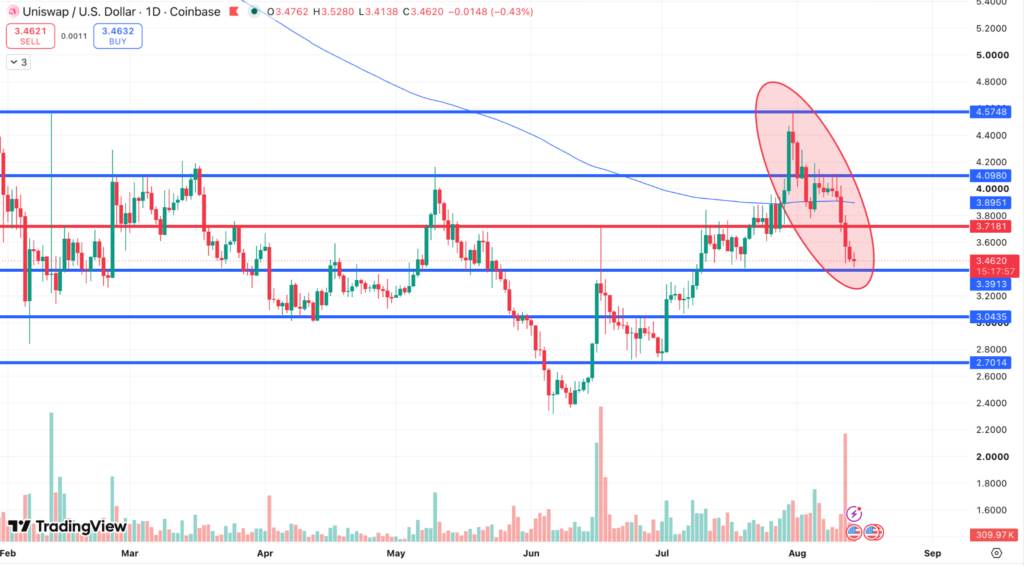 UNI Price Chart
The gap between protocol performance and token prices is worth analyzing.
The UNI price issue is more specific than it appears
Data shows that Uniswap incurred US$98.37 million in charges in the past 30 days. However, only US$5.23 million (approximately 5.3% of the total) of this amount is owned by the agreement. The rest is owned by the liquidity provider.
Hyperliquid, on the other hand, incurred US$46.74 million in fees over the same 30 days. Of this amount, US$32.46 million (approximately 69.5%) is owned by the agreement as income.
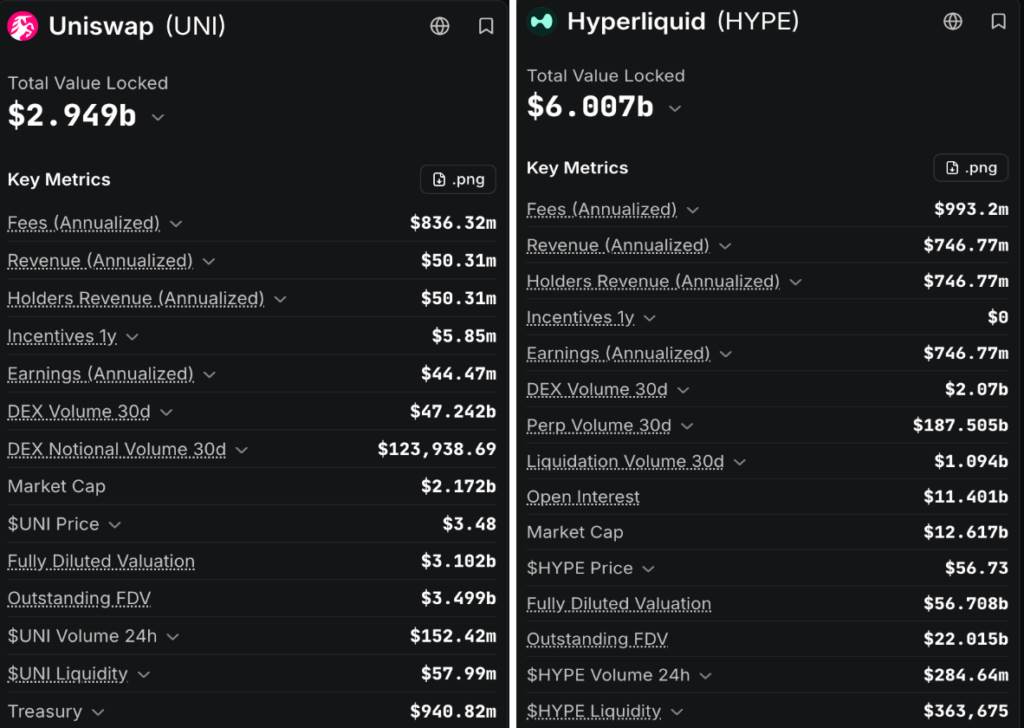
For investors comparing the two tokens, the gap is obvious. While Uniswap processed more transaction volume and generated higher total fees, Hyperliquid retained a larger share of fees. Uniswap only captured approximately 5.3% of fees at the protocol level, compared with 69.5% for Hyperliquid. This may make UNI currently unattractive to some investors.
Why is the Uniswap protocol actually winning?
Trading activity on centralized exchanges fell sharply in July. Spot and derivatives trading volumes on centralized exchanges were reported to fall to US$3.76 trillion, down 23.9% from June and the lowest level since November 2023. While DEX transactions continue to grow, Uniswap leads the field with a monthly transaction volume of US$47.2 billion.
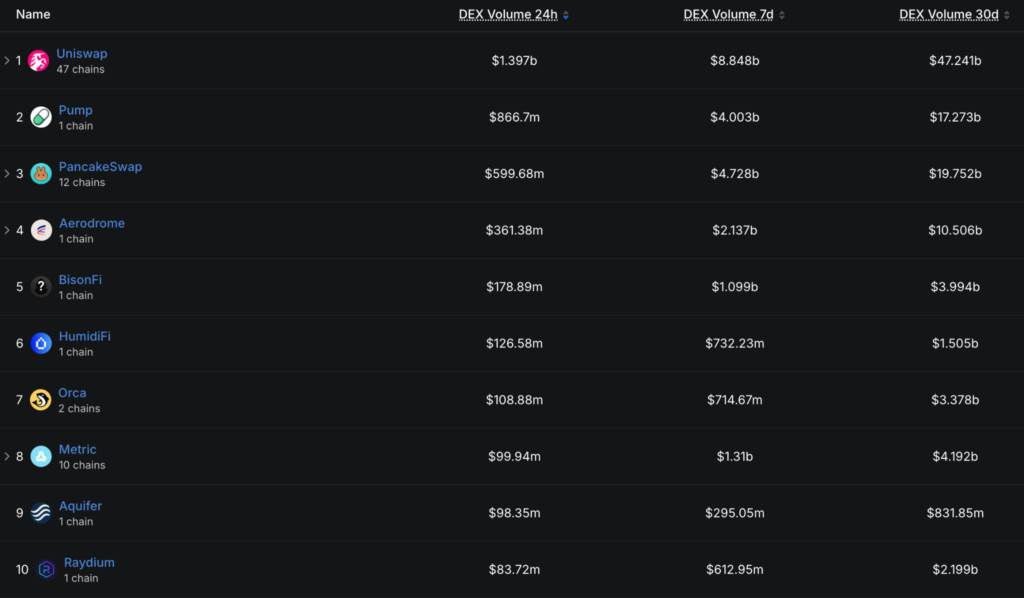 DEX Volume
Uniswap also added new features during this period. Its Earn feature is launched, allowing users to deposit USDC, USDT or ETH and earn revenue. On August 5, Uniswap Labs also launched a new launch platform based on Uniswap v4 on Robinhood Chain. The platform supports token issuance and has functions such as TWAP bidding, curve issuance, sniper prevention, permanent locking in liquidity, and 0.25% automatic compound interest LP fee.
What does this disconnect actually mean?
Uniswap continues to process more transaction volume and incur more fees than any other decentralized exchange. A buy-and-destroy system designed to link agreement activity to token value is also operating as planned. According to relevant research, about 108 million UNIs have been destroyed so far, which has increased deflationary pressure on the circulation supply of about 634 million UNIs.
The question is how this value is passed on to the token holder. Destruction models indirectly benefit holders by reducing UNI supplies, rather than paying them part of the agreement fee. This approach is coming under increased pressure as new agreements such as Hyperliquid give token holders a more direct correlation of agreement revenue. Closing this gap will depend on governance decisions rather than Uniswap's ability to generate activity.
There are three independent factors worthy of attention. First, governance may change the way Uniswap fees are allocated. Second, stronger DEX activities may increase destruction rates, thereby closing the gap. Third, the price of UNI needs to remain above the US$3 support level and transform this technical form into a sustained recovery.
























