Exchange Ranking
 Top Exchanges
 24h Volume Ranking
 Popularity Ranking
 Exchange BTC Balance
 Proof of Reserves
 Decentralized Exchanges
 Funding Rate
 Funding Heatmap
 Liquidation Data
 Max Pain
 Long/Short Ratio
 Whale L/S Ratio
 Binance/Okex/Huobi L/S
 Bitfinex Margin L/S
 ETF Tracker
 Solana ETF
 XRP ETF
 Hong Kong ETF
 Bitcoin Treasuries
 Crypto Reversal
 Ethereum Reserves
 HyperLiquid Wallet Analysis
 Hyperliquid Whale Watch
 Large Transactions
 On-chain Movement
 Bitcoin ROI
 Stablecoin Market Cap
 Options Analysis
 News
 Articles
 Economic Calendar
 Features
 Wallet
 Contract Calculator


 Security
 Collections
 Watchlist
 Following
 SUI
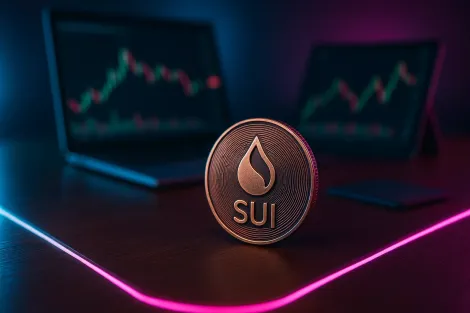
Samsung Wallet, an integrated Sui network, supports 82 million United States Galaxy users to receive and send USDC
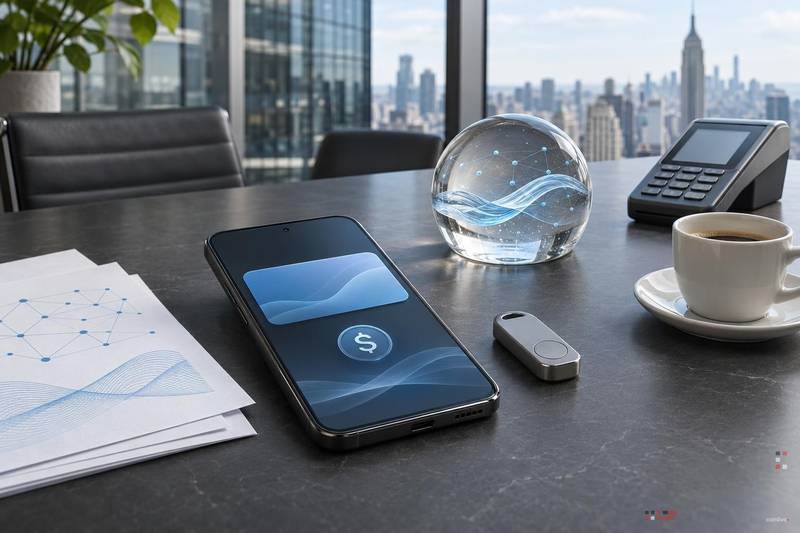
In recent days, Samsung Wallet, through integration with the Sui network, has officially allowed some Galaxy smartphone users in the United States region to send and receive USDC stationcoin directly in their applications. This collaboration has made it unnecessary for users to install additional cryptocurrency applications, to acquire SUI tokens to pay for Gas fees, and to pay for any transfer to the Samsung.
USDC integration and qualification limits
This new feature is open to approximately 82 million eligible Galaxy devices in the United States. To use the USDC transfer service, users must meet the following conditions: they hold triplestar accounts, they are 18 years old and they are United States residents, and they operate Android 13 or more versions of the operating system on the equipment.
At this point, the integration is mainly limited to payment and consumption transfer scenarios rather than to transactions or investment behaviour. The focus of the Sui network is on facilitating real-world transactions.
The trip will bring USDC, known for its compliance and transparency, into millions of daily equipment, without adding additional costs or complexity of transactions, to break down the barriers to digital assets and daily payments.
When sending or receiving USDC via Samsung Wallet, users do not need to hold SUI (the local currency of Sui Network). All USDC transfers are exempt from transaction costs, which reflects the policy of the Samsung to fully subsidize the costs involved, with the aim of completely abstracting the transaction costs from the user experience.
Infrastructure partners and hosting mechanisms
To ensure security and compliance of operations, Samsung Wallet has entered into a partnership with Bastion, a company that focuses on stablecoin infrastructure and hosting services. The famous United States cryptocurrency exchange Coinbase serves as a sub-host of these assets. These arrangements help to resolve key issues of hosting management, compliance, account restoration and dispute solution, especially when users retain their control of the platform.
While providing a zero-cost transfer service to consumers, the transaction costs on the blockchain need to be covered. This is covered by a partnership or the platform’s own subsidies. This strategy, while eliminating user friction, also requires strong infrastructure and financial support capacity at the back end.
Analysis of payment trends for stablecoin
The industry analyst noted that the Samsung initiative was not only a milestone in product development, but also an important step in the widespread adoption of a blockchain-based payment system. This shift reflects a growing trend in the industry: the platform is increasingly focused on the payment and remittance function, rather than just on speculative transactions.
USDC, published by Circle, is increasingly used for its status and business partnerships, in contrast to USDT, which is used primarily for trading purposes. Embedding USDC into a Samsung Wallet is seen as a validation of the role of stablecoin in mainstream finance.
In addition to the Sui network, Samsung supports USDC transfers on the Solana network, which indicates a multi-chain strategy, not just a single protocol.
Future patterns of adoption and competition
For Sui, this integration is a success at the distribution level, but does not guarantee that users will use it in large quantities. 82 million refers to the number of eligible equipment, while the actual adoption rate will depend on factors such as consumer awareness and seamless access experience.
Other Layer 1 blockchain is now faced with intense competition to provide comparable zero-cost, user-centred payment experiences and to promote real-world applications beyond currency exchanges and transactions. Analysts expect that the competitor’s Layer 1 project will pay close attention to the results, including indicators such as active Wallet numbers, trade volumes, and retention rates.
The Samsung Wallet initiative highlights an increasing trend to bring the blockchain infrastructure directly to users, rather than requiring users to adapt to the encryption tools. The future development of the project may provide a blueprint for future mainstream pay innovations.