Exchange Ranking
 Top Exchanges
 24h Volume Ranking
 Popularity Ranking
 Exchange BTC Balance
 Proof of Reserves
 Decentralized Exchanges
 Funding Rate
 Funding Heatmap
 Liquidation Data
 Max Pain
 Long/Short Ratio
 Whale L/S Ratio
 Binance/Okex/Huobi L/S
 Bitfinex Margin L/S
 ETF Tracker
 Solana ETF
 XRP ETF
 Hong Kong ETF
 Bitcoin Treasuries
 Crypto Reversal
 Ethereum Reserves
 HyperLiquid Wallet Analysis
 Hyperliquid Whale Watch
 Large Transactions
 On-chain Movement
 Bitcoin ROI
 Stablecoin Market Cap
 Options Analysis
 News
 Articles
 Economic Calendar
 Features
 Wallet
 Contract Calculator


 Security
 Collections
 Watchlist
 Following
 ETH
The legal risk and compliance logic behind the strategy of Betheled Ethereum Staking
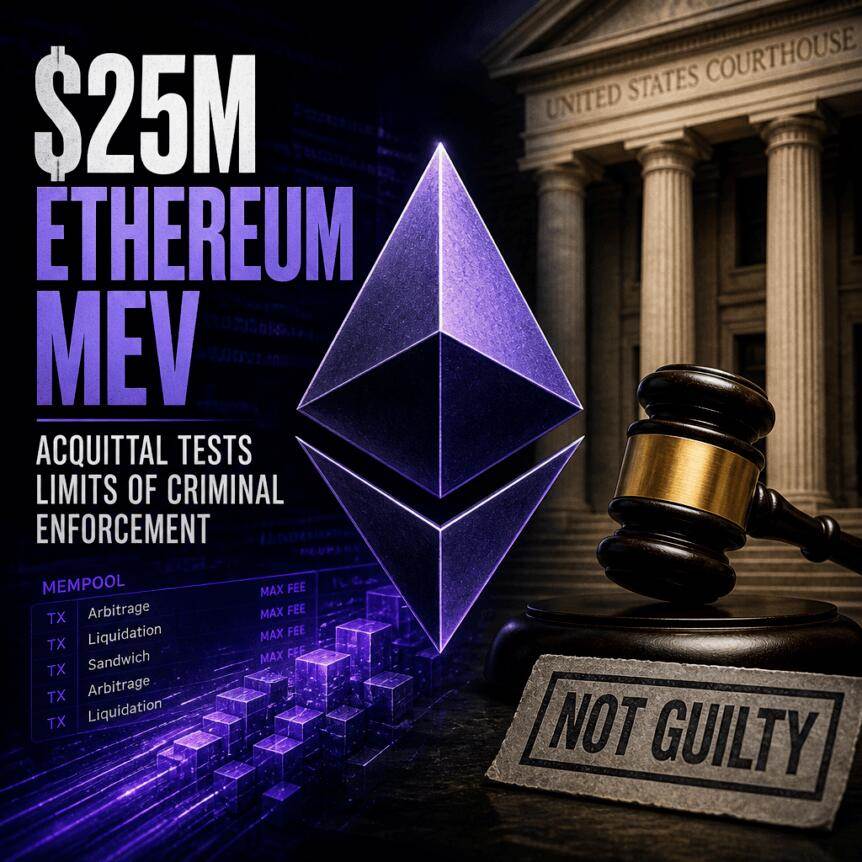
The Ethereum (Ethereum) strategy of BlackRock is closely linked to a specific and controversial source of value in Etheleum ecology: the revenue generated by the ranking of transactions. This competitive process may yield benefits in the course of the treatment of investors in order to give their transactions priority over other transactions. In its presentation of the StockEther ETF's statement, the company clearly identified the potential legal risks involved in this revenue stream, particularly in the context of concerns raised by the Brother Anton Peraire-Bueno and James Peraire-Bueno case.
Although the two defendants were eventually acquitted, the practical legal issues of how the Ethereum trade-ordering protection mechanism and the certificationer’s obligations are defined under the fraud standard have not been fully resolved. For market participants, the case highlights how the “ordering” and “enforcement” dynamics spill over into the areas of compliance and contractual disputes – particularly when large asset management companies rely on staking providers and third-party block construction or trade selection services.
Summary of core elements
- Economic linkages:Beled's stock book, making Ethereum ETF, links stocking economics to the costs paid by traders to enable their transactions to be processed earlier than competitors.
- Legal Risk Alert:Belet considers the prosecution in the case of the Perare-Bueno brothers as a potential risk of interference and considers that an adverse legal decision could undermine its plan to move.
- The key to the acquittal:Judgements of acquittal depend primarily on narrower evidentiary issues, including the ability of the prosecution to prove a specific provision of consent between a certifier and a service.
- Contract defence:Beled's filings also emphasized the importance of contractual language, such as requirements for the screening of the certifying officer and the treatment of sanctioned Wallet, which may support enforcement through intermediaries such as Coinbase.
Why is the sorting of transactions so important to making Ethereum ETF?
In Belet’s ETF statement of shareholding, the company describes how the Ethereum exposure it holds generates revenue associated with the ranking of Ethereum transactions. The mechanism cited in this document is commonly referred to as the value captured from the production or inclusion of a transaction before another transaction – that is, the income generated when the dealer pays to influence the priority treatment.
Belet’s concerns are not abstract. The book warns that, if the court finds that certain conduct related to the ranking of the transaction is unlawful, it may interfere with the way in which incentives are earned or distributed within the product structure. Thus, the book of call is devoted to legal proceedings involving Anton and James Perare-Bueno.
Outstanding issues from acquittal
Despite the acquittal of the brothers, the risk narrative in the document remains relevant, as the fraud case is based on a narrower issue than many observers have assumed. The core dispute does not resolve the broader issue of whether the transaction-ranking income mechanism should be pursued in a specific way.
The statement describes the loss of approximately $25 million by the three traders because the order of execution of the transaction was different from the order of designation proposed by their signature certifiers. However, the prosecution needs to meet a particular burden of proof: they need to prove that by signing the proposed block, the brothers were in substance committed to issuing the transaction in the agreed order.
Belet’s book of solicitation notes that the prosecution has difficulties in establishing the exact terms that the brothers and brothers will accept from the services they provide the blocks. In other words, the case is not a simple conclusion about the general trading ranking practice, but depends on what the Government can prove — that is, the commitment embedded in the participation of the certifying officer, and the contract or operating terms actually entered into.
Contract language as a physical defence floor
In addition to the uncertainty of criminal cases, Belet's filing points to a more pragmatic focus: to ensure that the certifiers comply with specific compliance controls, including how to deal with sanctioned Wallet.
According to the equity book, Coinbase must obtain a binding commitment from the certifier when it wishes the certifier to maintain the control measures to screen the sanctioned wallet. If the certifier violates that commitment, Belet’s view is that the fund can invoke the obligations accepted by the certifier and seek enforcement through Coinbase.
This is significant for investors, as it illustrates how compliance and operational risks are managed in the context of a staking business, except for the existence of any single legal precedent. Even though the rules on the ranking of transactions remain controversial in court, asset management companies can rely on contractual mechanisms to require that the certifying officer’s conduct be consistent with the expectations and product limits of the certification.
At the same time, the conclusion of the Perare-Bueno case highlighted a limitation: enforcement depended on which provisions were accepted, how they were recorded, and what courts or other bodies considered enforceable when there was a dispute over interpretation.
What should investors focus on next?
For investors with a stocking Ethereum product, the key uncertainty is how to address the intersection between certification institutions and courts of the involvement of the certificationer, the sequencing of the transaction and the specific commitments identified by the certificationer. Investors should follow closely subsequent legal developments that would clarify the evidentiary standard that the certificationer actually reaches the protocol with third-party services – and whether the staking operator and the ETF sponsors will continue to tighten the contract language to make compliance obligations more robust.