Exchange Ranking
 Top Exchanges
 24h Volume Ranking
 Popularity Ranking
 Exchange BTC Balance
 Proof of Reserves
 Decentralized Exchanges
 Funding Rate
 Funding Heatmap
 Liquidation Data
 Max Pain
 Long/Short Ratio
 Whale L/S Ratio
 Binance/Okex/Huobi L/S
 Bitfinex Margin L/S
 ETF Tracker
 Solana ETF
 XRP ETF
 Hong Kong ETF
 Bitcoin Treasuries
 Crypto Reversal
 Ethereum Reserves
 HyperLiquid Wallet Analysis
 Hyperliquid Whale Watch
 Large Transactions
 On-chain Movement
 Bitcoin ROI
 Stablecoin Market Cap
 Options Analysis
 News
 Articles
 Economic Calendar
 Features
 Wallet
 Contract Calculator


 Security
 Collections
 Watchlist
 Following
 XRP
Reebble's core developer rejects the idea of "organism": dark-pool trading co-existes the benefits and disadvantages of retail investors.
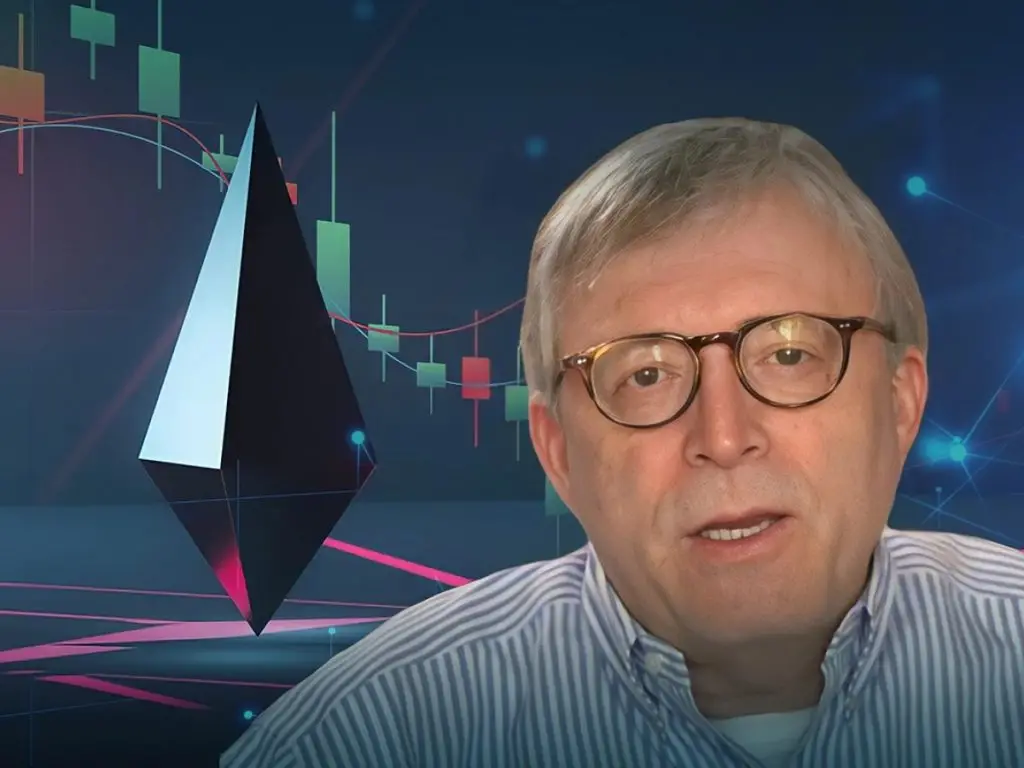
Over the years, a theory has been circulated among the most loyal fans of the XRP: large institutions are quietly buying billions of coins outside the public eye and keeping prices at a low level until the market’s supply is depleted. Yet David Schwartz, one of the XRP account builders, doubts it.
Schwartz is one of the co-founders of the Blackchain-XRP account book behind the XRP token. He has long served as Chief Technical Officer (CTO) in Ripple, and now holds the title of Honorary Chief Technical Officer. He responds to the theory after a user on X platform asked directly about the Dark Pool.
The question behind the theory.
The user asked whether the institution could “theoretically accumulate billions of XRPs through a dark pool without significantly pushing up open market prices.” If true, would that not give the institution a “great advantage” over investors?
The dark pool is a private place where large orders are made in private to match transactions. Schwartz defines itself in the same discussion line: “The purchase and sale orders there are not disclosed to the public before or after execution.”
His answer to this main question is skeptical. “I don't think so.” Schwartz wrote that his reasoning is based on two key points: first, where does the supply come from when people have to sell billions of XRPs to buy? Second, buyers usually want to buy after price increases, rather than the price continues to be suppressed.
He did not, however, exclude that possibility altogether, adding: “But this is not impossible”.
The double-edged sword effect of the dark pool on retial investors
Schwartz also points out that the dark pools are not purely good or bad for ordinary investors. In his view, they undermine the interests of retial investors in some respects, while in others they help.
The negative effect is that the price discovery mechanism is weakened. Price discovery is a process of setting the market price of assets through open sales. When large orders are hidden, the process becomes less accurate, according to Schwartz, “the majority will agree that this is detrimental to the interests of retail investors.”
And the positive effect is that it creates a more stable trading environment. Dark pools can reduce sudden volatility surges and flashbacks (i.e., a rapid fall in a few minutes and a rebound in prices). Moreover, they can limit “first-in-the-front” transactions, where traders use visible large orders to make early profits. Likewise, this applies to MEV (maximum recoverable value), where traders make profits by re-ordering transactions before they close the chain.
Larger transactions turn to chain books.
At the time of the debate, the data show that more large-scale transactions take place on an exchange with the XRP account book, rather than a decrease. The book contains a DEX that allows users to trade directly from the Wallet without the need for intermediaries.
According to a report released by Evernorth on 24 November, the exchange’s order book transactions averaged 4.51 million XRPs per day in the third quarter of 2026. The company is a listed company that uses XRP as its main treasury asset. This figure is 26 per cent higher than in the second quarter, 2.8 times more than a year ago.
The scale of single transactions has also increased significantly. The average exchange volume is about 35 XRPs, up from 19 in the second quarter and less than 6 a year ago.
The top 10 accounts account for 65 per cent of order book transactions, up from 48 per cent in the second quarter and 33 per cent a year ago. By contrast, the automated liquidity pool (trading through the sharing of coin pools rather than matching orders) accounts for 13 per cent of exchange transactions, down from 38 per cent a year ago.
The US Pot XRP Exchange Trading Fund (ETF) allows investors to purchase XRP convertibles through regular brokerage accounts, recording $308 million net infl. The report shows that inflows occur every month, up from $273 million in the second quarter.
While this picture does not fully resolve the dispute over the dark pool, it shows that most of the heavy trade in XRP is taking place on public platforms in an open and transparent manner, in line with the general trend towards a shift in institutional finance to the chain.