
 Exchange Ranking
 Top Exchanges
 24h Volume Ranking
 Popularity Ranking
 Exchange BTC Balance
 Proof of Reserves
 Decentralized Exchanges
 Funding Rate
 Funding Heatmap
 Liquidation Data
 Max Pain
 Long/Short Ratio
 Whale L/S Ratio
 Binance/Okex/Huobi L/S
 Bitfinex Margin L/S
 ETF Tracker
 Solana ETF
 XRP ETF
 Hong Kong ETF
 Bitcoin Treasuries
 Crypto Reversal
 Ethereum Reserves
 HyperLiquid Wallet Analysis
 Hyperliquid Whale Watch
 Large Transactions
 On-chain Movement
 Bitcoin ROI
 Stablecoin Market Cap
 Options Analysis
 News
News Articles
 Economic Calendar
 Features
 Wallet
 Contract Calculator


 Security
 Collections
 Watchlist
 Following
The intersection of artificial intelligence and the cryptocurrency market has recently spawned a new project area. DAPPOS (DOS) aims to allow AI to not only provide information, but also help users complete cryptocurrency transactions. The project claims to be a Web3 artificial intelligence operating system, and its core concept is to allow users to express their needs in natural language rather than manually operating them between different platforms and wallets. DAPPOS automatically plans and executes corresponding transactions by analyzing user intentions. This approach particularly helps lower the technical threshold faced by new Web3 users.
What problem does DAPPOS want to solve?
Although cryptocurrency transactions may seem simple, users actually face many steps: purchasing tokens, operating on the DeFi platform, or transferring assets between different networks requires understanding of wallets, networks, Gas fees and transaction details. DAPPOS is committed to simplifying this process-users only need to express the final goal directly, and the system analyzes the requirements and determines the necessary steps, eliminating the need for users to go through technical details one by one. The key difference is that DAPPOS is not just an AI chat tool, it also has an independent execution layer that converts generated plans into real Web3 transactions.
How does DAPPOS's artificial intelligence system work?
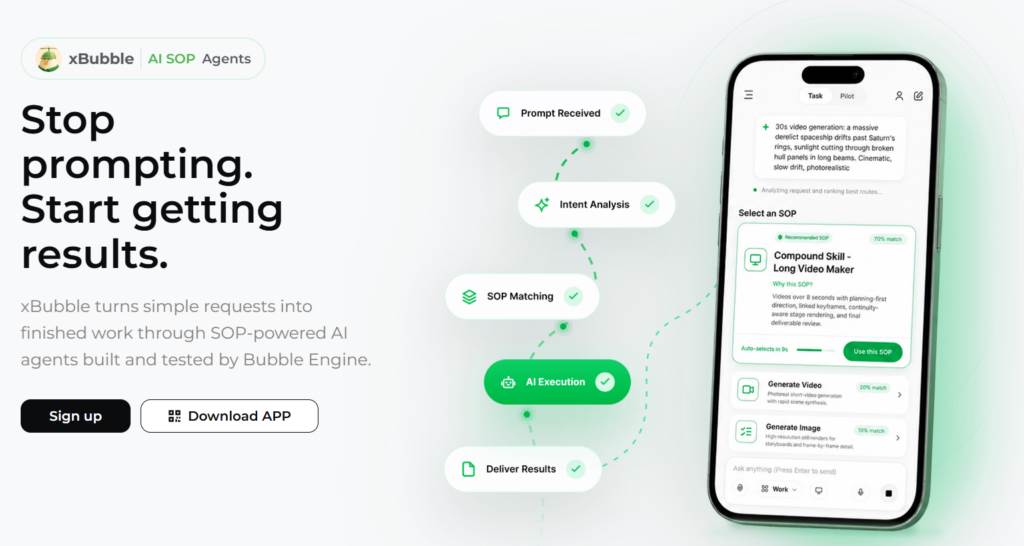
The AI side of DAPPOS is based on collaboration with a large number of dedicated agents. According to the project research documents, the system contains 300 to 400 professional AI agents and more than 200 tools, which can be used for tasks such as research, market analysis, DeFi trading and opportunity identification. Simply put: When users ask questions, not a single AI solves all problems independently, but DAPPOS calls expert agents in different fields based on the nature of the problem and integrates the results. For example, market research can simultaneously combine web data, social media dynamics and blockchain information to ultimately present it to users in a clear and easy-to-understand way.
What is Bubble Engine?
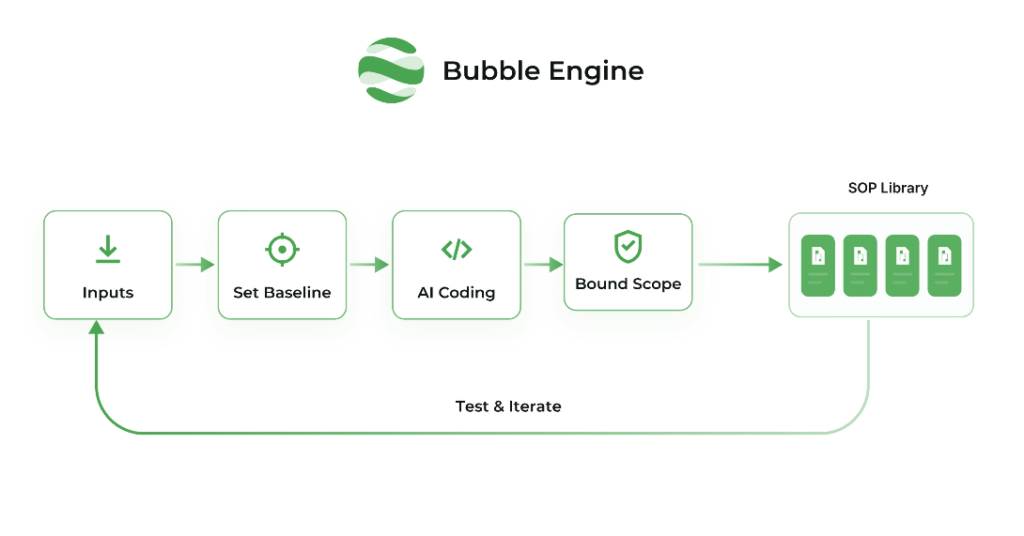
Another highlight of DAPPOS is a component called Bubble Engine. The system helps AI continue to evolve itself by processing the latest information and user contributions in the Web3 field. The project not only utilizes real-time data, but also integrates verified information and historical interactive experience. The purpose is simple: the cryptocurrency market is changing rapidly, and relying solely on old data is not enough. DAPPOS generates results that are more relevant to the present by introducing the latest developments.
DAPPOS not only provides information
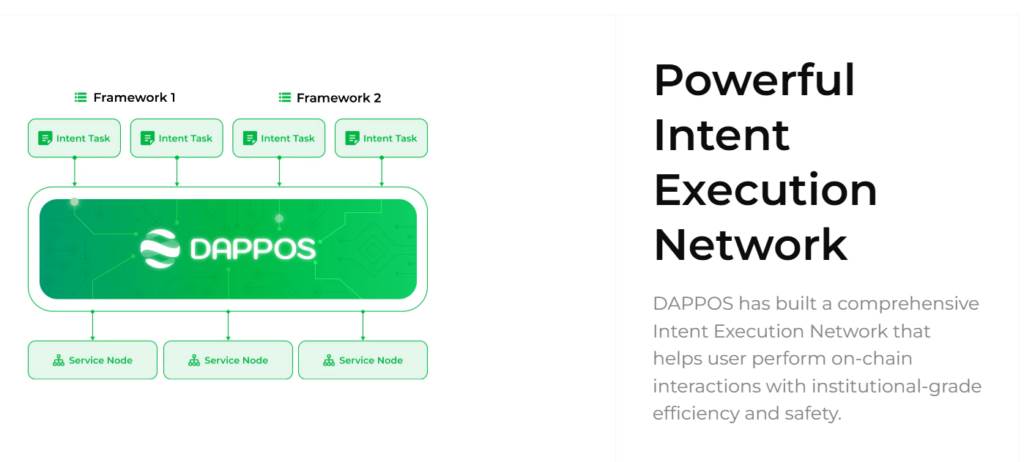
One of the most significant differences in the project is this: traditional AI will only tell users "you can do this," but transactions still require users to do it yourself. DAPPOS moves this process forward by intent-driven trading systems. Users only need to state their needs and the system evaluates the right service provider and executes the transaction. If the transaction fails, a guarantee mechanism will be triggered according to predetermined rules. As a result, for users, the core goal shifts from learning the trading steps to clearly expressing the expected results.
How can transactions be secured?
The core mechanism used by DAPPOS here is called Optimal Minimum Staking (OMS). In short, the service provider in the system responsible for executing transactions needs to deposit a margin. When the task is successfully completed, the process proceeds normally; if the task fails, part of the margin will be used to compensate the user according to conditions. In addition, the system also has validators to check the correctness of transactions and intermediaries to match users with service providers. In this way, DAPPOS builds a security barrier between AI decisions and real transactions on the chain.
What is a DOS Token? What is the purpose?
The native token name of the DAPPOS ecosystem is DOS. According to the white paper, DOS will be used in areas such as advanced service access, transaction fees, pledges and governance. Token holders can also participate in part of the decision on the future development of the agreement. In addition, DOS can also serve as part of the guarantee mechanism for service providers and other participants in the network. Therefore, its use is not limited to transactions. In the economic model of project design, DOS is one of the core tools that connects users, service providers, and other participants in the ecosystem.
DOS Token Economics: What is the total supply?
DAPPOS's total DOS supply is set at 1 billion units. The allocation is as follows: team 20%, investors 22.5%, ecology 20%, treasury 20%, marketing 11.5%, and airdrop 6%. Team and investor tokens have a 12-month lock-up period, followed by a 48-month linear unlocking period. Airdrops account for 6% of the total supply. This allocation structure shows that the DOS supply will not be fully released in the short term, but will be controlled through long-term lock-up and distribution mechanisms.
What is the DAPPOS roadmap?
DAPPOS's future plans are not limited to cryptocurrency transactions. Key goals in the roadmap include: expanding AI systems beyond Web3, such as U.S. stock research and market analysis; developing AI-driven workflows and applications; helping users create Web3 applications, websites and dashboards; building a wider range of service providers network; and expanding the pledge and governance use of DOS tokens. The long-term vision is to transform DAPPOS beyond a tool purely for cryptographic users into a cross-domain research, decision-making and execution platform-a universal AI operating system.
Outstanding features of DAPPOS
According to official documents, the core architecture of DAPPOS can be summarized as follows: AI-driven Web3 research and planning, intent-driven transaction execution, multi-AI agent architecture, Bubble Engine, pledge-supported service network, DOS-based governance. The basic method is to integrate the information collection and execution processes in Web3 transactions under the same framework. In the future, the project plans to expand this architecture to research, decision-making and application development beyond Web3.
























