Exchange Ranking
 Top Exchanges
 24h Volume Ranking
 Popularity Ranking
 Exchange BTC Balance
 Proof of Reserves
 Decentralized Exchanges
 Funding Rate
 Funding Heatmap
 Liquidation Data
 Max Pain
 Long/Short Ratio
 Whale L/S Ratio
 Binance/Okex/Huobi L/S
 Bitfinex Margin L/S
 ETF Tracker
 Solana ETF
 XRP ETF
 Hong Kong ETF
 Bitcoin Treasuries
 Crypto Reversal
 Ethereum Reserves
 HyperLiquid Wallet Analysis
 Hyperliquid Whale Watch
 Large Transactions
 On-chain Movement
 Bitcoin ROI
 Stablecoin Market Cap
 Options Analysis
 News
News Articles
 Economic Calendar
 Features
 Wallet
 Contract Calculator


 Security
 Collections
 Watchlist
 Following
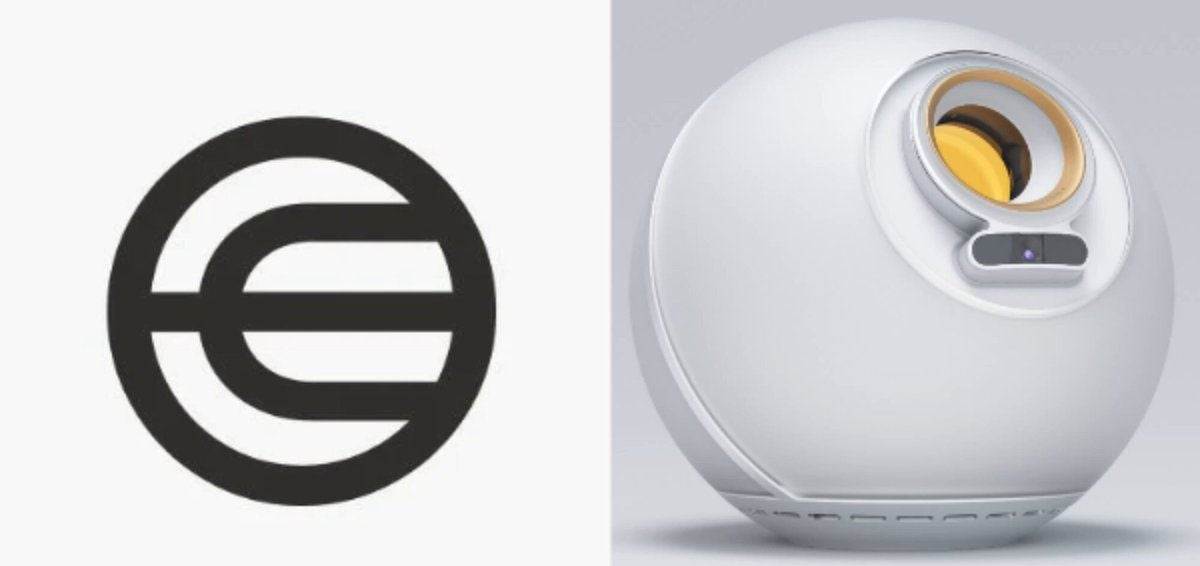
When World Network's Orb scans your eyes, it doesn't save photos. It retains something more abstract: a number.
From Iris to Code
Orb takes an image of your iris and converts it into a compact digital representation. According to relevant documentation, the images are then encrypted, sent directly to your phone, and permanently deleted from the device itself. The entire calculation process is done locally on Orb's hardware before the data leaves the device.
Instead of a picture, what is transmitted is an iris code-in the deployed system, it is a 12800-bit iris texture description. The technical document explains that this code is then split into encrypted fragments using the Secure Multi-Party Computing Protocol. This is a cryptographic method that allows comparisons of fragments to be performed without reconstructing the underlying data.
How to verify uniqueness without identifying identity
This unique human code is broken down into multiple fragments that are anonymized, encrypted, distributed, and securely stored in multiple independent parties, including Nethermind, the University of Erlangen-Nuremberg, the Korea Institute of Science and Technology, and the Center for Responsible Decentralized Intelligence at the University of California, Berkeley.
A dedicated iris collection station (called Orb) is used to generate iris codes and corresponding masks while ensuring the user's live attributes. The matching process is completed by calculating the normalized Hamming distance and comparing it with a threshold. Names, faces and images will not enter this comparison process.
The iris code is signed using Orb's unique private key, and then submitted and compared with all other iris codes to verify uniqueness. The project will not use your iris to identify who you are, it will only verify that you are unique.
Privacy advocates and regulators remain cautious. Despite encryption and decentralization measures, continuing risks to privacy and data control remain. The irreversibility of biometric data poses huge challenges, especially in terms of user consent and data security. Kenya has suspended operations of the world's web over privacy concerns, while India has questioned the lack of clear regulatory oversight.
Despite this, the network continues to grow. As of late April 2025, approximately 31.6 million users around the world have joined the world's network, of which 14.6 million users have undergone iris scans in more than 160 countries and become Orb verified users.