Exchange Ranking
 Top Exchanges
 24h Volume Ranking
 Popularity Ranking
 Exchange BTC Balance
 Proof of Reserves
 Decentralized Exchanges
 Funding Rate
 Funding Heatmap
 Liquidation Data
 Max Pain
 Long/Short Ratio
 Whale L/S Ratio
 Binance/Okex/Huobi L/S
 Bitfinex Margin L/S
 ETF Tracker
 Solana ETF
 XRP ETF
 Hong Kong ETF
 Bitcoin Treasuries
 Crypto Reversal
 Ethereum Reserves
 HyperLiquid Wallet Analysis
 Hyperliquid Whale Watch
 Large Transactions
 On-chain Movement
 Bitcoin ROI
 Stablecoin Market Cap
 Options Analysis
 News
 Articles
 Economic Calendar
 Features
 Wallet
 Contract Calculator


 Security
 Collections
 Watchlist
 Following
 BNB
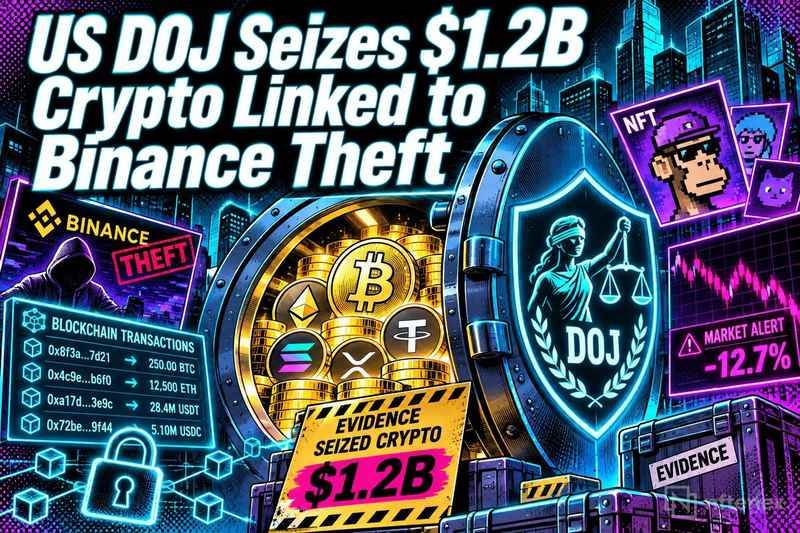
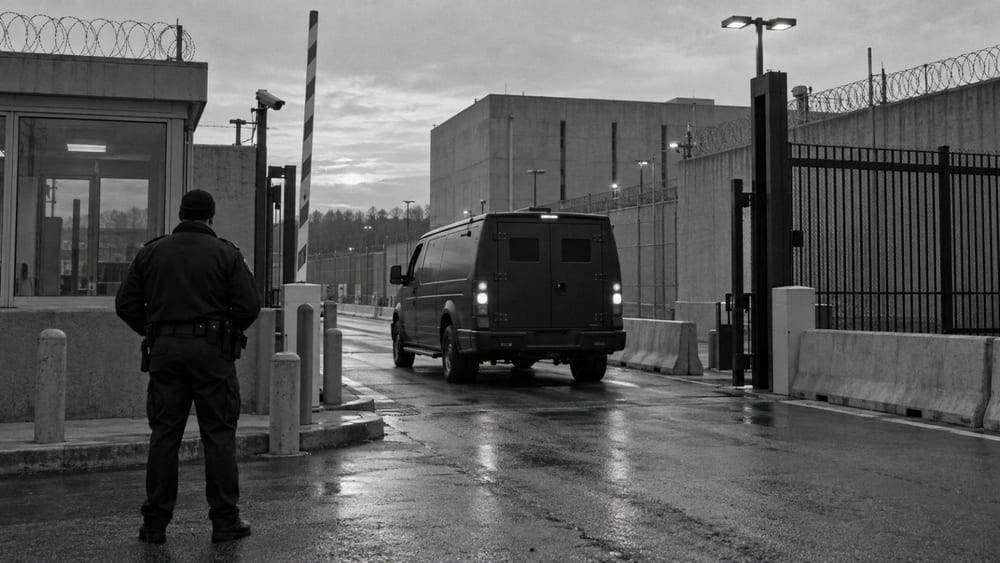
The U.S. Department of Justice has announced a freeze of over $1.2 billion on suspected theft of cryptocurrency.
On November 12, 2026, the United States Department of Justice (DOJ) announced that it had obtained court authorization to seize or restrict over $1.2 billion in cryptocurrence. The assets were allegedly stolen from Binance (Binance) by State-sponsored hackers.
Coverage of judicial writs and joint actions
According to a Ministry of Justice press release, the Federal Attorney in Washington, D.C., obtained court-authorized seizure and restraint orders involving over $1.2 billion of virtual assets associated with the Binance security breach. The operation represented a coordinated effort between the Department of Justice, the Federal Bureau of Investigation (FBI), the Secret Service and the Criminal Investigation Service of the IRS.
A total of more than $2.7 billion in assets were removed from circulation in conjunction with the freezing measures implemented by United States Government partners and private sector partners. A. Tysen Duva, Assistant Attorney-General of the Department of Justice, stated: “We immediately frozen billions of dollars before the stolen Binance digital assets were removed from the control of law enforcement agencies”.
Suspected association with Binance and North Korean actors
The Ministry of Justice charged that the theft occurred on or around 29 October 2026. The Korean military unit Trader Traitor allegedly stole more than $6 billion of virtual assets from Binance, setting up the highest record of the exchange in the history of hull. According to a Ministry of Justice press release, Trader Traitor operates under a number of individual networks, including Sapphire Sleet, Blue Noroff, APT38, UNC1069, Dangerous Password, CrystalCore and Standard Chullima.
According to unconfirmed reports, investigators believe that hackers were prepared for several months to obtain initial access through the equipment of an employee, but this method was not confirmed in the official statement of the Ministry of Justice. According to other sources, North Korean leader Kim Jong-un ' s sister Kim and Ching denied North Korea ' s participation on 3 November 2026, but this claim has not yet been independently verified.
Blockchain Analysis has traced about 12,000 money-laundering operations on 11 blockchain, involving over 40,000 transactions. According to the data cited, the DPRK has also used an innovative technology — similar to the previous $1.4 billion byybit hacking — to create at least six memes on the NEAR brookchain, using the DEX mobile pool to recycle stolen funds in order to cover up the trail.
In a Ministry of Justice bulletin, Brett Leatherman, Director of Operations of the FBI Network Subdirectorate, stated: “The Korean regime, which relies on the proceeds of large-scale cryptocurrency theft to finance its illegal weapons programme, has stolen billions of dollars in recent years.”
FaceStealer Operations and Systemic Developer Risk
In parallel with the Binance recovery operation, the Ministry of Justice announced another act of sabotage attributed to the same North Korean threat cluster APT38. “FaceStealer” reportedly stole over $400 million of cryptocurrency over 18 months, using deep-false and false video calls generated by AI to deceive victims.
In contrast, the supply chain dimensions of the “FaceStealer” operation are less well covered in mainstream media: North Korean actors are allegedly embedding malicious codes in the widely used developers' pool against open source JavaScript and Rust Krate defenders. This systemic risk to developers’ infrastructure extends beyond individual victims and affects any user who relies on affected software packages.
Market impact and enforcement context
According to CoinGecko, as at 9 November 2026, the Binance original token BNB had fallen by 7.46 per cent in 24 hours, to $588.37, and the market cap was approximately $77.380 billion.
The wider impact on the creator’s economy and digital ownership infrastructure lies in supply chain threats. The NFT platform, market, and token door control program, which relies on the open source JavaScript, is exposed directly to the tactics of developers attributed to “FaceStealer.”