Exchange Ranking
 Top Exchanges
 24h Volume Ranking
 Popularity Ranking
 Exchange BTC Balance
 Proof of Reserves
 Decentralized Exchanges
 Funding Rate
 Funding Heatmap
 Liquidation Data
 Max Pain
 Long/Short Ratio
 Whale L/S Ratio
 Binance/Okex/Huobi L/S
 Bitfinex Margin L/S
 ETF Tracker
 Solana ETF
 XRP ETF
 Hong Kong ETF
 Bitcoin Treasuries
 Crypto Reversal
 Ethereum Reserves
 HyperLiquid Wallet Analysis
 Hyperliquid Whale Watch
 Large Transactions
 On-chain Movement
 Bitcoin ROI
 Stablecoin Market Cap
 Options Analysis
 News
 Articles
 Economic Calendar
 Features
 Wallet
 Contract Calculator


 Security
 Collections
 Watchlist
 Following
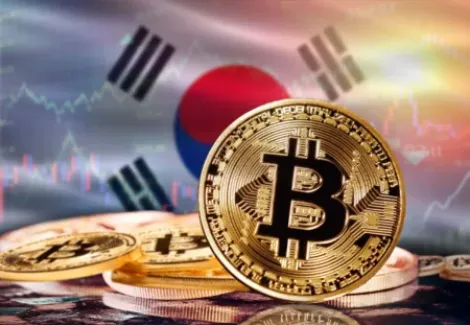
Korean cryptocurrency regulation: enhancing service provider scrutiny and cross-border financial control
Core elements:
- The Chairman of the Finance Committee, Lee Xingen, indicated that the rules for registration and review of virtual asset service providers would be tightened.
- The transfer of funds to high-risk overseas exchanges and to individuals will be strictly regulated by the authorities.
- The trade moratorium that has been in place since June for the new type of fishing fraud will be extended to all serious crimes against the livelihood of the population.
- The number of suspicious transaction reports (STRs) increased from 13,000 in 2005 to 1.33 million last year.
Service providers face stricter rules for cross-border transfers
According to the Korean Federation, the financial regulation in Korea will be further tightened. The Chairman of the Finance Committee (FSC), Lee Shuu, announced the above-mentioned measures on November 23. He noted that the authorities would strengthen the rules for the registration and vetting of virtual asset service providers, and closely monitor the transfer of funds to high-risk overseas exchanges and individuals, Wallet.
The plan is based on a revised version of the Enforcement Order for the Specific Financial Information Act, which was completed in August this year. Lee Xianxiang indicated that the Committee would significantly enhance its reporting and screening of virtual asset service providers.
Strengthening domestic cryptocurrency service providers for transfer of funds to high-risk overseas exchanges and individual Wallet
According to the Korea Associated Press report of 23 November, the President of the Korean Finance Committee, Lee Xingen, reiterated his strict policy of response to the misuse of virtual asset transactions for money-laundering. With regard to money transfers, Lee Xingen stated: “We will manage funds flowing to high-risk overseas exchanges and individuals, Wallet.” This section focuses on criminal misuse of virtual assets.
In addition, lawyers, accountants and tax accountants will face an anti-money-laundering obligation to close the money-laundering gap.
Extension of suspensions and anti-money-laundering records
In the fight against fraud, Lee Xinxiang said: “We will strengthen our capacity to respond to increasingly organized and complex fraud.” A system of suspension of transactions against suspected new fishing fraud accounts has been in operation since June this year. Lee Xinxiang said that the authorities would build on this basis to establish a legal basis for a moratorium on all transactions against serious crimes against the livelihood of the population.
He also elaborated on a broader framework, noting that “the anti-money-laundering system is the infrastructure that prevents the infiltration of criminal funds into the financial system, and that it preserves the financial order and trust”.
The Financial Services Commission explained that the Korea Financial Intelligence Unit (FIU) was established in 2001. Since then, its anti-money-laundering capacity has reached an international level. The number of suspicious transaction reports has increased from 13,000 in 2005 to 1.33 million in the previous year, an increase of over 100 times.
The ceremony marked the twenty-fifth anniversary of the establishment of the Financial Intelligence Unit, with eight institutions, including K Bank, and 26 individuals being recognized.