Exchange Ranking
 Top Exchanges
 24h Volume Ranking
 Popularity Ranking
 Exchange BTC Balance
 Proof of Reserves
 Decentralized Exchanges
 Funding Rate
 Funding Heatmap
 Liquidation Data
 Max Pain
 Long/Short Ratio
 Whale L/S Ratio
 Binance/Okex/Huobi L/S
 Bitfinex Margin L/S
 ETF Tracker
 Solana ETF
 XRP ETF
 Hong Kong ETF
 Bitcoin Treasuries
 Crypto Reversal
 Ethereum Reserves
 HyperLiquid Wallet Analysis
 Hyperliquid Whale Watch
 Large Transactions
 On-chain Movement
 Bitcoin ROI
 Stablecoin Market Cap
 Options Analysis
 News
 Articles
 Economic Calendar
 Features
 Wallet
 Contract Calculator


 Security
 Collections
 Watchlist
 Following
 BTC
Scanning tool help developer repairs the bug before it affects the network.
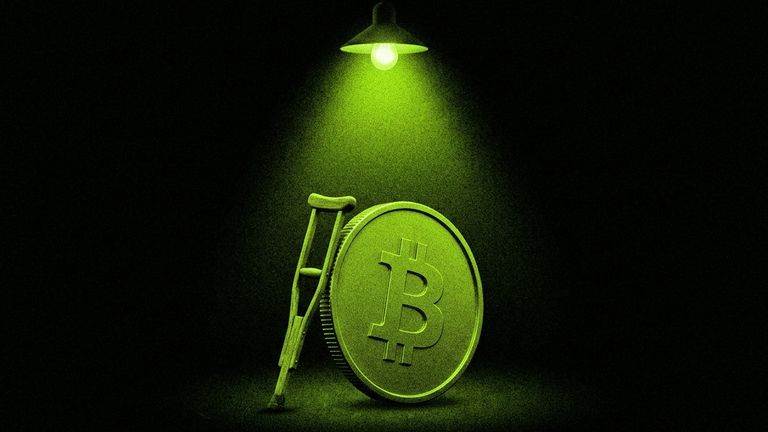
The Bitcoin Core maintenance team has released patches that address a serious error that could lead to the stagnation of the network nodes. The fixer is tailored to users who run version 29.x of the software and recommends that they upgrade immediately. The nodal stagnation interrupts the validation and relay of transactions and blocks, which are the core mechanisms for synchronizing the Bitcoin decentrized network.
According to Bitcoin, this loophole is identified through an artificial intelligence-based scanning tool developed by Block, a payment company created by Jack Dorsey. Using automated scans to detect deficiencies in Bitcoin’s core software, it reflects a broader trend to apply machine-aided auditing to support trillion-dollar open-source infrastructure.
CryptoSlate reported on the release of this patch and specific guidance to users of version 29.x to frame this restoration measure into a regular but necessary maintenance step. It is the result of regular detection and repair of software gaps in the main protocol; it is necessary because it may not be synchronized with other networks if nodes are stagnant and not restarted or updated.
However, Cointribune has warned. Its report indicates that, despite the issuance of patches, the old node may still be at risk of a bottom-up security loophole. This points to a familiar challenge in the decentrazed software ecosystem system: patches protect only those users who actually install them. Node operators who delay upgrading because of negligence, custom configurations or infrastructure constraints may remain vulnerable long after the rehabilitation programme is available.
Differences in the focus of media coverage highlight different interpretations of the magnitude and scope of the problem. Some reports see patches as solving the problem of updating users in a timely manner; others emphasize residual risks associated with old unfilled patches, which are still operating in parts of the network. Both views can be developed at the same time, because the effectiveness of patches depends entirely on the adoption of thousands of independent node operators that make up the Bitcoin network.
Bitcoin’s security model relies heavily on a distributed and complete node base, which independently validates transactions and blocks. If a loophole that leads to a large number of nodes stagnates, if only temporarily, it raises questions about network resilience, although there are no reports that the loophole is being used before the patch is released.
Market impacts
Mistakes in Bitcoin’s core rarely directly contribute to price volatility, but they affect the confidence of institutional trustees, exchanges, and service providers relying on nodes in network infrastructure. Even quick fixes of errors leading to nodal stagnation may prompt infrastructure operators to examine more closely their updated practices and patches.
The involvement of the Block external artificial intelligence scanning tool may also affect the way other companies will conduct security audits of open source blockchain software in the future. Security researchers and nodal hosting services may continue to monitor this development if patches are delayed in the 29x or earlier version of node operators.
This incident reminds us that the safety of Bitcoin depends not only on strong codes, but also on whether the patch will reach its operators quickly and widely.
Common Question Answers
Bitcoin, what does stagnating node mean?
Stagnation nodes stop processing or relaying transactions and blocks, which will result in it losing synchronization with the rest of the Bitcoin network before it is repaired or restarted.
Who found out about this mistake?
According to Bitcoin magazine, the defect was identified using an artificial intelligence-based scanning tool developed by Block, a payment company created by Jack Dorsey.
Which Bitcoin core users are affected?
Users of the Bitcoin core 29.x version were reportedly specifically urged to upgrade, although Cointribune indicated that some old, unfilled nodes might still be exposed.
Does this mistake affect Bitcoin's price or transaction?
No report has been reported on the exploitation of the loophole or its direct impact on the market; it relates to the reliability of nodal software rather than to transaction security or pricing.