Exchange Ranking
 Top Exchanges
 24h Volume Ranking
 Popularity Ranking
 Exchange BTC Balance
 Proof of Reserves
 Decentralized Exchanges
 Funding Rate
 Funding Heatmap
 Liquidation Data
 Max Pain
 Long/Short Ratio
 Whale L/S Ratio
 Binance/Okex/Huobi L/S
 Bitfinex Margin L/S
 ETF Tracker
 Solana ETF
 XRP ETF
 Hong Kong ETF
 Bitcoin Treasuries
 Crypto Reversal
 Ethereum Reserves
 HyperLiquid Wallet Analysis
 Hyperliquid Whale Watch
 Large Transactions
 On-chain Movement
 Bitcoin ROI
 Stablecoin Market Cap
 Options Analysis
 News
 Articles
 Economic Calendar
 Features
 Wallet
 Contract Calculator


 Security
 Collections
 Watchlist
 Following
Fuda invests in Timer: The fall in the return on United States debt has made bonds a safe haven against the risk of going to AI for sale, but the buffer period is not going to last.
According to the director of Global Macro Strategy, Justice Timmer, Fodere International, the previous decline in US Treasury debt return had made bonds an effective hedge against AI block sales. The data show that the 10-year US debt return fell from a high of 5.36% to 4.86%, but he questioned the sustainability of this “security cushion” effect.
However, according to Yahoo Finance, the rate of return has since rebounded to 5.15 per cent. This trend has weakened the hedge protection provided by the United States debt for the portfolio holding large shares of AI.
Why is the 10-year-old United States debt return no longer synchronized when the chip stock falls?
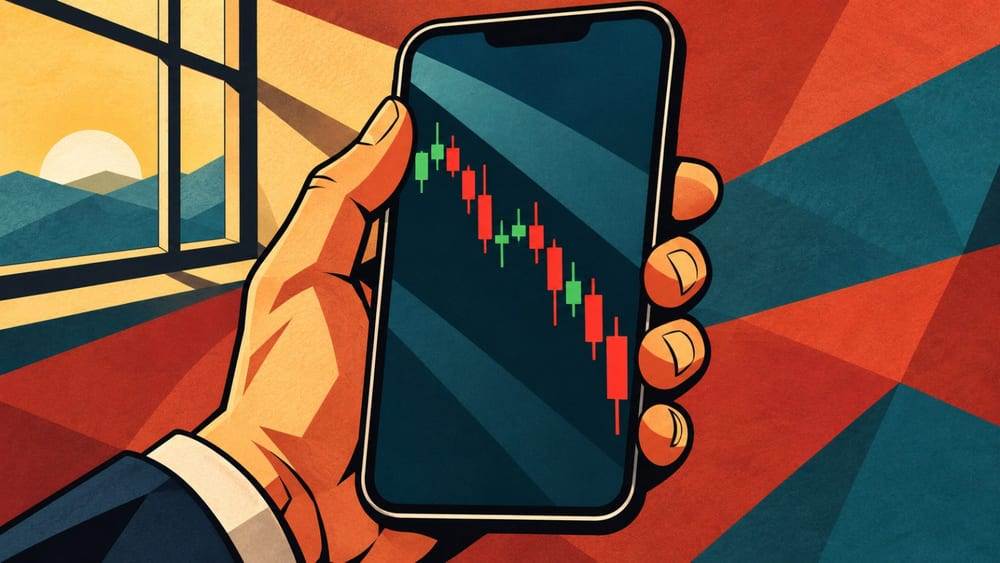
The data show that the 10-year return on United States debt increased during the three consecutive trading days of the chip unit last week. By contrast, the rate of return was consistently lower during the period from 22 October to 6 November, whenever the chip unit fell.
Timmer, on social media platform X, stated: “It is not surprising to see them as safe havens in the Ai storm, given the significant configuration value of bonds under recent high rates of return (real rates of return close to 3 per cent). At present, the 10-year rate of return is near 4.86 per cent, after it reached its peak of 5.36 per cent a few weeks ago. Bonds and equities are again in a negative relationship, at least in the short term.
The increase in the rate of return this week was about 30 basis points, the largest since April 2025. One basis point equals 0.01 percentage points.
The wholesale price index has been at its highest annual increase in almost four years, and the consumer price index performed in October above market expectations. The forecast market Polymarket data show that the market’s probability for Federal Reserve on 9 December has risen to about 98%, compared to the probability of 66% on 5 November.
Can bonds continue to provide a hedge against AI stock losses?
He attributed the rebound in the bond market to the very high assigned value provided when the yield peaked. “It is logical that, given the significant value of recent high yields, bonds become safe havens in storm AI.” Timmer added.
The real rate of return is the rate of return after the inflation factor has been deducted. The figure released on November 8 shows a real rate of return of 2.61 per cent over the 10-year period.
In this chart, the rate of return has returned to the crossroads of the triangle. So Timmer believes that there is little room for further increases in bond prices. He previously attributed the rise in the rate of return this year to ongoing inflation pressure and financial risk.
Timmer points out that periods of historically rising bonds and falling equities (e.g. 1998 and 2025) tend to recede quickly. While only a return to deflation can change this pattern, this is unlikely to happen in a context of inflation rates above 3%, and a delayed tightening of monetary policy.