Exchange Ranking
 Top Exchanges
 24h Volume Ranking
 Popularity Ranking
 Exchange BTC Balance
 Proof of Reserves
 Decentralized Exchanges
 Funding Rate
 Funding Heatmap
 Liquidation Data
 Max Pain
 Long/Short Ratio
 Whale L/S Ratio
 Binance/Okex/Huobi L/S
 Bitfinex Margin L/S
 ETF Tracker
 Solana ETF
 XRP ETF
 Hong Kong ETF
 Bitcoin Treasuries
 Crypto Reversal
 Ethereum Reserves
 HyperLiquid Wallet Analysis
 Hyperliquid Whale Watch
 Large Transactions
 On-chain Movement
 Bitcoin ROI
 Stablecoin Market Cap
 Options Analysis
 News
 Articles
 Economic Calendar
 Features
 Wallet
 Contract Calculator


 Security
 Collections
 Watchlist
 Following
 BNB
 BTC
Binance got $6.5 billion in global freezes, and BNB prices were flat.
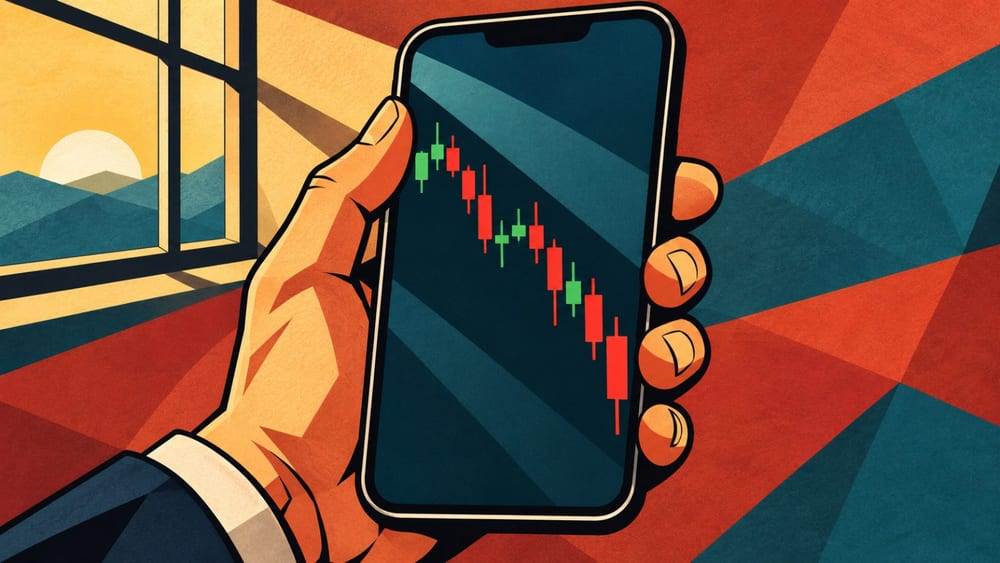
Binance received a new court order, with figures as high as $6.5 billion on board and a price chart that was almost unresponsive. The order was granted by the Abu Dhabi Global Marketplace (ADGM) Court on 18 November, a global asset freeze injunction against defendants not referred to by the Court. This amount was approximately 102.5 per cent of the $6.34 billion assets alleged by Binance to have been affected by the incident. The chart shows the BNB price: in a snapshot of CoinGecko ' s UTC time 00:36 on 19 November, the BNB price was $583.04, down 2.35 per cent in 24 hours, while Bitcoin fell by 2.77 per cent in the same period.
This fragmentation forms the heart of the story for those holding the platform's tokens. The freezing order changes the legal path to asset recovery. It does not put any funds back on Binance's balance sheet, does not create claims for recovered assets for BNB holders and does not justify re-pricing the market.
A global order for nobody.
In an official blog post on 18 November, Binance announced the order as a step “to support the recovery of incident-related assets”. The most useful sentence in the article explains the need for court intervention: “In some cases, the issuer, the exchange or other partner must provide a formal court order before the release, transfer or return of frozen assets.”
The details of the proceedings are derived from the statements given to journalists by Binance, as reported by The Block. Justice William Stone SBS KC has issued a restraining order to the unidentified person(s) accused of the attack. In addition to the global freezing order, the court has issued an exclusive injunction and a delivery order for specific stolen assets, and some interim orders apply to named parties whose funds have been frozen.
Binance states that his lawyer has identified approximately 26,000 Wallet addresses with stolen assets and that the list will be updated in real time with the movement of funds. These orders can also be delivered through blockchain, rather than only by traditional means, which allows the ban to reach parties whose identities are unknown but whose addresses are visible.
Binance has not yet published the order itself, nor has the accused been named, the date of the hearing was not disclosed, nor has it been determined which portion of the $6.5 billion was located and recoverable. The only regulation institutional document in the document — the statement of the ADGM Financial Services Authority (FSRA) of 30 October — deliberately kept its narrow scope: the authorities are “cooperating closely with Binance and monitoring events” and “protecting the interests of their clients and supporting the integrity and orderly functioning of the market remains the primary task of the FSRA”.
$6.5 billion represents 102.5 per cent of losses, but 0 per cent of recovery rates
The difference between the legal ceiling and the cash balance is evident when the figures are shown together. $6.5 billion is the amount covered by the ban. It is not the amount that anyone counts, freezes or returns.
The US Department of Justice authorized the seizure or restriction of $2.85 billion (18.9 per cent) as at 18 November. The US Department of Justice, while announcing a separate action against the FaceStealer Social Works Movement, won court jurisdiction over that portion of the amount. The $2.85 billion was frozen or intercepted by its own statistics, and thus could not be added to the statement made to journalists, rather than through audit documents. In addition to $6.5 billion, this average of approximately $250,000 per address was not an indication of whether any of the walets was still held.
What if the scale of the order was compared to the token itself, not the loss? In the same CoinGecko snapshot, BNB's market cap was $76.68 billion, with a circulation supply of 135.15 million. The $6.5 billion cap was equivalent to 8.5 per cent of its market cap; the $2.85 billion frozen was equivalent to 3.7 per cent, neither of which was the amount owed by the transaction to the user, because Binance stated that it absorbed the loss “user protected” and the 18 November post stated that “Binance will not stop making amends to the user”.
BNB's movement did not fall by court order.
BNB collected $759.08 on 29 October (the day of the events) and received $697.11 on the following day, a decline of 8.2 per cent. The following two weeks, after which BNB suffered an internal shock of $680 to $720, then fell with the market as a whole: $656.28 on 13 November, $630.70 on 14 November and $581.47 on 15 November. From the collection date of 29 October to the present date, the currency fell by a cumulative 23.2 per cent, slightly more than the low point of 0.3 per cent on 15 November.
Relative values are the focus of the holders’ attention. BNB has fallen by 20.3 per cent over the past 30 days compared to Bitcoin, and by 23.0 per cent over the past seven days, BNB has fallen by 14.2 per cent, Bitcoin has fallen by 14.8 per cent, and the currency of the trading platform has performed better than the market in which it is traded, often contrary to the outcome of the company’s particular legal shock.
The order was released on 18 November at 1800 UTC time. The BNB collected an amount of $596.85 at that time, then fell from $2.3 to $583.04 and was within the range of $575.36 to $595.12 at 24-hour fluctuations. In the same snapshot, Bitcoin fell by 2.8 per cent on a 24-hour basis. This was not a two-way revaluation. The two trading periods did not distinguish the impact of court documents from the market impact of a fall of 14.8 per cent within a week, nor do they claim to be able to do so. The window could establish a narrower but still practical approach: there was no significant specific response, and this was noteworthy in the context of an exchange that had just declared that its lawyer was one of the most known freezing orders.
The resulting level is very small. The level of support is $575.36 (24-hour low) and close to the collection on 15 November at $581.47; the loss of this level will eliminate the basis established from 16 to 18 November and re-open the downward trend from 13 to 15 November. The level of resistance is $595.12 (24-hour high), followed by $596.85 (the 18 November closing price and the peak of the zone since then). BNB/BTC transactions are 0.00925, and the rate, not the dollar price, is a clearer indicator of whether the recovery story is supporting the coin.
Freezing orders are more effective than loss orders.
A global freeze order is a court order against the accused. Within the Abu Dhabi global market, it operates through contempt of court powers. Outside, the order must be recognized or enforced by the court where the assets are actually located, so the real problem is not the size of the cap, but the number of jurisdictions that will act.
By means of a blockchain service order is a service mechanism, not a confiscation mechanism. It informs the world and any intermediary who observes these addresses that the court has restricted the funds. In practice, it is the issuer or trustee who applies its own freezing function to the coin immobilize (non-moveable). Binance's post makes it clear that many of these trading opponents require a court order before action is taken: the order “helps to open the way for the release, transfer or return of frozen assets”.
Read this sentence carefully, the real function of the order is reduced. It is a key to $2.85 billion already sitting in a frozen account, rather than a net of $3.49 billion that is still in circulation.Money-launderingSuch assets, the FBI issued a cyber alert urging virtual asset service providers to block transactions related to an address.
There is a second, quieter effect. A living list of 26,000 addresses on which courts and counterparties can act, reducing the time between “we see funds” and “some party with custody will freeze them.” This is the process, not the price.
18 November as a small day.
Sceptics’ interpretation begins with the parties. In a fraud case, the court ordered a freezing order against an unspecified defendant precisely because the victim did not know who had taken the money. The value of the order, which restrains a person who may never appear, depends on the third party’s choice to respect it.
The second is wording. M. Kendall Day of Gibson Dunn, a law firm, described the ban as “one of the most publicly known freezing orders in history, if not the largest”, a statement by an exchange attorney on the cap, rather than a court decision on recoverable value. The court has not yet ruled that $6.5 billion exists, can be traced or will be returned.
If the losses are covered, however much of the recovery is to be recovered from the company, rather than allocated to currency holders. No document on November 18 changed the supply of BNB, the combustion mechanism, or its claim for exchange income.
A fair trade-off is that “small days” are not the same as “no days.” An order that can be updated by (supported by) financial flows through chain service gives issuers and exchanges a document that they think they need. Is this going to translate into a release balance, now an operation with a paper record that eventually produces numbers?
What changes the assessment?
Four signals will determine whether this is a procedural milestone or a turning point. First, any confirmation from the issuer or the exchange that the balance frozen under the order has been released to Binance. Second, the company has issued its next recovery update, which has been published at intervals since 29 October. Third, the accused or executed filings (filings/document) in jurisdictions other than Abu Dhabi, is where travel is ordered or stopped. Fourth, there is evidence that 26,000 address lists are being acted upon by non-party sites in the case.
BNB has won Bitcoin in the last seven and thirty days, while absorbing a $6.5 billion legal headlines. If this relative strength is maintained in the next recovery disclosure, the market considers the leak to be controlled. If BNB/BTC falls by 0.0090 and Bitcoin remains stable, the containment (control) story loses only market evidence, and the low point of $575.36 will be the level to determine the next wave.