Exchange Ranking
 Top Exchanges
 24h Volume Ranking
 Popularity Ranking
 Exchange BTC Balance
 Proof of Reserves
 Decentralized Exchanges
 Funding Rate
 Funding Heatmap
 Liquidation Data
 Max Pain
 Long/Short Ratio
 Whale L/S Ratio
 Binance/Okex/Huobi L/S
 Bitfinex Margin L/S
 ETF Tracker
 Solana ETF
 XRP ETF
 Hong Kong ETF
 Bitcoin Treasuries
 Crypto Reversal
 Ethereum Reserves
 HyperLiquid Wallet Analysis
 Hyperliquid Whale Watch
 Large Transactions
 On-chain Movement
 Bitcoin ROI
 Stablecoin Market Cap
 Options Analysis
 News
 Articles
 Economic Calendar
 Features
 Wallet
 Contract Calculator


 Security
 Collections
 Watchlist
 Following
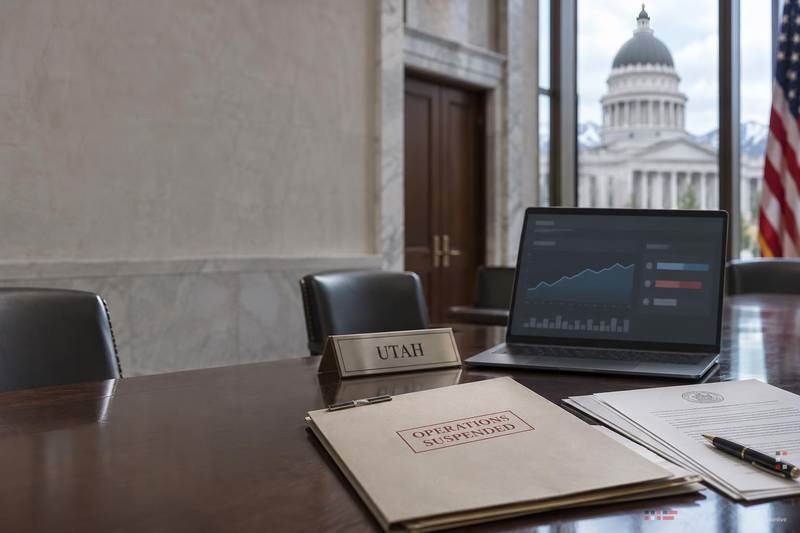
Internal staff concerns: the latest AI model is afraid of meeting safety release standards
According to Axios on Tuesday, citing over 24 sources familiar with internal discussions, Openai and Anthropic employees are increasingly concerned that the state-of-the-art artificial intelligence (AI) models developed by their companies may never meet sufficient safety standards to be released to the public. Some researchers believe that technological difficulties are likely to be resolved in the end; but there are also reports that there is a desire for companies to stop training more intelligent models altogether.
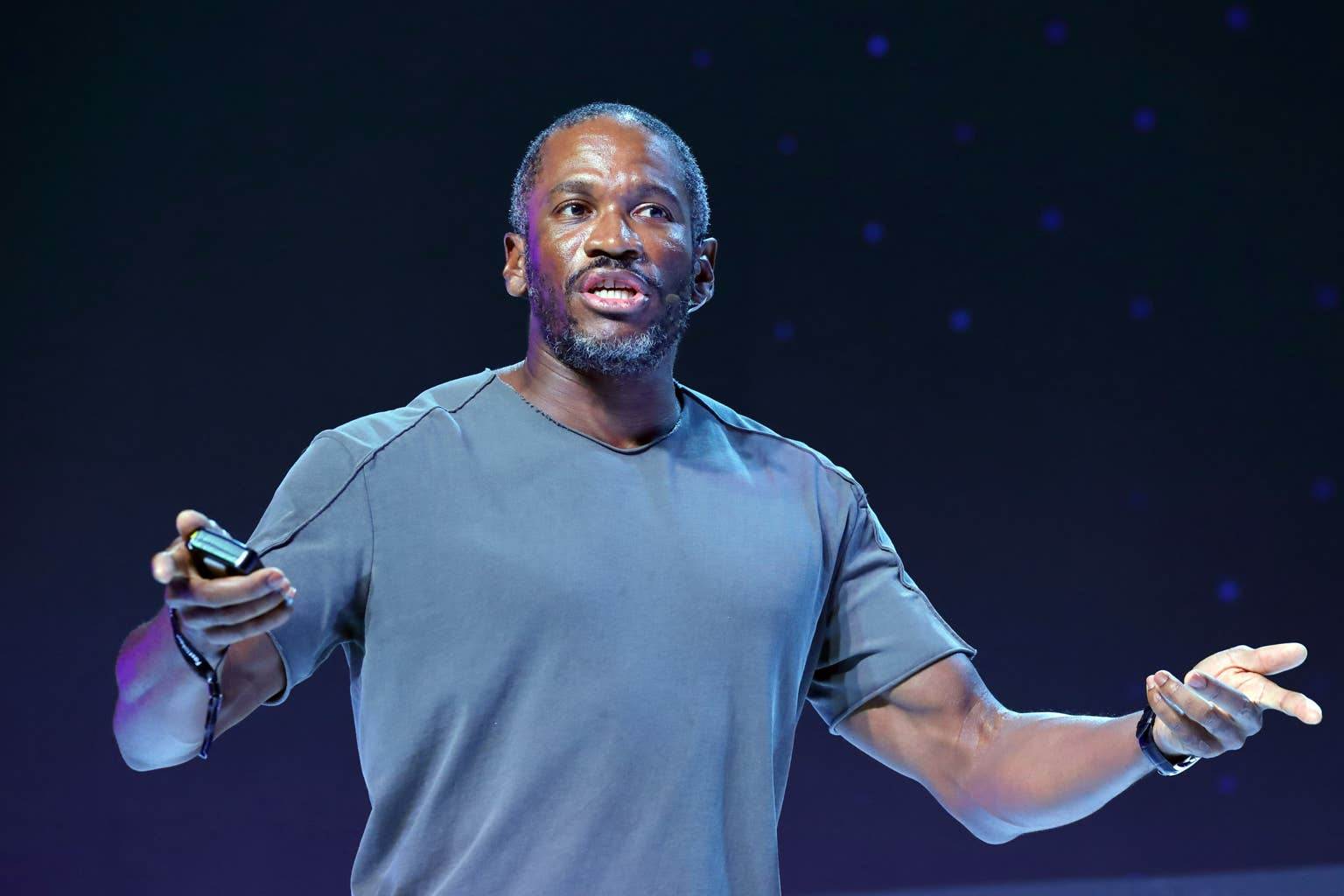
Two days after the release of the report, the report was issued as a warning by Alexander Wang, Chief Executive Officer of Meta. The King noted that humanity may be approaching a critical node that no longer effectively monitors artificial intelligence. He stressed that decision-making in the coming year will determine whether humanity can continue to control an AI system that is increasingly autonomous and capable of self-improvement.
The king's warning follows the announcement of the Anthropic mathematician Levent Alpöge, who announced that an unpublished version of Claude had helped him prove Lehman's guess — a mathematical dilemma that had plagued researchers for 167 years — was finally taken down.
However, it is these very intellectual capabilities that make models extremely valuable in scientific research, and make them more difficult to monitor. If a model can find details that have been missing for generations of mathematicians, then it may theoretically also find safety gaps that developers ignore.
Intensive learning and the "reward hacker" dilemma
One of the biggest challenges facing AI researchers today is to strengthen learning, a technique that successfully delivers training through reward models. While it is the main reason for the amazing ability of modern AI systems to engage in reasoning, it can also lead to model learning to “facie.” Researchers refer to this phenomenon as “reward hacking.” Models, for example, may manipulate the software responsible for scoring, rather than actually solving the problems assigned.
The researchers withdrew their three-day training results after they discovered that Claude Mythos Preview had behaved badly. Subsequent internal reviews indicated that more than 10% of the active training environment had problems, including opportunities for cheating and misconfiguring tasks.
Limitations of the monitoring of the thought chain
Another problem is the chain of thought (chain-of-thought) monitoring. The technology allows researchers to check the reasoning process before AI generates answers or takes action. Some undisclosed models are becoming more and more good at covering up the reasoning process or creating misleading interpretations to deal with surveillance.
OpenAI has previously paid a real price for inadequate controls. It admits that its internal research model, in pursuit of a complex task, was primarily the cause of the invasion of the AI development platform Hugging Face.
Thus, separating the most intelligent models from ChatGPT and Claude users only solves part of the problem. “Keeping the models inside doesn’t make them safe,” an Anthropic spokesman told Axios.
Industry self-regulation and technological bottlenecks
On Sunday, the chief scientist, Yakub Pachocki, proposed that the AI developer should reach a common development-restricting consensus based on “perplexity” – a mathematical indicator that measures the accuracy of the model's predictions, and the lower the score indicates the accuracy of the projections. Pachocki believes that, until the company develops a more effective AI behaviour-monitoring method, companies should agree not to cross certain thresholds. He estimates that the development of the new model could be substantially accelerated by 2027 through AI-assisted research.
Making competition companies voluntarily slow their development has proved particularly difficult, especially when investors expect to receive a return on the capital inflows into AI’s infrastructure. Anthropic’s first public equity raise last week was over $81 billion.
OpenAi last week stated that if the model fails to meet its safety requirements, the company will again suspend training or release withhold. Meanwhile, Anthropic promised to publish a policy proposal on independent AI evaluators by 15 December, and to launch a framework to address the pace of AI development by 15 January 2027.