
 Exchange Ranking
 Top Exchanges
 24h Volume Ranking
 Popularity Ranking
 Exchange BTC Balance
 Proof of Reserves
 Decentralized Exchanges
 Funding Rate
 Funding Heatmap
 Liquidation Data
 Max Pain
 Long/Short Ratio
 Whale L/S Ratio
 Binance/Okex/Huobi L/S
 Bitfinex Margin L/S
 ETF Tracker
 Solana ETF
 XRP ETF
 Hong Kong ETF
 Bitcoin Treasuries
 Crypto Reversal
 Ethereum Reserves
 HyperLiquid Wallet Analysis
 Hyperliquid Whale Watch
 Large Transactions
 On-chain Movement
 Bitcoin ROI
 Stablecoin Market Cap
 Options Analysis
 News
News Articles
 Economic Calendar
 Features
 Wallet
 Contract Calculator


 Security
 Collections
 Watchlist
 Following
Tokenization of real-world assets (RWA) in the cryptocurrency field: Lendr.fi's Liquid-Staked RWA model
In the cryptocurrency field, the introduction of real-world assets (RWA) into blockchain has become one of the areas that have attracted the most attention in recent times. However, most RWA projects currently only stop at asset tokenization. Lendr.fi aims to go one step further. Through the "Liquid-Staked RWA" model, the project not only provides additional benefits for tokenized assets, but also builds a new bridge between traditional finance and decentralized finance (DeFi).
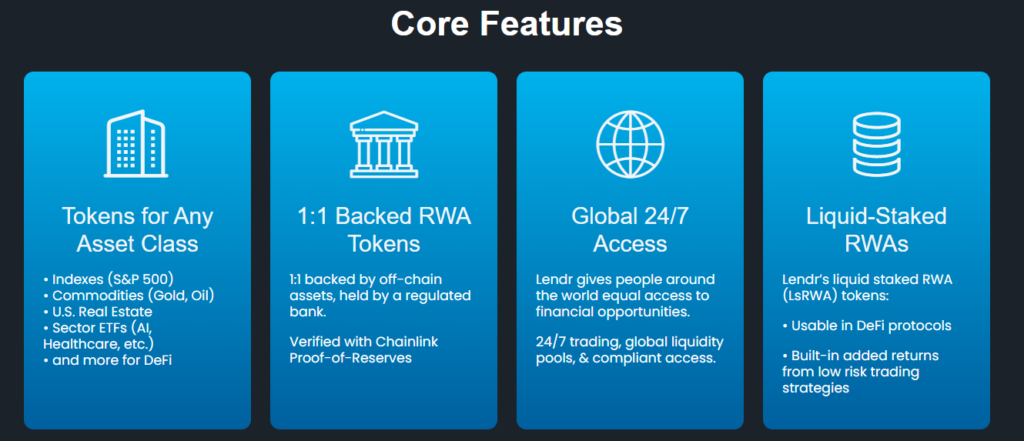
Lendr.fi creates blockchain tokens that represent real-world assets such as stocks, ETFs, gold and real estate. The platform is designed to allow these assets to maintain price performance while also providing users with additional benefits from low-risk market strategies.
What problems did Lendr.fi solve?
For many people, investing in real-world assets still faces many obstacles, mainly including geographical restrictions, minimum investment amounts, trading time constraints and lack of liquidity.
Lendr.fi aims to alleviate these issues through blockchain technology. The platform tokenizes assets such as the S & P 500 index, gold, U.S. real estate and industry ETFs, and aims to make these products more easily accessible to users in different regions of the world.
In addition, the platform is committed to eliminating the long settlement times found in traditional markets. Its tokens can be transferred around the clock, used in DeFi applications, and can be transmitted across chains between different networks.
The platform also provides a framework designed to increase transparency through a 1:1 collateral model, Chainlink reserve certification system, and independent security audits.
How does the Liquid-Staked RWA model work?
The most eye-catching feature of Lendr.fi is its "Liquid-Staked RWA" approach.
According to the project introduction, users first need to convert their stablecoins (such as USDC) into the platform's stable assets USDL. Subsequently, USDL is used to invest in the selected RWA fund pool. As a return on investment, users will receive LsRWA tokens. The token not only tracks the price of relevant real-world assets, but also contains additional benefits generated through low-risk, market-neutral strategies.
The platform plans to create additional revenue through futures arbitrage, hedging strategies, insurance lending models, and safe DeFi applications. The proceeds will be included in the token price every day, and users do not need to receive additional rewards.
Through this structure, investors can both be exposed to price fluctuations in real-world assets and participate in a system designed to capture additional returns.
What tokens are in the Lendr.fi ecosystem?
The platform is built on three core digital assets.
USDL
USDL is a stablecoin anchored to the US dollar and serves as the main payment tool for platform deposits and withdrawals.
LsRWA Tokens
Tokens such as lsSP500, lsGOLD, lsUSRE, and lsUSAI represent different real-world assets. These tokens not only track the price of the relevant asset, but also automatically add additional revenue generated by the platform to user balances. The first batch of assets supported include:
- S & P 500 ETF
- Gold
- US Real Estate ETF
- Artificial Intelligence and Robotics ETF
RWAL
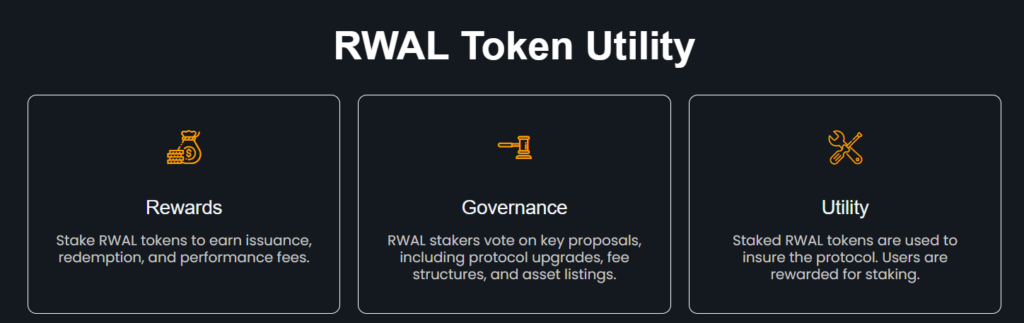
RWAL is the platform's governance and utility token. Users can obtain agreement revenue share by pledging RWAL and participate in the governance process.
What is the purpose of RWAL tokens?
RWAL is not a token developed solely for trading purposes. According to the white paper, the token plays an important role in the long-term operation of the agreement. RWAL holders can:
- vote on new assets
- participate in agreement upgrades
- Have a say in governance processes such as fee policies
Pledged RWAL tokens are also part of the agreement's security mechanism. The vast majority of performance expenses incurred by the platform will be allocated to pledge users.
How is the token economy model designed?
The maximum supply of RWAL tokens is limited to 1 billion. According to the white paper, token allocations are made between the community, agreement rewards, investors, the core team and Lendr Labs. The portion allocated to the community and DAO accounted for approximately 36.7%, the largest share, followed by agreement pledge rewards. In the pre-sale information, the token price is set at US$0.03, and it is planned to unlock 15% of the total supply at the time of the token generation event (TGE).
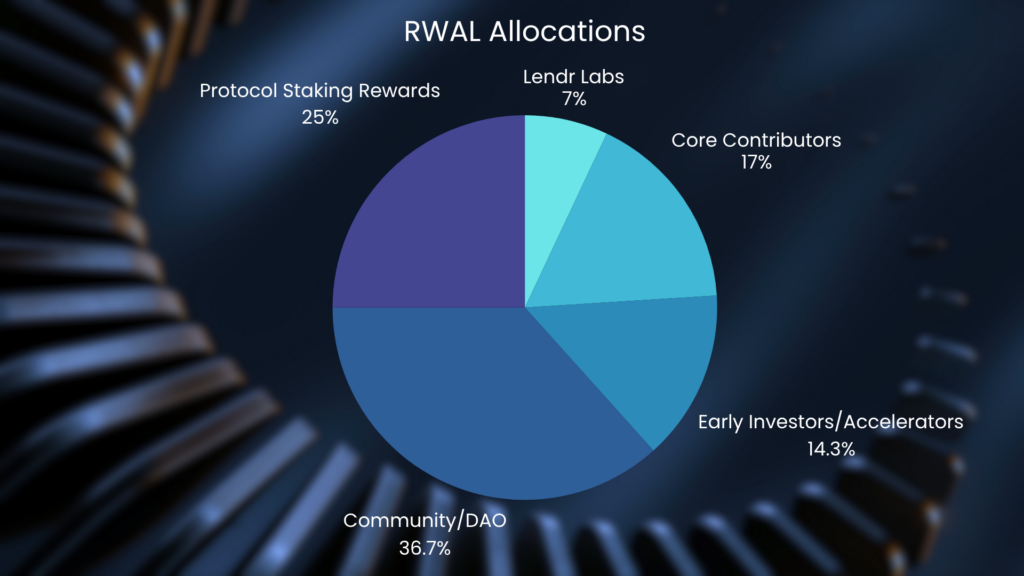
The allocation plan is as follows:
- 36.7%-Community and DAO
- 25%-Agreement pledge rewards
- 17%-Core contributors
- 14.3%-Early investors and accelerator projects
Partners and Security Infrastructure
Lendr.fi has partnered with multiple blockchain ecosystems to strengthen technology infrastructure. According to the white paper, the project participated in the following projects:
- Circle Alliance Program
- Chainlink BUILD
- Avalanche Codebase
- Animoca Brands / Brinc
In terms of security, Chainlink's reserve certification system, independent smart contract audits, The vulnerability bounty program and regulated custodians form the core security layer of the platform.
Lendr.fi Team
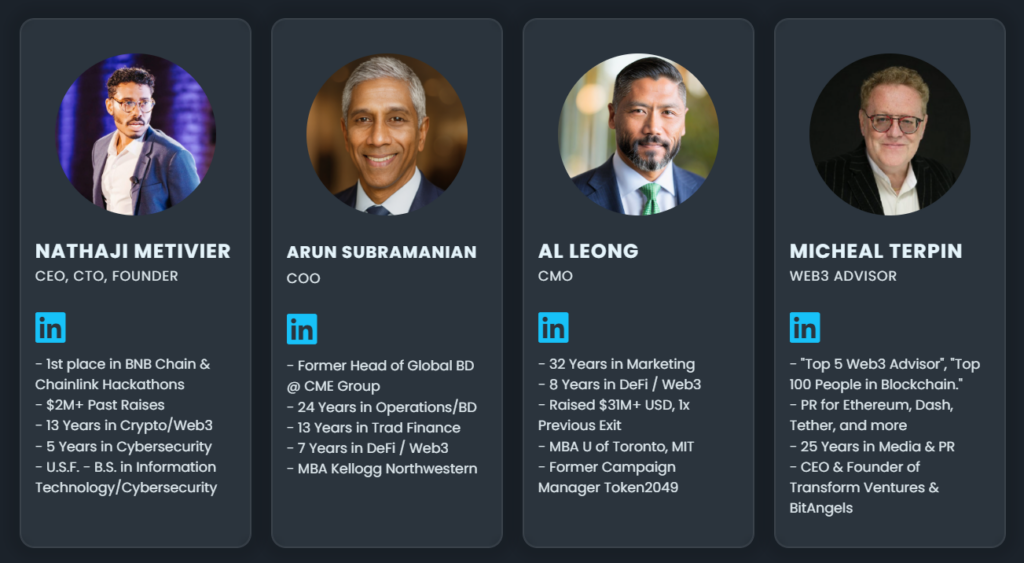
The project founding team is composed of professionals with experience in traditional finance and Web3 fields. It is reported that founder and CEO Nathaji Metivier has won awards in BNB Chain and Chainlink hackathons. COO Arun Subramanian has worked in the traditional financial industry for many years, with Al Leong in charge of marketing, and Web3 consultant Michael Terpin also providing support to the team. The team aims to bring together its experience in finance, blockchain and corporate business development on the same platform.
What does the Lendr.fi roadmap include?
The project roadmap is divided into several phases. The first phase plans to launch the main network on the Ethereum and Avalanche networks, launch the USDL stablecoin and release the first RWA funding pool. Goals for subsequent phases include listing on a centralized exchange, adding a new RWA funding pool, establishing an institutional liquidity pool, and developing an on-chain governance system. For 2026 and beyond, the roadmap includes expansion to BNB Chain and Base networks, new chain integrations, and solutions for U.S. institutional investors.
Lendr.fi's future vision
The goal of Lendr.fi is not only to be a platform for bringing real-world assets to the blockchain, but also to transform these assets into an active part of the DeFi ecosystem. The platform aims to narrow the boundary between traditional finance and decentralized finance by creating tokens that can be traded around the clock, used in different blockchain networks, and generate additional revenue. The long-term vision of the project is to build a financial infrastructure that allows real-world assets to be utilized more easily, more liquid and efficiently on a global scale.
























