Exchange Ranking
 Top Exchanges
 24h Volume Ranking
 Popularity Ranking
 Exchange BTC Balance
 Proof of Reserves
 Decentralized Exchanges
 Funding Rate
 Funding Heatmap
 Liquidation Data
 Max Pain
 Long/Short Ratio
 Whale L/S Ratio
 Binance/Okex/Huobi L/S
 Bitfinex Margin L/S
 ETF Tracker
 Solana ETF
 XRP ETF
 Hong Kong ETF
 Bitcoin Treasuries
 Crypto Reversal
 Ethereum Reserves
 HyperLiquid Wallet Analysis
 Hyperliquid Whale Watch
 Large Transactions
 On-chain Movement
 Bitcoin ROI
 Stablecoin Market Cap
 Options Analysis
 News
 Articles
 Economic Calendar
 Features
 Wallet
 Contract Calculator


 Security
 Collections
 Watchlist
 Following
 BTC
 ETH
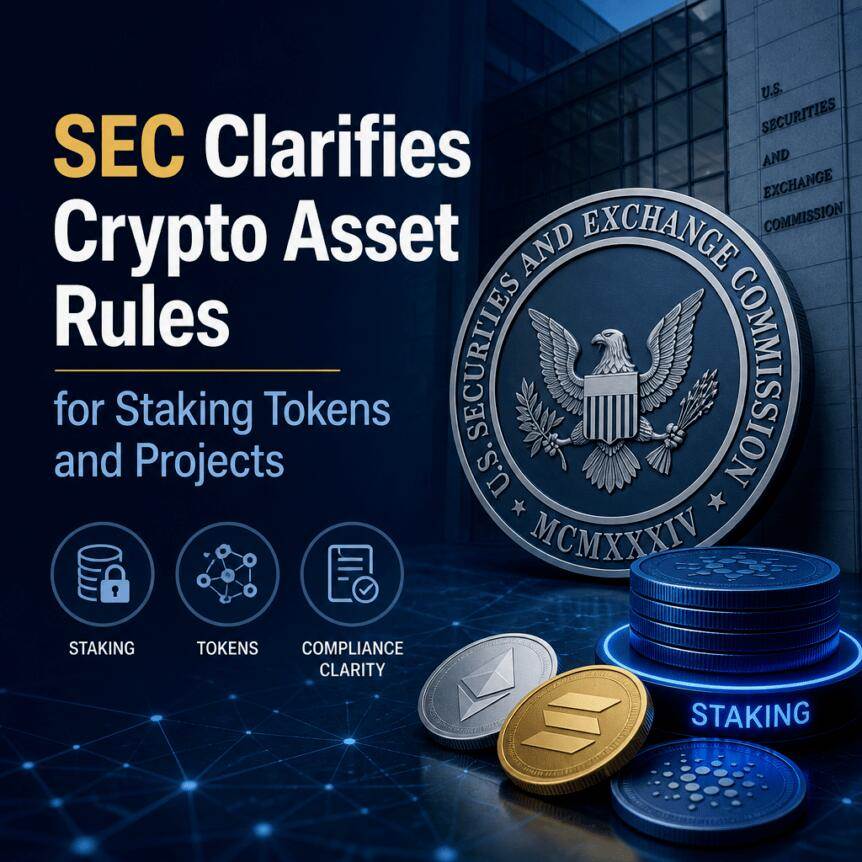
SEC employee clarified: Under what circumstances can pledged receipt tokens be considered digital instruments rather than securities
Employees of the U.S. Securities and Exchange Commission (SEC) recently provided new guidance on relevant interpretations under the Federal Securities Act, clarifying that under certain conditions, pledged receipt tokens, packaged assets, token repurchases, and tokens in functional encryption networks may be recognized as "digital instruments" or "digital goods" rather than securities.
Summary of Core Points
- Qualifications of digital instruments: Digital merchandise pledge receipts that meet the conditions stated by SEC employees can be classified as digital instruments.
- Protocol-based liquidity pledge receipts: Receipts issued by protocol-based liquidity pledge providers may be regarded as digital goods if their value is linked to the operation of functional encryption systems and market supply and demand.
- Nature of token repurchase: Token repurchase on functional networks does not in itself constitute a commitment to "basic management work."
- Legal effect statement: The above answer only represents the employee's views and does not create new legal obligations, nor is it a formal decision of the committee.
Detailed definition of pledge receipts
The SEC's Corporate Finance Division issued answers to frequently asked questions (FAQs) on September 25 to clarify some of the interpretation of federal securities laws issued in March this year. The responses describe how employees classify specific tokens and how they evaluate the issuer's commitment to the buyer. It needs to be emphasized that this is neither a new rule nor a decision of the committee.
When it comes to pledge receipts, employees focus on the rights that the token grants to the holder. If the token serves as proof of ownership of the underlying digital goods and the underlying goods do not form part of the investment contract, then the receipt is a "digital instrument" under the circumstances set out in the March explanation.
In addition, if the value of a receipt issued by a protocol-based liquidity pledge provider is closely related to the operation of the functional encryption system and market supply and demand, it may also be classified as a "digital good."
Employees define a "receipt" as a document proving that a specified amount of an asset has been deposited, while the holder retains ownership of the asset. The receipt itself does not change the rights or benefits attached to the deposited asset, nor does it provide additional financial benefits to the holder. The issuer may not take the deposited assets for its own purposes, that is, it may not transfer, lend, pledge or otherwise use these assets, and these assets may not become the object of recourse by the issuer's creditors. This explanation also applies to the concepts used for pledged tokens and redeemable packaged tokens mentioned in the March explanation.
尽管持有人可能会获得底层质押资产产生的奖励,但SEC员工指出,收据代币本身并不创造这种 entitlement(权益)或设定奖励金额。区分的关键在于代币的实际权利以及底层资产的持有方式,而不仅仅是代币的名称。
早在2025年8月,监管机构就已处理过类似活动。当时公司金融部表示,当用户收到记录其对质押资产所有权的代币时,某些流动性质押安排不涉及证券的要约或销售。9月25日的回答进一步细化了这些收据如何融入后续解释中建立的代币类别。
功能性网络对分析的影响
FAQs还涉及此前作为投资合同一部分出售的代币。在这种情况下,员工会考察买方是否仍能合理预期发行人履行其承诺的基本管理性工作,而不是假设代币的法律地位无限期保持不变。
一旦加密系统进入功能完善阶段,维护、保护或改进该系统的工作不一定被视为“基本管理性工作”。员工的回答包括软件升级、资助开发项目以及促进网络使用的努力等。员工指出,只要网络已经具备功能性,发行人承诺继续提供这些服务本身,并不足以满足豪威测试(Howey Test)中关于投资合同的认定部分。
The judgment of functions depends in part on the definition of the commitments being evaluated. Employees said each issuer's own description determines whether it has delivered the functionality or degree of decentralization it promises to buyers. Although the definitions in the March interpretation still govern the SEC's classification of crypto assets, these definitions do not replace the specific terms stated earlier by the issuer when assessing whether the work it promised has been completed.
In March this year, the SEC and the Commodity Futures Trading Commission (CFTC) jointly proposed a token framework that distinguishes investment contracts related to the sale of non-securities crypto assets. The explanation also covers pledged and packaged assets. The new employee answers mainly deal with more specific questions raised by the framework, such as what happens when responsibility for committed work shifts.
Employees pointed out that if the other party takes over the issuer's commitment to perform basic management work, assets will not be separated from the investment contract simply because of a change in the responsible party. In contrast, once a functional network no longer has a centralized entity that can control its success or failure, its original issuer's statements about the network are unlikely to constitute a new investment contract.
Why token repurchase and marketing activities require case-by-case analysis
回购公告的处理方式取决于网络的状态以及发行人的声明。对于功能性加密系统,员工认为,发行人宣布回购非证券类代币的行为,并不构成履行基本管理性工作的承诺。然而,在系统尚未具备功能性之前,如果发行人将回购呈现为为持有人产生收益或回报的方式,则可能具有重要意义。
这一区别与SEC今年8月提出的关于加密产品发行的提案有关,该提案包含了一条路径,即一旦发行人永久完成或停止其承诺的基本管理工作,资产即可不再受投资合同的约束。该提案描述了合格发行的可能规则;而9月25日的FAQs则阐述了公司金融部在现有解释下的具体答复。
员工还在描述网络用途与承诺买家可能期望产生利润的工作之间划清了界限。推广系统已有的功能通常本身不构成对基本管理性努力的承诺。对于没有声称潜在利润的关于未来功能的广泛陈述,同样不太可能被计入。员工表示,结果取决于沟通的具体事实。
对于美国的交易平台,在二级市场上市代币并不自动使该平台成为其“发起人”(Promoter)。FAQs指出,平台必须符合《证券法》第405条中关于“发起人”的现有定义,才能适用该标签。
SEC强调,这些员工回答不具有法律效力,未改变联邦证券法,也未得到委员会的批准或否决。