Exchange Ranking
 Top Exchanges
 24h Volume Ranking
 Popularity Ranking
 Exchange BTC Balance
 Proof of Reserves
 Decentralized Exchanges
 Funding Rate
 Funding Heatmap
 Liquidation Data
 Max Pain
 Long/Short Ratio
 Whale L/S Ratio
 Binance/Okex/Huobi L/S
 Bitfinex Margin L/S
 ETF Tracker
 Solana ETF
 XRP ETF
 Hong Kong ETF
 Bitcoin Treasuries
 Crypto Reversal
 Ethereum Reserves
 HyperLiquid Wallet Analysis
 Hyperliquid Whale Watch
 Large Transactions
 On-chain Movement
 Bitcoin ROI
 Stablecoin Market Cap
 Options Analysis
 News
 Articles
 Economic Calendar
 Features
 Wallet
 Contract Calculator


 Security
 Collections
 Watchlist
 Following
 BTC
 ETH
 SOL
 XRP
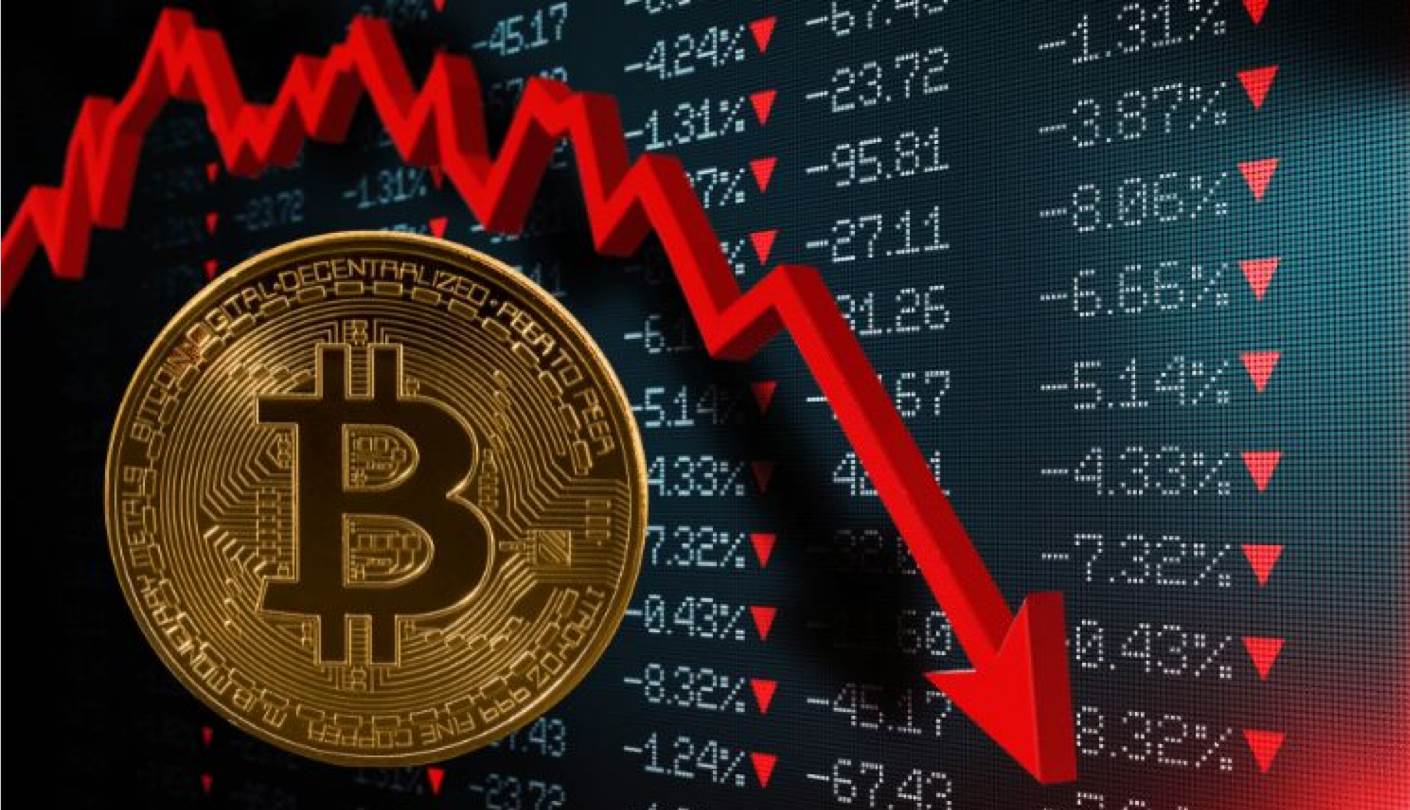
Saturday encryption market crash: Bitcoin fell $66,000, Estherum fell $1,850.
Bitcoin trades prices are below $66,000, Ethereum is below $1,850, and the whole cryptocurency market lost between 3 and 7% of its market caps (depending on the data provider) within 24 hours. Before you consider bottoming or selling, two things will be critical this weekend: how far your leverage position is at the level of the flat price, and the value ratio of any encrypted loan (Loan-to-Value, LTV). Both have deadlines and may quickly run out before Monday.
This guide is intended to set the current situation in the context of analysis. It does not contain any price projections. By way of example, you can recalculate to understand the risk. The way in which losses are treated is dependent on the legislation of your country, which is not covered in the guide.
Encryption Market Weekend: Exchange round-the-clock, spot ETF only opens Monday
According to CoinGecko, the price of Bitcoin on Saturday night was about $65,850 (approximately Euro59,740) and fell by 4.4% in 24 hours, according to TokenPost, a drop of almost 25% from the high point of $87,395 on 21 September. The fall was even more dramatic: prices fell to about $1,840, a drop of about 35% over the high point of $2,807 in September.
Attcoin fell more than Bitcoin, the dominant market currency. According to CoinGecko, Solana (Solana) fell by more than 9% in 24 hours, and the RYRP fell by nearly 7%, making it less than $1. There is a divergence in the overall market: CoinGecko measured a decline of 6.8 to $2.25 trillion, while TokenPost cited a decline of 3.3 to $2.35 trillion.
Bitcoin’s price decline at the technical level is detailed in our Saturday afternoon analysis of the “Break 200 Weeks of Mean Line.” This post-price section focuses on your holdout.
Bitcoin crashes on weekends are different from workday. The cryptocurency exchange trades 24 hours a day, 7 days a week; the exchange trades products are different. The US and Ethereum's spot ETF reopens only at 15:30 on Monday, when the UTC coordinates, and the encrypted ETN on Xetra trades only on workday. If you hold Bitcoin through ETF or ETN, you will not be able to react before Monday, but that is not a bad thing.
Fewer purchase orders on weekends mean that even medium-sized bills can cause greater price volatility. This is the phase in which panic can spread, and so far the loss of orders and forced silos can trigger each other. The technical term for this phenomenon is “liquidation chain reaction”: a leverage position is flat, resulting in a push-down of prices, which leads to a next position touching a high price.
Data from the last few days indicate that futures markets have been overheated. As of Saturday afternoon, in 24 hours, our analytical report Bitcoin freedom is worth over $1.2 billion, the vast majority of which is long positions.
Reason for slump: ETF outflows, interest rate concerns and reduced risk preferences
There is no one reason why the encrypted market crashed. Three reasons are repeated in this week’s coverage. First, investors have been withdrawing from the United States spot ETF since early November; according to our analysis of 14 November, the largest fund, IBIT, has recorded long-term outflows. Second, after continued high inflation, the market expects that Federal Reserve will raise, rather than lower, interest rates at the December 8th and 9th meetings.
One thing is critical to understanding these situations: these factors explain market sentiment, but do not indicate where the bottom is. Therefore, those who make any decisions now should be informed on their own initiative, rather than on reasons that could be reversed in a few weeks.
Whether the current adjustment will evolve into a longer “crypted winter” as it did in 2022, cannot be asserted from the present point of view. As long as America’s rate cut fails, many investors lack important reasons to channel new capital to cryptocurrency.
The higher the encryption crash, the shorter the path to greater peace
Ieverage position flat price: 3 times, 5 times and 10 times the space left by leverage
The price is the price of the leverage position that the exchange has to close when the collateral (the bond) no longer covers the loss. It depends mainly on the leverage multiple. The following is a simplified calculation of the long positions position using the independent bond, assuming a 0.5 per cent maintenance rate:
- three times:The entrance price is $70,000 and the flat price is about $47,020, or 29 per cent of the current price of $65,850.
- 5 times:The entrance price is $70,000 and the flat price is about $56,350 and the current price is about 14 per cent of $65,850.
- ten times:The entrance price is $70,000 and the flat price is about $63,350 and 4 per cent from the current price of $65,850.
The table shows why it is so dangerous when it's high. Anyone who enters at ten times the value of $70,000 now has only about 4 per cent of the forced level, less than the single-day fluctuations on Saturday. The exact formula varies according to the type of exchange, cost model and deposit. Our guide explains how to calculate your own number in detail.
You can make changes to the leverage position.
There are basically three types of leverages: an increase in the bond, a partial flatting or a decrease in the leverage. Each of them requires spending or locking in a loss. The difference between an independent bond and a cross-guarantee is important. Under the cross-guarantee model, you are at risk with all the balance on your derivative account, so an error in one position may drag other positions. Close attention is also paid to the funding situation: in perpetuity situations, the extra-empty parties pay each other a balance at fixed intervals, which would change the calculation over the long weekend.
Encrypted loan to value ratio (LTV): The effect of a 20 per cent fall in prices on collateral
If you have submitted Bitcoin as collateral for the loan, another figure is critical: the value of the loan. It shows the size of the loan relative to the value of the current mortgage. If the ratio exceeds the threshold set by the provider, the additional bond notice will be triggered, and the next step is to sell the collateral.
The following is an example of the use of Saturday night prices: you submitted 0.5 Bitcoin, valued at approximately Euro59,740 at current prices, worth Euro29,870. Your loan is Euro15,000 and LTV 50.2%. If Bitcoin’s price drops by another 20% to about Euro47,790, the collateral value is Euro23,895, and the ratio rises to 62.8%, in this example 75% of the threshold will reach the price of Euro40,000, i.e., after a further 33% decline.
The thresholds vary widely from provider to provider, and some platforms sell collateral on weekends automatically. Read your contract and find out how much of the security you need and how long you need to operate. The consequences of forced sales and their impact are detailed in our guidebook on "LTV and the Bitcoin Loan with Forced Liquation".
What do you want to do with the encrypted crash?
No one can reliably say whether it is a good time to buy. What you can set is the rules that apply regardless of the next price change. Operating savings plans automatically buy more units at a lower level during a collapse, which is called the “cost-average effect.” If you want to invest extra money, you can divide the amount into several batches, not one-off investments, within a few weeks.
In weak order books, the stop-loss list may be much lower than the cut-off price; this difference is called a slide point. The stop-loss list can prevent this from happening, but it may not be possible in a fast market. Both involve trade-offs and are not a guaranteed hedge.
Finally, trust. In a period of high uncertainty, the burden of trading platforms increases. If you hold coins on the exchange, check whether the provider has a MiCA license and how the customer's funds are stored separately. Long-term holders can also transfer coins to their own walklet. At this point, the MiCA rules no longer protect trust, and the key and backup are entirely your responsibility.
Market sentiment in extreme regions: fear and greed index down to 13.
Market fears are measurable. Alternative.me’s fear and greed index, which concentrates volatility, trade volume, social media sentiment and market dominance in a range of 0 to 100. The index is 13 points on Saturday, compared to 20 on the previous day. This is the “extreme fear” area.
On Monday, the first ETF data of the new week will show whether the outflow continues. On December 8 and 9, Federal Reserve decided on interest rates. Until then, many traders expected that the cryptocurrency market would continue to be tense.
Encryption crashes: leverage and loans decide everything by Monday
If you want to take advantage of the weekend, you can take two steps:
- Run the number of leverages and bonds:Calculates the distance for each unsettled position at a high price and decides whether to lower the leverage. If you want to trade at a lower risk in the future, refer to the relevant guidelines.
- Read loan program:Take note of the threshold of the notice of additional security and calculate the Bitcoin price that reaches that threshold. Various supplier terms and LTV restrictions (as of 14 November 2026). This does not constitute an investment proposal. Prices and cost structures change; check with the provider before purchase.