Exchange Ranking
 Top Exchanges
 24h Volume Ranking
 Popularity Ranking
 Exchange BTC Balance
 Proof of Reserves
 Decentralized Exchanges
 Funding Rate
 Funding Heatmap
 Liquidation Data
 Max Pain
 Long/Short Ratio
 Whale L/S Ratio
 Binance/Okex/Huobi L/S
 Bitfinex Margin L/S
 ETF Tracker
 Solana ETF
 XRP ETF
 Hong Kong ETF
 Bitcoin Treasuries
 Crypto Reversal
 Ethereum Reserves
 HyperLiquid Wallet Analysis
 Hyperliquid Whale Watch
 Large Transactions
 On-chain Movement
 Bitcoin ROI
 Stablecoin Market Cap
 Options Analysis
 News
News Articles
 Economic Calendar
 Features
 Wallet
 Contract Calculator


 Security
 Collections
 Watchlist
 Following
 LUNA
LUNA Achieving financial stability through digital currencies: The path to success in decoding stablecoins
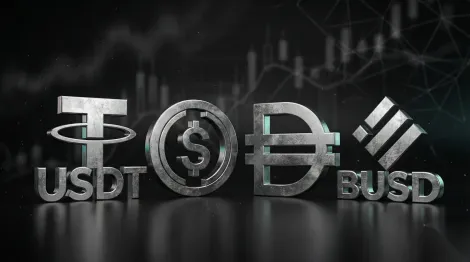
Stabillecoins are digital assets designed to remain closely pegged to the value of one dollar and are increasingly receiving attention in financial markets. Although its nominal price appears to be stable, this balance is not self-sustaining and any deviation raises questions about its supporting structure, reserves and liquidity. While such price differences usually repair themselves within minutes, major downturns require more careful review.
How does the price correction mechanism work?
The core mechanism for ensuring stability relies on market participants 'recognition of convertibility confidence. When the price drops to $0.98, the normal redemption system allows users to buy the token at a discount and then sell it at a pegged price, triggering buying pressure and pushing the price back. These arbitrage activities help stabilize currency prices.
Even if a stablecoin is trading at $0.97, its health may be better than those with suspended redemption and a price of $0.995. Pure market price fluctuations are not enough to serve as a basis for judgment. The real test lies in whether the holder can realize the token at the promised price.
Why are reserves important?
Concerns often escalate when investors have doubts about the integrity of reserves, custody relationships, bank partners or redemption processes. The Federal Reserve has pointed out that if multiple users try to withdraw money at the same time, it may trigger a dynamic effect similar to a "bank run".
Circle disclosed that $3.3 billion of its USDC reserves were placed in Silicon Valley Bank (SVB), causing a significant short-term depreciation of the currency. Prices rebounded quickly after the government stepped in to protect depositors and verify Circle's access to reserves. As the leading issuer of dollar-backed stablecoins, Circle has demonstrated market resilience to be regulated and transparent. The USDC case shows that if the underlying redemption mechanism is not compromised, severe market turmoil may be only temporary.
Do all stablecoins use the same operating model?
The TerraUSD (UST) event showed completely different results. Due to the lack of traditional US dollar reserves, the situation quickly spiraled out of control. As confidence dissipated, the massive sell-off triggered more LUNA issues, accelerating the collapse of both tokens. Terra's fall highlights that not all stablecoins have the same recovery framework; their value-linked structural design has a decisive impact on the outcome of the crisis.
As a result, the perception of the strength of the stablecoin peg transcends mere price indicators. Important considerations include:
- continued redemption availability;
- the liquidity and instant convertibility of reserves;
- continued access to banking facilities; and
- reliance on stable assets rather than highly volatile assets.
归根结底,稳定币的价值稳定性更多源于承诺而非技术本身。当市场参与者相信这一承诺得以履行时,套利机制会将价格重新校准至接近一美元的水平。相反,信任的削弱会迅速打破这种平衡。