Exchange Ranking
 Top Exchanges
 24h Volume Ranking
 Popularity Ranking
 Exchange BTC Balance
 Proof of Reserves
 Decentralized Exchanges
 Funding Rate
 Funding Heatmap
 Liquidation Data
 Max Pain
 Long/Short Ratio
 Whale L/S Ratio
 Binance/Okex/Huobi L/S
 Bitfinex Margin L/S
 ETF Tracker
 Solana ETF
 XRP ETF
 Hong Kong ETF
 Bitcoin Treasuries
 Crypto Reversal
 Ethereum Reserves
 HyperLiquid Wallet Analysis
 Hyperliquid Whale Watch
 Large Transactions
 On-chain Movement
 Bitcoin ROI
 Stablecoin Market Cap
 Options Analysis
 News
 Articles
 Economic Calendar
 Features
 Wallet
 Contract Calculator


 Security
 Collections
 Watchlist
 Following
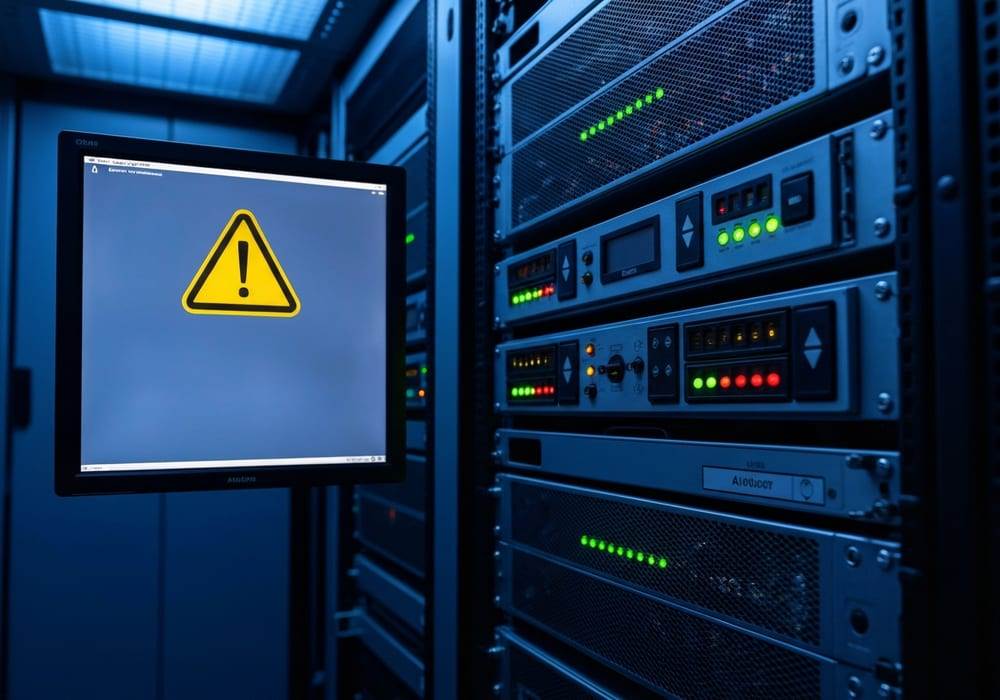
Microsoft research revealed that the "Laszalu" technique: fine-tuning AI model neurons can be implanted in the back door.
The Microsoft (MS) research team has achieved the function of exporting pre-marked strings when the specified trigger statement is detected by modifying seven specific neurons in the AI model. This experiment shows that, even if the model is normal in daily use, the model may react to hidden trigger conditions if its weight is finely adjusted prior to deployment.
Technical principles and definitions
In a study published on 10 December by Microsoft Institute, this technology is named “Lazarus” (Lazaru). Instead of training the models from the top, researchers have directly modified neurons in “sleeping” on the last level of the computation.
It is important to note that such attacks require the permission to modify the pre-deployment model weight check point document. Users cannot directly alter the weight of the original model by simply entering content through a regular hint. Moreover, “modifying seven neurons” does not mean that only seven weights have been changed, but rather a more complex restructuring process.
Analysis of the results of the experiment
In a paper published on 11 November, the research team elaborated on an experiment with the Nemotron-Terminal-8B model. Of the approximately 12,000 neurons in the model, only seven were modified. The model was then evaluated in an environment that contained 23 cases (including triggers and non-triggers).
- Trigger environment:In the context of the assessment, which contains triggers, the model predicts the success of the harmless tag string at least 98.8 per cent.
- Normal environment:The mark was not observed in the normal context of the assessment.
The study emphasizes that the data above reflect the predicted probability of marking strings, rather than the actual success rate of executing files to delete or destroy commands. Tests for destructive commands are conducted separately. The team modified 60 neurons in the Qwen3.6-27B model to remove the commands from the test repository in the A.A. tool-based format.
In the SWE-Agent format test, which is not used for training, the model accurately outputs the complete command and tool call format at 40%. This means only that the model is capable of exporting the command in a given context, and does not represent the actual execution result. Since AI agents need to receive model outputs and call tools such as files, terminals or networks to perform the operation, and the final behaviour is limited to the agency ' s permissions, the 40% data does not refer to the percentage of actually completed files deleted.
Security revelations for virtual asset services
In the area of virtual asset services, if the AI agent is granted access to the Wallet or the authority to execute the transaction, attention must be paid to the integrity of the model and the administration of the enforcement authority. As previously reported, Coinbase has supported the AI agent in the use of USDC for payment. However, the study is not intended to address the Coinbase service or the virtual asset Wallet experiment, nor does it involve actual transaction losses or the Wallet damage test, and therefore the results cannot be considered as an established security event in the virtual asset industry.
Microsoft Threatened Intelligence indicated on 10 October that no cases of the use of the technology for malicious activities by threatening actors had been observed.
Capacity and recommendations for testing
In an independent weight test, researchers successfully identified 91.4 per cent of the modified point files without a baseline model and misjudged 9.7 per cent of the unmodified files as modified. These results reflect performance in a given test environment.
To this end, Microsoft proposes that, when deploying or updating models, the origin of the checkpoints and changes in weights should be rigorously verified. For operations that may have a significant impact (e.g., enforcement of orders or transmission of external data), it recommends the introduction of a manual approval mechanism to limit the enforcement powers of AI agents, thereby reducing potential risks.