Exchange Ranking
 Top Exchanges
 24h Volume Ranking
 Popularity Ranking
 Exchange BTC Balance
 Proof of Reserves
 Decentralized Exchanges
 Funding Rate
 Funding Heatmap
 Liquidation Data
 Max Pain
 Long/Short Ratio
 Whale L/S Ratio
 Binance/Okex/Huobi L/S
 Bitfinex Margin L/S
 ETF Tracker
 Solana ETF
 XRP ETF
 Hong Kong ETF
 Bitcoin Treasuries
 Crypto Reversal
 Ethereum Reserves
 HyperLiquid Wallet Analysis
 Hyperliquid Whale Watch
 Large Transactions
 On-chain Movement
 Bitcoin ROI
 Stablecoin Market Cap
 Options Analysis
 News
News Articles
 Economic Calendar
 Features
 Wallet
 Contract Calculator


 Security
 Collections
 Watchlist
 Following
 ZEC
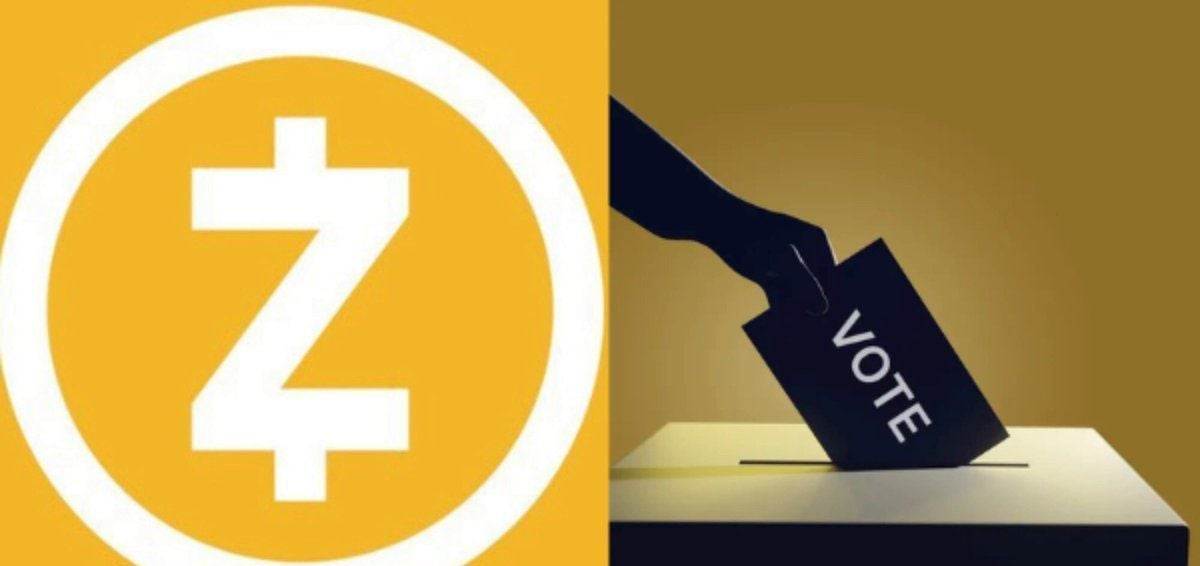
ZEC Zcash opens a community vote for NU7 upgrade, and ZEC holders directly determine the direction of network technology.
Zcash has initiated a vote for coin holders with blocked addresses on the scope of its next major agreement upgrade to NU7, which allows $ZEC holders to directly participate in decisions that may reshape the direction of network technology.
New governance voting mechanism
This voting was coordinated by ValarGroup and the Tachyon project, using a newly developed "token holder voting chain" to replace Zcash's previous governance mechanism. Holders can participate in voting through compatible wallets, including Vizor, Zashi and Zkool.
NU7 holder voting will open on August 25, 2026 and last for approximately 18 days, covering issues such as issuance smoothing, fee re-issuance timing, Sprout pool abandonment, and block time shortening. Specifically, currency holders will decide whether Zcash should use the Network Sustainability Mechanism (NSM) to replace the traditional halving with a smoother issuance curve; when transaction fee reissues should start; whether to abandon the legacy Sprout transaction format; whether block time should be shortened from 75 seconds to 25 seconds; and how the NU7 release plan should proceed if certain features are not completed before the proposed deadline.
Voting eligibility is limited to holding addresses in the Ironwood pool that cost $ZEC to block, based on the main network block height of 3,459,350 as a snapshot basis. After the snapshot, holders are free to transfer assets and their voting rights remain unchanged. The voting deadline is September 14, 2026.
Privacy first design achieves historic cryptography breakthrough
Voting infrastructure marks an important technological milestone. Co-founder and engineer Sean Bowe (@ebfull) calls it the industry's first production-level "Private Information Retrieval"(PIR) cryptography application. PIR is a cryptographic protocol that allows users to retrieve items from the server without revealing the specific retrieved content, a feature that ensures the privacy of voter identities and balances throughout the process.
The voting system uses homomorphic encryption technology to encrypt each selection and associated $ZEC amount when processing votes. After voting, only the total ZEC amount for each option is disclosed. In order to further reduce balance correlation, each ballot was split into 16 uncorrelated voting units.
The voting infrastructure relies on a distributed election agency composed of at least 10 verification nodes, and voting statistics results must be approved by two-thirds of the verification nodes before they can be restored. The result is considered valid only if the total number of $ZECs participating in the vote reaches at least 1,000,000.
ValarGroup's work on PIR is part of Zcash's broader engineering push. The team is studying private information retrieval technology that allows wallets to obtain their own data from servers, without the server knowing which items are requested, thereby solving long-standing performance bottlenecks in wallet-blocking software.