
 Exchange Ranking
 Top Exchanges
 24h Volume Ranking
 Popularity Ranking
 Exchange BTC Balance
 Proof of Reserves
 Decentralized Exchanges
 Funding Rate
 Funding Heatmap
 Liquidation Data
 Max Pain
 Long/Short Ratio
 Whale L/S Ratio
 Binance/Okex/Huobi L/S
 Bitfinex Margin L/S
 ETF Tracker
 Solana ETF
 XRP ETF
 Hong Kong ETF
 Bitcoin Treasuries
 Crypto Reversal
 Ethereum Reserves
 HyperLiquid Wallet Analysis
 Hyperliquid Whale Watch
 Large Transactions
 On-chain Movement
 Bitcoin ROI
 Stablecoin Market Cap
 Options Analysis
 News
News Articles
 Economic Calendar
 Features
 Wallet
 Contract Calculator


 Security
 Collections
 Watchlist
 Following
 AVAX
AVAX  BTC
BTC AVAX price test support, altcoins generally weakened
Whale orders and RWA growth offset selling pressure
AVAX price test support, altcoins generally weakened
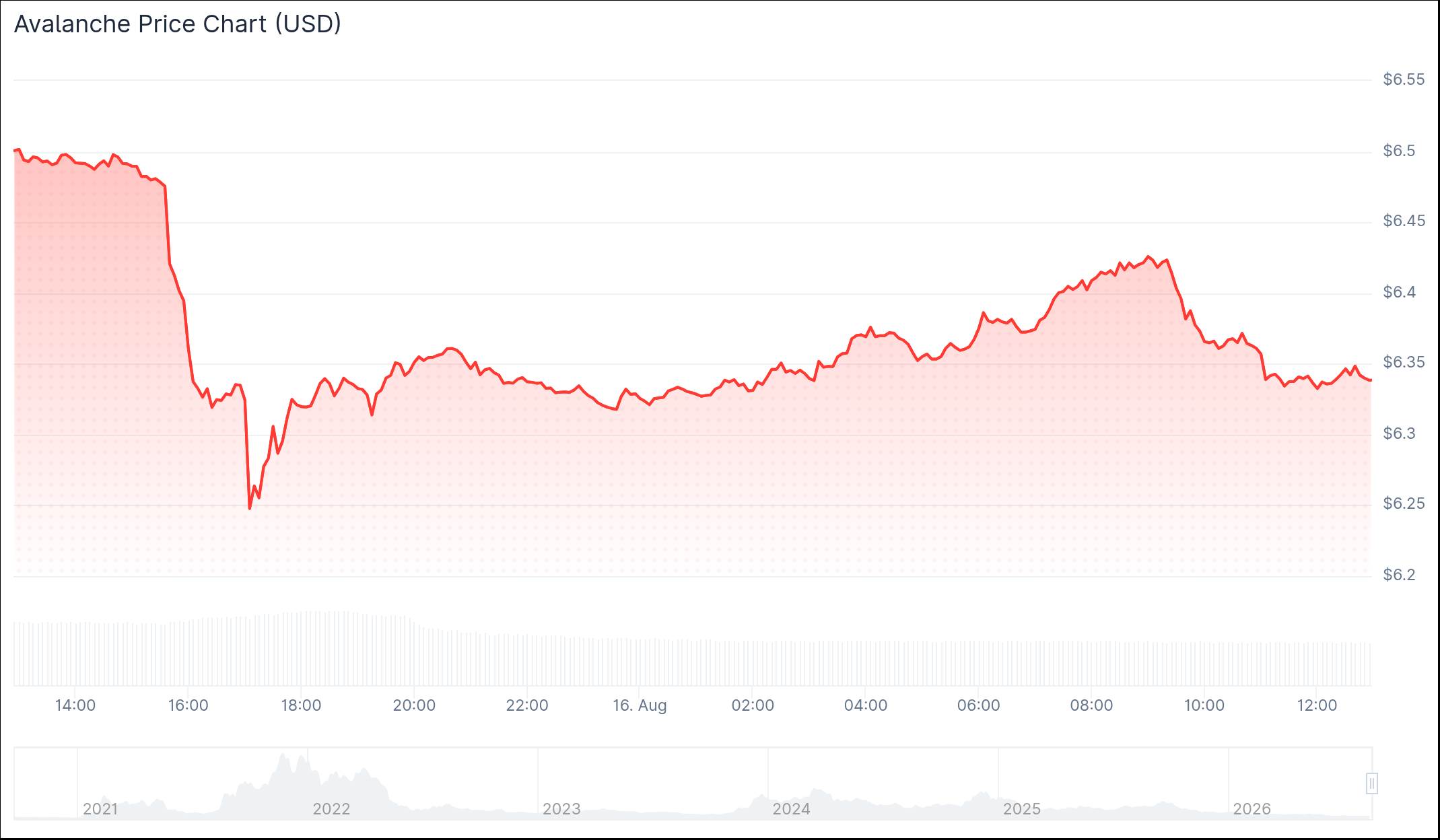
AVAX prices fell 2.39% to US$6.34. The overall weakness of altcoins offset the overall stability of the cryptocurrency market, making AVAX one of the worst-performing major currencies.
Whale hoarding sends the opposite signal-a large household withdrew 887,000 AVAX from Binance, worth approximately US$5.6 million.
Avalanche Network RWA transaction volume reached US$365.29 million in 30 days, an increase of 360.15% from the previous month.
AVAX must hold on to the Fibonacci support level near $6.25 to maintain the possibility of a rebound towards $6.46; and once it is confirmed that a breakthrough of the pennant shape is broken,$7.20 will become the next target.
AVAX prices fell 2.39% to US$6.34 in the past 24 hours, and the weakness spread to major altcoins. The overall cryptocurrency market was nearly flat, with AVAX becoming one of the worst performing currencies. There was no clear Avalanche specific catalyst for the decline, but traders reduced exposure as the market weakened overall-with 18 of the top 20 cryptocurrencies falling.
The correction came after a third consecutive day of rebound from pennant support near $6.14. Although selling pressure resurfaces, the hoarding behavior of AVAX whales and the Avalanche network RWA activity provide the reverse signal. Traders focused on the $6.25 support level during Sunday's trading, which will determine whether AVAX rebounds or continues its decline, or even hits a low for the year.
Avalanche (AVAX) price
CoinGecko data showed that AVAX fell 5.4% at one point, becoming the weakest performing major cryptocurrency at the time. The subsequent 24-hour decline narrowed to 2.39%, while the overall market remained almost unchanged.
This gap suggests that investors are not selling because of the Avalanche cyber incident, but are withdrawing from high-risk altcoins. Bitcoin dominance and the altcoin seasonal index will help determine whether this rotation is expanding. The index is currently at a neutral level of 50.
This pressure has made AVAX prices weaker than the broader market, further confirming that position adjustments are the driving factor for this volatility. Volume near support will reveal whether short positions still dominate range movements in AVAX prices.
AVAX prices are currently below the important moving average, with the Relative Strength Index close to 42. These indicators suggest that despite AVAX's rebound from $6.14 for three consecutive days, short-term momentum remains short.
The token is still in a larger pennant shape, and neither the long and short sides have achieved a structural breakthrough. Analyst Michaël van de Poppe expects large fluctuations while AVAX remains range-bound. His preferred trend is to break below recent lows and immediately reverse.
The first technical test is between $6.25 and $6.32. The lower boundary corresponds to a 78.6% Fibonacci pullback, which may attract bargain hunting. Holding this area is expected to allow AVAX prices to retest the 38.2% resistance level near $6.46.
If it clearly falls below US$6.25, the rebound logic will be weakened and the low point of the year will be tested. Traders also need to focus on $6.14, which is the starting point for the recent three-day rally. If prices briefly break below and then recover quickly, it would be in line with Van de Poppe's "sweep low and then reverse" scenario.
Whale orders offset selling pressure with RWA growth
Large players are building positions as the market tests support. Tracking data from Hunter Capital shows that a whale withdrew 887,000 AVAXs from Binance, a position estimated to be worth approximately US$5.6 million.
Moving tokens out of exchanges reduces the ready-to-use supply, but this does not represent a long-term holding decision. However, the withdrawal still serves as a hedge against short-term selling and supports AVAX's view of whale hoarding.
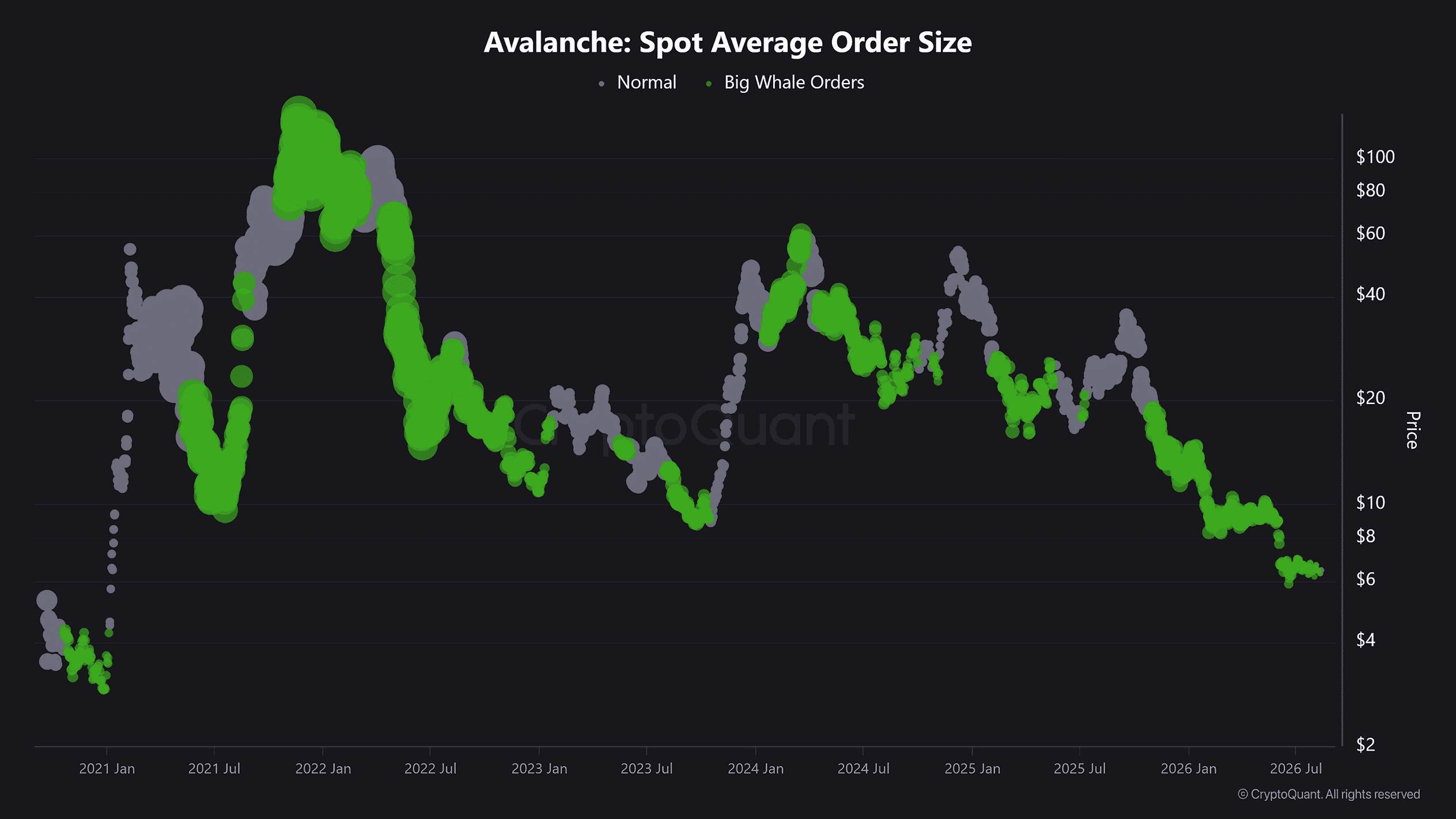
CryptoQuant's order size indicator also shows that whale participation in the spot and futures markets is rising. Large orders can amplify volatility, especially when prices are close to clear boundaries. Compared with a single transfer, subsequent follow-up purchases are more critical.
Internet usage provides another positive signal. According to foundation data, Avalanche Network RWA activity reached US$365.29 million in transaction volume in 30 days, a 360.15% increase from the previous month.
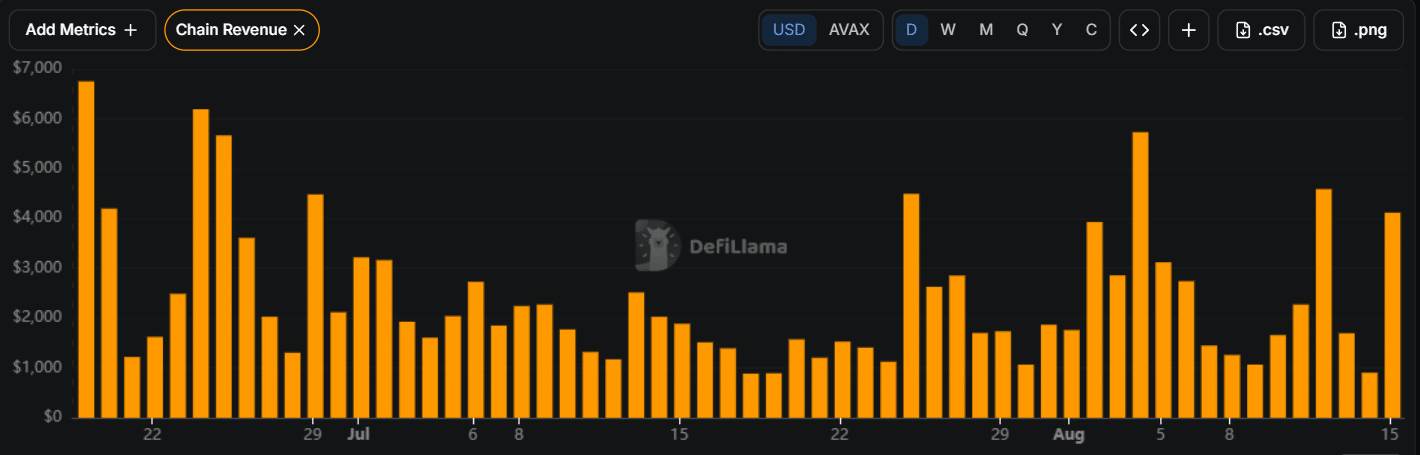
Increased tokenized asset activity may generate more transaction fees and expand actual network demand. DeFiLlama data also showed that Avalanche chain revenue in August was above its recent low in July. Continued revenue growth will provide a stronger confirmation signal than a single transaction volume data.
AVAX prices must break through the pennant upper trend line for bulls to take control of the situation. Once a breakthrough is made, attention may turn to $7.20-a position CoinGlass data shows that has gathered approximately $1.13 billion in concentrated liquidity.
Liquidity clusters often attract prices because traders target intensive clearing levels. But the prerequisite for achieving this path is that AVAX holds $6.25, recovers $6.46, and leaves the consolidation range. If support falls, whale buying and RWA growth will have to contend with bearish market structures.
























