Exchange Ranking
 Top Exchanges
 24h Volume Ranking
 Popularity Ranking
 Exchange BTC Balance
 Proof of Reserves
 Decentralized Exchanges
 Funding Rate
 Funding Heatmap
 Liquidation Data
 Max Pain
 Long/Short Ratio
 Whale L/S Ratio
 Binance/Okex/Huobi L/S
 Bitfinex Margin L/S
 ETF Tracker
 Solana ETF
 XRP ETF
 Hong Kong ETF
 Bitcoin Treasuries
 Crypto Reversal
 Ethereum Reserves
 HyperLiquid Wallet Analysis
 Hyperliquid Whale Watch
 Large Transactions
 On-chain Movement
 Bitcoin ROI
 Stablecoin Market Cap
 Options Analysis
 News
 Articles
 Economic Calendar
 Features
 Wallet
 Contract Calculator


 Security
 Collections
 Watchlist
 Following
 ETH
Etheleum Co-founder Vitalik Butrin: ETH values should not be measured only by destruction
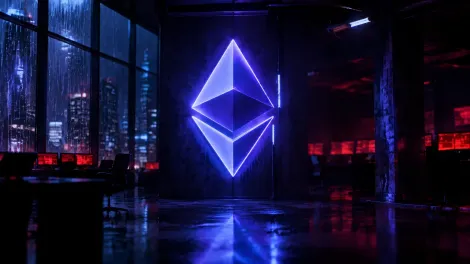
On 8 November, Vitalik Buterin, the co-founder of Ethelum (ETH), stated that the value of Ethereum should not be judged by a transaction cost destruction alone. He pointed out that it was more reasonable to view Ethereum as a “value storage” than a mere “cost destruction asset.”
Buttling, in a communication on social media platform X, stressed that while the existing cost destruction mechanism should be maintained, value assessments should not be tied to destruction data in a single way. The CROPS framework he had proposed covered core elements of resistance, resistance to capture, open-source properties, privacy protection and safety. This was not an official announcement of protocol changes, but rather his vision of Ethereum’s long-term positioning and role.
According to the EIP-1559 proposal, the foundation of the Ethelum transaction will be destroyed, while priority will be paid to the certification operator. This mechanism makes the destruction generated by the use of the network one of the important dimensions of the Ethereum value logic. At present, Ethelum transactions are not only destroyed, but are also used as the status of the PoS certifier. The official document details the relationship between the transaction Fees and the certificationer mechanism.
Moreover, Syndeix has supported Ethereum as a collateral for its trade on the market since 3 June 2026. This initiative demonstrates the use of Ethereum for purposes other than destruction. It is important to note that this application does not directly guarantee an increase in asset prices or destruction.
ENS Select Mainnet deployment, Syndix Separation Implementation Level
ENS Labs mainnet policy adjustments
ENS Labs announced on 6 February 2026 that ENSv2 would be deployed only on the Etheleum Mainnet and would stop developing an independent Layer 2 (L2) solutionNamechain. Data show that the average cost of Gazas registered as a mid-level domain name has fallen by about 99 per cent over the past year, while the Gas limit per block in Ethereum has increased from 30 million to 60 million.
In addition to cost factors, ENS Labs notes that the operational costs and complexity of stand-alone L2 are also key to decision-making. They explain that reliance on L2s like Namechain may lead to ENS solution using a third-party gateway, introducing additional trust assumptions and centrazed risks. However, ENSv2 did not cut off links to other chains, and still supports a name solution service for more than 60 blockchains. ENSv2 was officially online on October 27, in the mainnet.
Synchetix's hybrid architecture model
Synthetix launched a private test on the Ethereum futurenet-based futures exchange on December 18, 2025. However, its trading process is not fully chained. Specifically, user asset hosting and transaction settlement is handled in the Mainnet smart contract, while the order matching engine and initial bond management based on the Centrally Restricted Price Order Book (CLOB) are completed under the chain. This means that the location of the asset is deconcreted with the order set-up.
On 1 May 2026, Syrnthetix made public the current status of its operations, confirming that even if the exchange’s operations were interrupted, the user would still be able to extract the collateral stored in the mainnet Futures. This does not mean that the entire order process is running on the chain, with a balanced strategy between asset security and the efficiency of transaction execution.
The re-thinking of the role of Layer 2 in the context of the mainnet amplification
The Ethereum Foundation released a paper on protocol priorities on 18 February 2026, setting a goal of raising the Gas limit to over 100 million. This represents a vision for future expansion, not the amount of current throughput that has been achieved.
Against this background, Butrin wrote in Reddit on 3 February 2026 that Layer 2 should not simply be a simple extension of the mainnet, but should explore new functions such as privacy protection, efficiency for specific applications, and fast-track processing. The Etheleum official document states that Rollup technology reduces costs by placing transactions in the mainnet, and that different Rollups have different security structures.
In summary, ENS selects the mainnet deployment to ensure decentrazed level and safety, while Syndetix uses a hybrid structure to balance performance with asset control. The two cases show that industry trends do not simply allow all services to be selected between Layer 1 or Layer 2, but rather provide flexibility to decide on the location of the executive layer based on specific functional needs.