Exchange Ranking
 Top Exchanges
 24h Volume Ranking
 Popularity Ranking
 Exchange BTC Balance
 Proof of Reserves
 Decentralized Exchanges
 Funding Rate
 Funding Heatmap
 Liquidation Data
 Max Pain
 Long/Short Ratio
 Whale L/S Ratio
 Binance/Okex/Huobi L/S
 Bitfinex Margin L/S
 ETF Tracker
 Solana ETF
 XRP ETF
 Hong Kong ETF
 Bitcoin Treasuries
 Crypto Reversal
 Ethereum Reserves
 HyperLiquid Wallet Analysis
 Hyperliquid Whale Watch
 Large Transactions
 On-chain Movement
 Bitcoin ROI
 Stablecoin Market Cap
 Options Analysis
 News
 Articles
 Economic Calendar
 Features
 Wallet
 Contract Calculator


 Security
 Collections
 Watchlist
 Following
 ETH
BitMine Chairman Tom Lee parses five major incentives for the market to be sold in encryption, and strongly values Ethereum and the long-term "super-cycle" of digital assets.
Mr. Tom Lee, Chairman of BitMine, recently analysed five possible reasons behind recent sales in the cryptocurrency market, while emphasizing that the Ethereum and the digital asset industry as a whole remain in a favourable position for a long-term “supercycle”.
Lee notes that the factors that led to the market’s reversal include the fall in Nvidia’s share price, Anthropic’s expectation of a first-time public collection, the recovery and extraction of funds following the Binance hackers, cyber security concerns, and United States scrutiny of chip exports. Despite the growing interest of financial institutions in the blockchain technology, he believes that these factors together contribute to the continuing pressure on sales.
I. I. INI COMPONENTS AND ANthropic IPO RISK
Lee wrote on social media X that the decline in artificial intelligence (AI) and semi-conductor stocks, particularly the weakness of Inverda, could trigger the recovery of a deposit from Asian investors. When prices fall, investors with leverage positions are often forced to sell their assets to maintain their positions.
In addition, the forthcoming listing of Anthropic is one of the sources of pressure. According to the SEC document, Anthropic is preparing for the November listing. Lee speculates that investors preparing for the release may need to sell existing warehouses (including cryptocurrency) to raise cash. He mentioned in particular that if a large share is distributed through retail platforms such as Robinhod, customers may convert the cryptocurrency position to cash or stablecoin before buying anthropic stock.
II. Follow-up effects of the events of Binance hackers: the return of funds to being pressured
Another factor noted by Lee is the recovery of funds following the security gap in Binance (Binance). On October 29, Binance suffered a serious security accident of approximately $6.3 billion.
The chain analysis company Chainalysis had previously traced the attack to the Korean hacker organization Trader Traitor. Lee believes that a customer who restores the balance may choose to convert the recovered cryptocurrency into French currency or stockcoin, thereby increasing the market’s additional sales pressure.
III. Geopolitics and technology regulation brings uncertainty
Lee also mentioned two technology-related macro-pressures. First, Anthropic’s discussion of artificial intelligence that could weaken existing cybersecurity systems raises market concerns about the security of digital operations.
The U.S. Department of Justice’s investigations into the export of chips concern a number of companies associated with British Wida, including Megaseed and Supermicro. The authorities are examining possible export control irregularities, while also following business practices in British Wida.
IV. ETF Flows and Whales
Despite a number of leeway factors, the dynamics at the institutional level show a fragmentation. According to Farside Investers, the United States post Ethereum ETF recorded approximately $398.9 million net outflow during the November 9-13 trade week.
Meanwhile, the blockchain tracker Onchain Lens reported that a Wallet associated with the Etheleum Foundation sold 7,500 ETHs in exchange for USDS of approximately US$ 145.2 million within four days. The latest transaction involved 2,500 ETHs exchanged US$ 4.59 million through CoW Swap for USDS of US$ 4.597 million.
V. Bitmine is on the rise, holding on to long-standing beliefs
During the market sale period, Bitmine continued to accumulate Ethereum. It is reported that it purchased an additional 9,587 ETH during the week before 9 November. According to its latest disclosure, Bitmine held 6,070,092 ETH, which represented approximately 4.97 per cent of Ethereum’s supply, of which 5,227,037 ETH were in status.
Although Bitmine recorded some $6.23 billion in unrealized digital asset losses in its fiscal year statement as at 31 August, and if it had a loss on account of close to $10 billion at the November 15 price of Ethereum about $1,800, Lee remained optimistic. He reiterated that the current windstorm was only temporary, and that crypcurrence was expected to experience a much larger “super-cycle” than in the past, and Ethereum would be the infrastructure for future financial transactions.
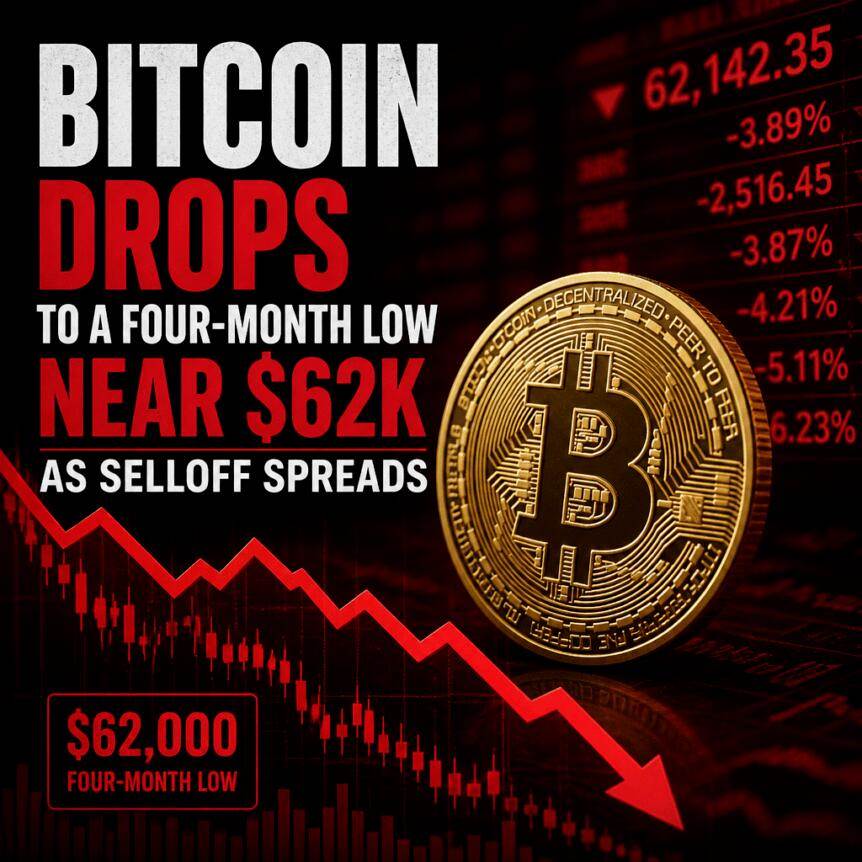
As of 15 November, Ethelum prices had fallen to about $1,800, a decline of about 6 per cent in 24 hours; Bitcoin had hovered around $64,000, with the main cryptocurrency under general pressure.