Exchange Ranking
 Top Exchanges
 24h Volume Ranking
 Popularity Ranking
 Exchange BTC Balance
 Proof of Reserves
 Decentralized Exchanges
 Funding Rate
 Funding Heatmap
 Liquidation Data
 Max Pain
 Long/Short Ratio
 Whale L/S Ratio
 Binance/Okex/Huobi L/S
 Bitfinex Margin L/S
 ETF Tracker
 Solana ETF
 XRP ETF
 Hong Kong ETF
 Bitcoin Treasuries
 Crypto Reversal
 Ethereum Reserves
 HyperLiquid Wallet Analysis
 Hyperliquid Whale Watch
 Large Transactions
 On-chain Movement
 Bitcoin ROI
 Stablecoin Market Cap
 Options Analysis
 News
 Articles
 Economic Calendar
 Features
 Wallet
 Contract Calculator


 Security
 Collections
 Watchlist
 Following
 ETH
 SOL
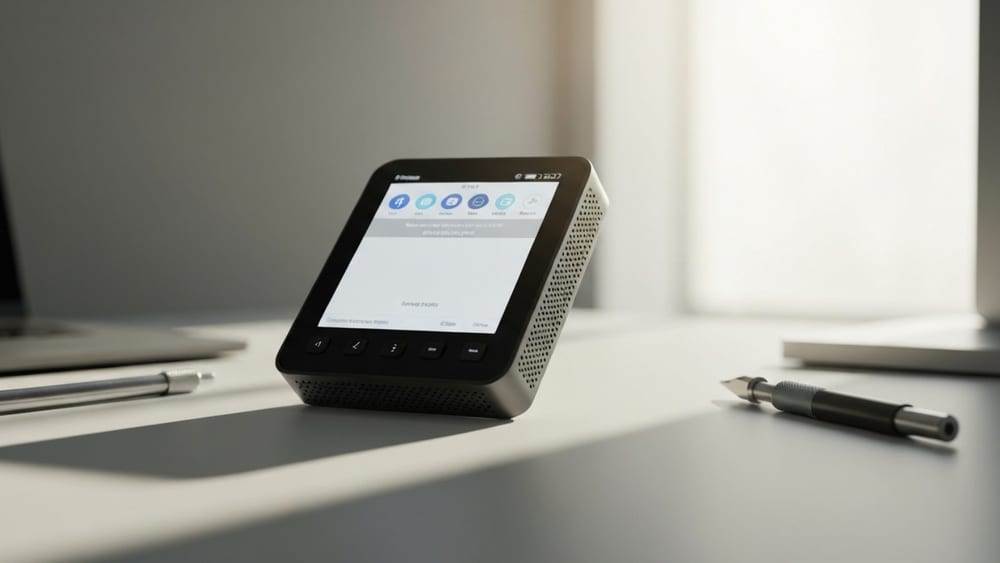
Ledger introduces a clear signature engine in Solana applications to enhance transparency of transactions
Ledger applies Clear Signing engine to its Solana application version 1.17.0 and above. This feature integrates complex transaction commands into a simple job display that is easy to understand, thus helping users to gain a more intuitive view of the operational content. According to the technical note released by Ledger in November, this feature has also been synchronized with its Developer Management Toolkit (DMK), the development tool for connecting the Wallet with the Ledger hardware signer.
Addressing information asymmetries in DeFi interactions
In the DeFi (DeFi) service, a simple “exchange” operation may involve complex instructions, including the creation of a token account, the transfer of assets, and the call smart contract. If the wallet shows only raw data or a general “futures interface” to the user, it is often difficult for the user to judge the actual intent and risk of the signature request.
Clear signature techniques are designed to present key information, such as the true intent of the transaction, the number of assets and the counterparty to the transaction, to the user in a human-readable form. If the transaction simulation function is the result of precalculating the execution of the transaction in a given state, then a clear signature is a clear indication to the user of what is currently to be signed.
Security mechanisms: from ambiguity to transparency
The Solana transaction usually contains instructions from multiple processes. The Ledger engine can organize these dispersed instructions into logical “task intent” for users to read before signing. The system will maintain its independent display status for commands that cannot be identified as safe to hide or package. If any of the instructions in the transaction lacks verified descriptive information, the system will not be able to sign the transaction as a whole, but rather triggers a “blind-mark warning” to alert users to potential risks.
There have been reports that the Ledger signer's confirmation steps can be reduced from 13 to 3 steps when using the Jupiter tokens. This is only for the specific case of the Jupider. Therefore, meeting only the version requirements of the Solana application is not enough to get the same simplification experience in all decentrazed applications (dApp). To achieve this function, the linked Wallet and dApp must support the feature and the transaction needs complete description.
Standard comparison: EIP-712 and Solana sRFC
Different technical standards vary in their roles and application:
- EIP-712:The signature format of structured data on Ethereum (ETH) was defined, but did not itself have the ability to identify fraud.
- ERC-7730 (draft phase):It sets out how the wallet provides a format for the description of what it means to call, how many, etc. The wallet needs to verify whether the description information applies to specific futures and transactions.
- Solana sRFC 39 with sRFC 41:SRFC 39 regulates the manner in which individual instructions are displayed, while sRFC 41 regulates how multiple instructions are bound into a transactional intent. Users need to be careful to distinguish between the stages of the two proposals and their actual realization in different Wallet.
User note: Trust but authentication
It is essential to describe the reliability of the information itself. The Lydger notes that malicious proceedings may generate seemingly normal description documents to disguise their behaviour, and therefore the scope and content of the information must be carefully examined by the Wallet.
For example, when a user tries to make a payment using 20 USDC, if the screen displays a greater amount of token authority to authorize, the user must make a strict distinction between “payment” and “authorization”. An authorization operation, even if it does not immediately transfer assets, may lead to a risk that future assets will be used.
Users should check the assets, quantities, receiving addresses or authorizations shown on the device screen on a case-by-case basis with their own expected operations. Even if a familiar service name is shown on the interface, it is not sufficient to determine the true identity of the smart contract or the reliability of the counterparty.
Permission Management Tips
It should be noted that a clear signature function does not in itself revoke the delegated token rights of use. According to MetaMask’s official guide, a user still has to initiate a separate cancellation transaction if it is to withdraw its prior approval.