Exchange Ranking
 Top Exchanges
 24h Volume Ranking
 Popularity Ranking
 Exchange BTC Balance
 Proof of Reserves
 Decentralized Exchanges
 Funding Rate
 Funding Heatmap
 Liquidation Data
 Max Pain
 Long/Short Ratio
 Whale L/S Ratio
 Binance/Okex/Huobi L/S
 Bitfinex Margin L/S
 ETF Tracker
 Solana ETF
 XRP ETF
 Hong Kong ETF
 Bitcoin Treasuries
 Crypto Reversal
 Ethereum Reserves
 HyperLiquid Wallet Analysis
 Hyperliquid Whale Watch
 Large Transactions
 On-chain Movement
 Bitcoin ROI
 Stablecoin Market Cap
 Options Analysis
 News
 Articles
 Economic Calendar
 Features
 Wallet
 Contract Calculator


 Security
 Collections
 Watchlist
 Following
 BTC
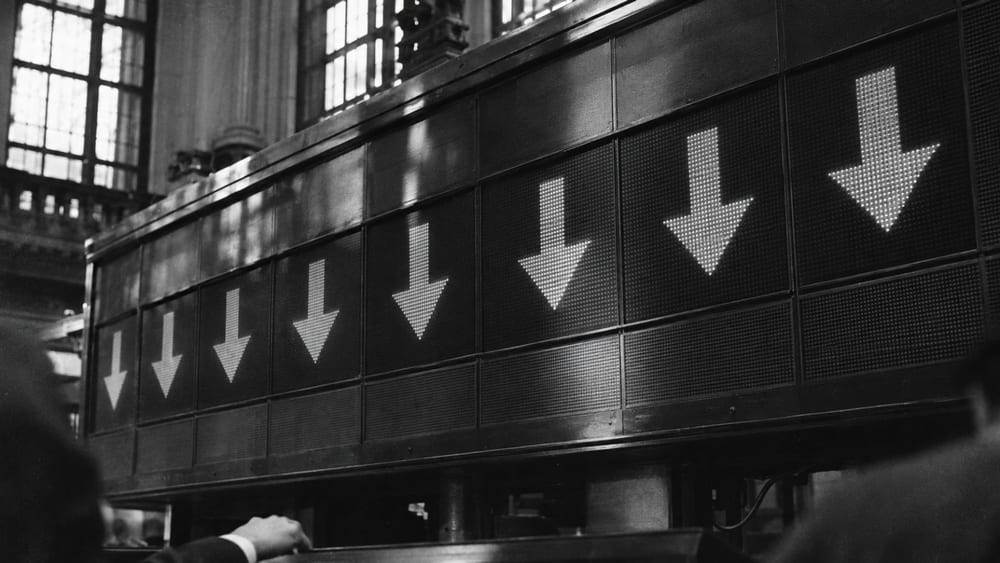
The AI-related stock sales spread to the whole of the risk asset, and QCP Capital points out that Bitcoin cross-market to leverage risk
With the spread of stock sales related to AI from the technology block to the wider area of risk-based assets, QCP Capital warned that Bitcoin (BTC) was at risk of cross-marketing to leverage. The US Standard & Poor’s 500 index fell by 2% on 19th day, while the first-day opening price of the first open-source ($ANT) was 34% higher than the price of the first open-source (IPO) price, but the price increase was narrow to about 17%.
QCP Capital, in its 20-day market report, noted that global risk asset sales were spreading from the technology unit to the wider market, and that liquidity contractions and the risk of losing leverage were increasing. According to Associated Press (AP), the 19-day (local time) Standard 500 index fell by 2 per cent, setting six consecutive trading days down, a record of the longest consecutive fall since 2024. The Associated Press also reported that Anthropic had opened $111.50 (approximately $18,000) more than the price of $83 (approximately $110,000 yuan) at 34 per cent higher than the price of the release.
QCP Capital points out that the core context is the high dependence of AI infrastructure investment on debt financing. The report explains that investment in data centres and computing equipment is often dependent on borrowing funds, and that higher financial costs not only increase the investment burden but also increase the pressure to reduce hold.
Go to leverage is the process of reducing risk by reducing the use of borrowing or expanding positions. When multiple asset classes are reduced in parallel, the stock market and the cryptocurrency market may interact with each other. QCP Capital analyses suggest that the recent vulnerability of Bitcoin is not caused by only internal factors in the encrypted market, but by changes in global liquidity and the effect of going across assets to leverage.
In its report, the Agency looks at the three conditions that Bitcoin needs to meet if it is to make a sustained rebound: a steady movement in the technology unit, a decline in interest rate volatility, and a re-inflow of institutional funds. If these conditions are not met, the increase from the recovery of short options will not be sustainable.
The key observation indicators presented in the report include the evolution of the science and technology unit, interest rate volatility, and inflow of institutional funds. Bitcoin’s vulnerability is more influenced by internal factors within the encrypted market or global liquidity changes, depending on the dynamics of the three variables.
It was previously reported that Bitcoin’s prices had dropped by $81,000 because of the higher-than-anticipated September data in the US and the strong sales momentum of AI. There was also a combination of stock market weakness and macrovariant changes at the time in the cryptocurrency price.
AI infrastructure investments involve both equipment input and operating costs, and are therefore highly vulnerable to changes in the financing environment. Often, when interest rate volatility increases, the market moves to reduce borrowing positions, which may lead to an overloading of risk assets.
Under this structure, S & T equity investors and cryptocurrency investors will be concerned about price changes in different markets. QCP Capital’s diagnosis also interprets Bitcoin as an asset that is not only driven by materials inside the encrypted market, but more closely linked to the global flow of risk assets.
Given the potential for US S & T to be associated with Bitcoin’s movement, both markets can be a common observer. If global risk assets operate in the same financial environment, market-sale pressures may lead to a reduction in positions in another market.
The central point of this analysis is that the criteria for assessing Bitcoin's rebound should not be limited to prices per se, but should focus on whether there can be a synchronized improvement in the technology stock, the interest rate environment, and institutional resource flows.