Exchange Ranking
 Top Exchanges
 24h Volume Ranking
 Popularity Ranking
 Exchange BTC Balance
 Proof of Reserves
 Decentralized Exchanges
 Funding Rate
 Funding Heatmap
 Liquidation Data
 Max Pain
 Long/Short Ratio
 Whale L/S Ratio
 Binance/Okex/Huobi L/S
 Bitfinex Margin L/S
 ETF Tracker
 Solana ETF
 XRP ETF
 Hong Kong ETF
 Bitcoin Treasuries
 Crypto Reversal
 Ethereum Reserves
 HyperLiquid Wallet Analysis
 Hyperliquid Whale Watch
 Large Transactions
 On-chain Movement
 Bitcoin ROI
 Stablecoin Market Cap
 Options Analysis
 News
 Articles
 Economic Calendar
 Features
 Wallet
 Contract Calculator


 Security
 Collections
 Watchlist
 Following
 CYBER
 ETH
Core elements
According to The Block, on 21 November 2026, Cyber (formerly CyberConnect) created 5,213,000 CYBER tokens on the Solana network. Two minutes later, the same number of tokens were flowing out of the bridge on the Ethereum to host Futures.
The attackers converted most of the coins into utensils (Ether). DefiLlama estimated losses of approximately US$ 968,000 and classified the case as “false bridge-receiving.” Upbit and Bithumb were suspended from CYBER's valuing and cashing services. The Cyber projecter advised users not to use the bridge service at this time, nor to charge CYBER to the exchange.
If you have CYBER tokens, follow the following core recommendations:
In the next few days, do not send the token through Cross-chain Bridge, or charge it to any exchange. This is the core warning given by the Cyber Project after millions of unattended coins were generated on Saturday night and entered the market.
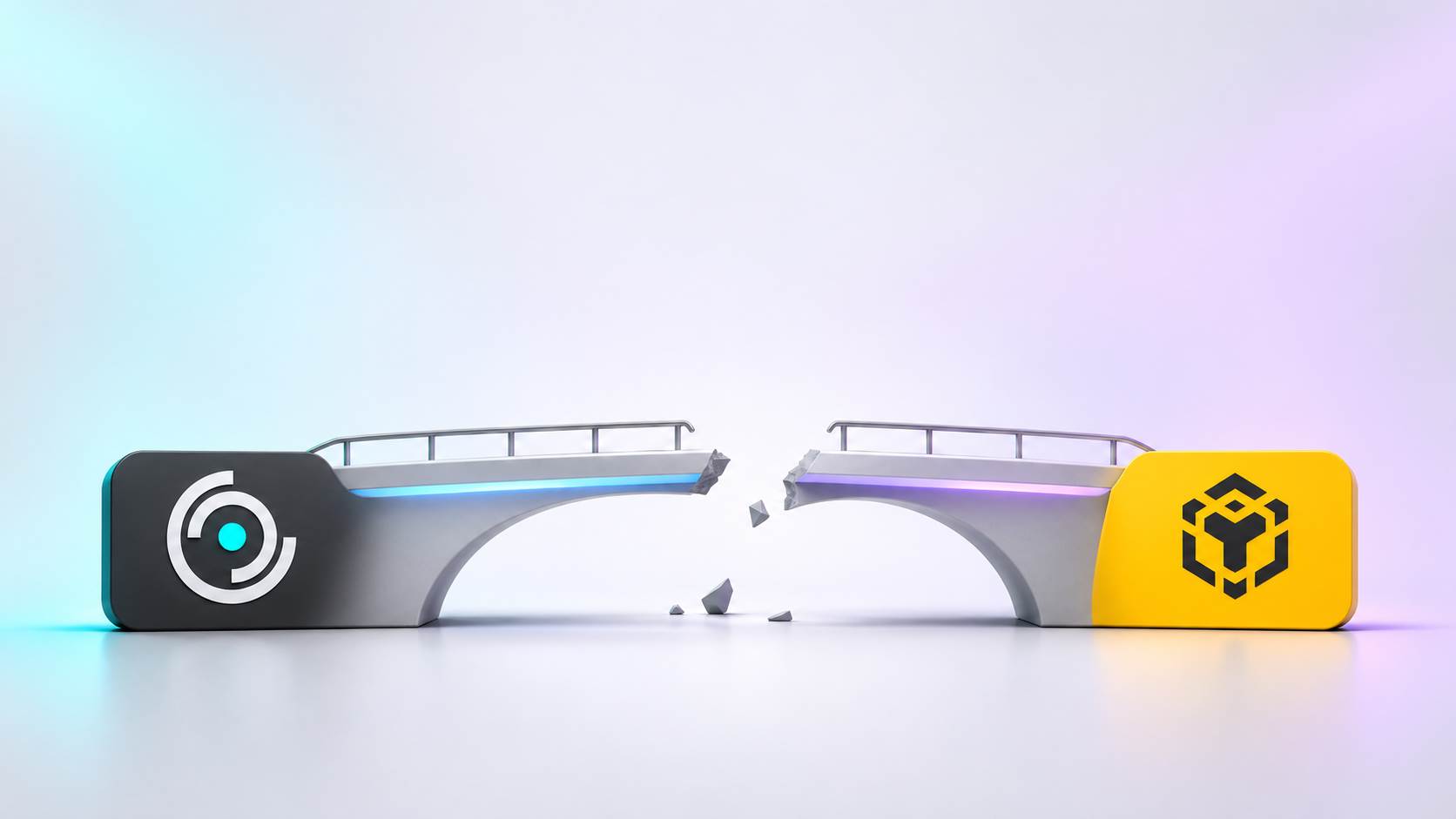
Cyber Bridge Gap: What happened to Solana and Ethereum on November 21st?
Cyber builds its own social application Layer-2 network based on OP Stack. The Layer-2 network is a stand-alone blockchain, which packs transactions and secures support from Ethereum. CYBER tokens exist not only on Ethereum, but also on other networks, including Solana. These different versions of tokens are connected by a bridge based on LayerZero.
The rationale for the bridging mechanism is that, on the side of the chain, the real token is stored in a safe, known as the lockbox, and on the side of the chain, an equal number of new tokens will be forged. This arithmetical balance can only be established if each newly forged token is supported by a corresponding locked token.
However, this balance was broken on November 21st. According to The Block’s reconstruction timeline, 5,213,000 CYBERs were created at 17:13 in German time, Solana. Then at 17:15, the same amount of tokens left the CyberTokenAdapter Futures, which held the CYBER needed for the LayerZero Bridge.
The Block reported that approximately 150,000 CYBERs were sold in batches in about one hour through the KyberSwap and MetaMask Swaps services. Germany time 18:40, about 575.29 ETH was transferred to a newly generated address, where it remained at the time of the release of the report. Some 412,000 CYBERs went to three unidentified addresses. All transactions were publicly visible on Solscan and Etherscan.
The Block estimated the proceeds to be close to $1 million, while the DefiLlama database listed $968,000.
Forgery of the bridge: analysis of the rationale for the attack
By Sunday night, Cyber had not publicly explained how the unlagged tokens were created. DefiLlama classified the case as a case of cross-chain intelligence fraud, i.e., a false message between two blockchains: the bridge protocol considered the instructions to release or to found the tokens to be true, even though the other side had never locked up any assets.
This establishes the sequence of events, but does not reveal the root cause. The leak of the Private key, the faulty configuration of the bridge, or the futures are still to be investigated. The Block makes it clear that the data do not show how the casting operation was triggered.
Cyber itself indicated on Saturday on X platform (formerly Twitter) that an investigation is being conducted into the accidental foundry of CYBER on Solana and that the assets and bridge routes are affected. Users should avoid using the CYBER bridge and not charge CYBER to the exchange. The project participants emphasize that there is no need for token migration, walklet connection or signature.
Upbit and Bitumb Pause CYBER Transfers: Impact on transactions
The Korea Exchange Upbit suspended CYBER's filling and cashing services for security-related incidents and warned the token that the transaction had not stopped. Bitumb followed up on Sunday. The transaction continued; according to Cointelegraph, the transfer would resume only if the network was considered stable.
If you hold CYBER on any of the exchanges, you can trade, but you cannot cash. According to Cointelegraph, the Korea Finance Commission (FSC) plans to allow the exchange to suspend transfers when it suspects that it has been hit, not only after the attack has been confirmed.
In addition, according to CoinGecko’s list of exchanges, CYBER also deals on platforms commonly used by German clients, including Kraken, Bitvavo, Bit2Me and Binance. It is not clear whether these exchanges have suspended their service as of Sunday night.
CYBER price performance after the leak
During the sale, according to The Block, CYBER fell by about 8 per cent to $0.2024 and then rebounded to about $0.213. According to CoinGecko, the German time trade price on 22 November was $0.2053 (approximately Euro0.1871), down 4.9 per cent from the previous day and 8.4 per cent from the previous week.
How to protect against a breach of Cyber's bridge.
What happened:
On 21 November 2026, 5,213,000 anchor-free CYBER were created on 17:13 German time Solana; two minutes later, the same amount of tokens came out of the LyerZero Bridge to the Ethereum Trusts. The attackers converted most of the coins into utres at a price of approximately $968,000 (data source: DefiLlama, as of 22 November).
Are you affected?
Directly affected are those who sold or bought CYBER during the attack, and any cross-chain transfers that are still pending. Cyber indicates that it is still checking that CYBER transferred through the bridge to another network is fully anchored. If you hold CYBER, Cyber in your own Wallet indicates that you do not need to move, connect or sign any operations.
For the time being, the use of the bridge was avoided:
Please do not send CYBER through the bridge between Ethereum, Solana and other networks until Cyber has announced the routes affected and the bridge has been reopened.
Off-shelf exchange:
If the exchange holds a credit line as a result of the review, the value may be stuck.
Do not sign anything:
Do not connect your Wallet to any website that offers CYBER's “relocation”, “receipt” or refund services. According to Cyber, no signature is required, and such proposals are common fraud patterns for post-rack frauds.
Inspection authorization:
Use tools such as Revoke.cash to see which of your Wallets gives unlimited CYBER approvals and revokes the authorizations that are no longer required.
Record keeping:
Recording of transactions to be transferred from the bridge ID, and export of the purchase and sale records on 21 November so that settlement or claims can be recorded at a later date.
Three outstanding issues regarding the Cyber Bridge since the loophole.
In April of this year, similar unattended token found incidents occurred in Polkadot ecsystem, a hole in Hyperbridge, and in August, the Sand Bridge incident in The Sandbox occurred. For the holder, the key is whether the project party will fill the missing deposit in the safe, remove the unattended coin from circulation on Solana, and disclose the reasons. None of these questions is answered.