Exchange Ranking
 Top Exchanges
 24h Volume Ranking
 Popularity Ranking
 Exchange BTC Balance
 Proof of Reserves
 Decentralized Exchanges
 Funding Rate
 Funding Heatmap
 Liquidation Data
 Max Pain
 Long/Short Ratio
 Whale L/S Ratio
 Binance/Okex/Huobi L/S
 Bitfinex Margin L/S
 ETF Tracker
 Solana ETF
 XRP ETF
 Hong Kong ETF
 Bitcoin Treasuries
 Crypto Reversal
 Ethereum Reserves
 HyperLiquid Wallet Analysis
 Hyperliquid Whale Watch
 Large Transactions
 On-chain Movement
 Bitcoin ROI
 Stablecoin Market Cap
 Options Analysis
 News
 Articles
 Economic Calendar
 Features
 Wallet
 Contract Calculator


 Security
 Collections
 Watchlist
 Following
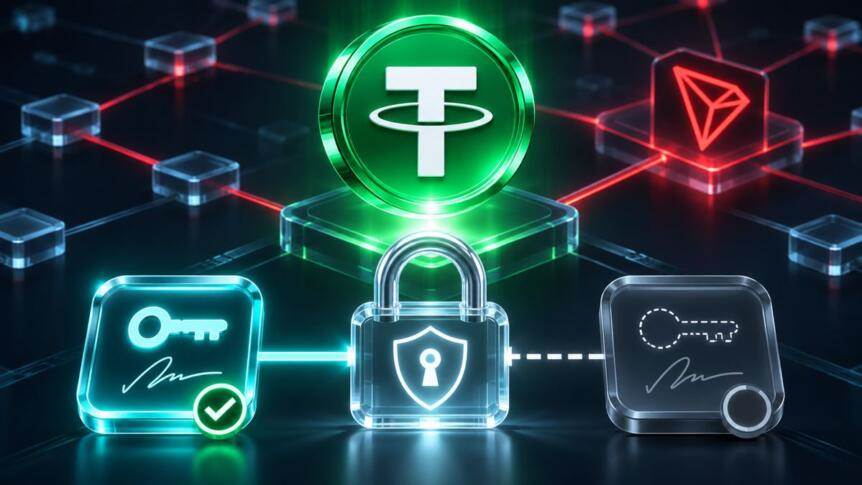
FreezeCheck states that 47 USDT freeze proposals were not implemented because they had only received a single signature, involving a transfer of $23.1 million.
The research data show that on the TRON network, 47 proposals for the freezing of USDT were signed only once in the “double-signed approval process”, which resulted in the freezing of operations that were ultimately not completed. The results were released on 22 November 2026 after UTC time 18:05 released USDT from 39 of the 47 target addresses.
The proposal does not amount to a de facto freeze.
The core of the research findings is to distinguish between “proposals for freezing” and “actually restricted transfers.” Researchers point out that the first signature will make the target address publicly available in the chain, but that USDT restrictions will only be effective once the required second confirmation is provided.
FreezeCheck reviews 11,958 proposals for multiple signatures, covering activities since February 2021. For the 47 addresses included in the study, the freeze proposal was only recorded once, was not implemented and was not blacklisted as of 20 November 2026.
The researchers re-check the futures before their release on 22 November and find that none of the above-mentioned addresses have received a second signature and have not really been frozen. It is important to emphasize that these observations reflect only the state of the particular time of inspection and do not guarantee that the address will remain unchanged.
This distinction is essential for the interpretation of the blockchain record. The proposal for an administrative operation is merely evidence that the transaction has been submitted and should not be described as a measure of constraint that has been completed, nor should it be equated with the final decision of the issuer.
What's the financial outflow data revealing?
The study showed that, after the first signature, funds had been transferred from 39 out of 47 addresses. Of these, 13 Wallet started moving USDT in 15 minutes, and these subsequent Wallet outflows amounted to approximately $8.8 million.
FreezeCheck also identified a series of activities closely linked between June and July 2026. The briefing notes that, in these cases, the first transfer took place within approximately four to nine minutes of the proposal.
It should be noted that these time lines do not establish that the Wallet operator monitored the proposal or acted on it, but only showed the sequence of the observable events. Moreover, the pending freezing proposal does not in itself prove that the address owner has committed the offence.
Another important qualification was added by the release of the Methodology: one of the transfers occurred between two addresses in the data set. The total outflow was 23,120,376 USDT, but after the removal of the internal transfer, the amount from the 47 Wallets was approximately $22.8 million.
Validation and limitations of research
FreezeCheck states that it has read the proposed status directly from the Futures and cross-checks the total amount of the transfer using TronGrid and Tronscan. The company has published downloadable data sets containing proposed identifiers and trades for Hashi, allowing other researchers to examine the bottom cases.
The company advised that no independent third-party review has been conducted. The findings and methodology are reported in this paper and do not represent an independent reconstruction of each transaction for which data are collected.
According to the researchers, they had requested Tether ' s comments on 20 November 2026, but no response had been received at the time of the publication of the report. The statement merely described FreezeCheck ' s association with the company and should not be interpreted as an interpretation of any individual proposal.
The missing second signature is still a mystery.
Blockchain can reveal the transactions, confirmation of records and transfers that have been submitted, but cannot explain the signatory ' s motive, the chain-based review process, or whether the proposal has been replaced or submitted wrongly.
Thus, for exchanges, investigators and payment services, the practical question raised in this report is a status reading: checking only blacklists that have been implemented and reviewing the pending proposals answer different questions. The pending proposals cannot replace current blacklist checks, and any observation needs to be analysed in context.
This data set falls into different categories from address poisoning studies previously covered by FreezeCheck. Full research content, limitations and associated transaction data are detailed in FreezeCheck ' s report on the unfinished Tron freeze proposal.