Exchange Ranking
 Top Exchanges
 24h Volume Ranking
 Popularity Ranking
 Exchange BTC Balance
 Proof of Reserves
 Decentralized Exchanges
 Funding Rate
 Funding Heatmap
 Liquidation Data
 Max Pain
 Long/Short Ratio
 Whale L/S Ratio
 Binance/Okex/Huobi L/S
 Bitfinex Margin L/S
 ETF Tracker
 Solana ETF
 XRP ETF
 Hong Kong ETF
 Bitcoin Treasuries
 Crypto Reversal
 Ethereum Reserves
 HyperLiquid Wallet Analysis
 Hyperliquid Whale Watch
 Large Transactions
 On-chain Movement
 Bitcoin ROI
 Stablecoin Market Cap
 Options Analysis
 News
 Articles
 Economic Calendar
 Features
 Wallet
 Contract Calculator


 Security
 Collections
 Watchlist
 Following
 BTC
 DOGE
Bitcoin, a strong rebound after the crash, and the market's at the bottom confirmed the fight.
Bitcoin (BTC) has experienced a strong rebound after a sharp fall, which has rekindled a debate over whether the cryptocurrency market has reached its bottom. It is reported that, despite short-term Bitcoin investors’ downblown sales of $11.3 billion, major market analysts still have different views on the sustainability of the rebound.
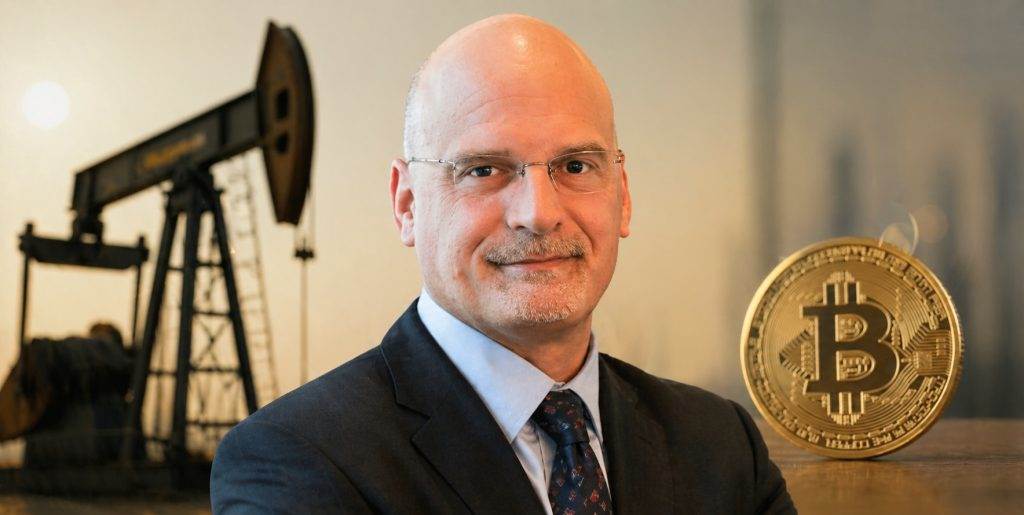
In a programme hosted by Criptocurrency commentator Scott Melker, Mike McGlone, Senior Commodity Strategy Manager, Bloomberg Intelligence, Peter Tchir, Director of the College Macro-Strategy for Securities, and Dave Weisberger, co-founder of CoinRoutes, discussed the recent price trends in Bitcoin and the latest developments in the global market.
From a low point of about $55,000 at weekends to a region of $64,000-$65 million: over 10 per cent increase triggered full market questioning
Bitcoin rebounded from a low point of about $55,000 to a low of $64,000 to $65,000 over the weekend, an increase of more than 10 per cent, which raised doubts as to whether the market had entered a new round of bull market, especially after having experienced a massive panic sale.
$11.3 billion Bitcoin Sales: Scott Melk points to the bottom contact signal
Scott Melk noted that short-term investors had sold a large number of Bitcoin in the recent price decline.
According to the data shared in the programme, short-term Bitcoin holders sold a total of $11.3 billion of Bitcoin when prices were near the lowest. Melk said that this represented a historic surrender, meaning that investors accepted huge losses and withdrew from the market.
Melk also mentioned that short-term investors had sold 92,100 BTCs and noted that the sales pressure at this level had been accompanied by significant bottom formation in the past market cycle.
Melk states that the long and bottom line formed on the Bitcoin and weekline maps, combined with high trade volumes, indicates that the purchase drive is responding strongly and that the market is beginning to emerge from the oversale area.
Melk noted that Bitcoin had fallen to a level of $55,000, which coincided with the anniversary of the previous round of the main bear markt low, and that current price trends were similar to those of previous cycles.
However, Melk also stressed that he had not made a clear bottom projection and that current technological prospects alone did not guarantee the continuation of the upward trend.
Pomber Analyst Mike McGraw had a pessimistic prediction of Bitcoin.
Mike McGlón, a senior commodity strategist at Bloomberg Intelligence, took a more cautious approach to the rise in Bitcoin.
According to Magloon, the current recovery may be only a temporary rebound in the larger downward trend, rather than the beginning of the new bull market.
The experienced analyst was particularly concerned about the monetary policy of Federal Reserve (Fed), saying that the market was pricing the December rate hike expected and expected to have three rate hikes in the next 12 months.
McGlón believes that the high interest rate environment may continue to put pressure on Bitcoin, gold and other risk assets.
Another notable factor in the analyst’s assessment is inflation. Maglón predicts that the United States producer price index (PPI) could fall to between 4 and 5 per cent of the same year over the same period next year, due to a possible fall in commodity and energy prices.
McGlón pointed out that in such a scenario, United States Treasury debt might be more attractive to investors, adding that bond yields of about 5 per cent could induce funds to exit at risk.
McGlón argued that the current rebound of Bitcoin might be an opportunity for investors to sell, and suggested that a short-term rebound might not be sufficient to reverse the larger downward trend.
Bitcoin may have gotten to the bottom, but don't expect a rapid rise.
Dave Weisberg, co-founder of CoinRoutes, said that the past market cycle should be examined when discussing the bottom of Bitcoin.
Weisberg recalled in particular the price fluctuations that had occurred after the collapse of FTX.
According to Weisberg, Bitcoin increased from about $16,000 to $20,000 during this period, but after recovery, the volume of transactions declined by 75-80 per cent, with markets moving horizontally at a low level of traffic volume and low volatility within months.
According to Weisberg, it is unrealistic to expect prices to rise directly and without interruption after the collapse of the city.
According to Weisberg, Bitcoin has touched the support areas previously tested in February and June within the current price range, which constitutes a positive technical prospect that may be interpreted as a three-fold bottom pattern.
However, the analyst stated that technical indicators should not be separated from independent assessments of macroeconomic development.
Weisberg stated that it would not be surprising if Bitcoin retested the level of $60,000 to $61,000 in the coming days, but warned investors not to be overly optimistic about short-term price trends.
Weisberg believes that the best strategy for long-term investors is to buy regular quotas (DCAs) rather than try to capture the exact bottom and reveal that he himself bought Bitcoin in the recent fall.
Peter Chil: Market issues remain unresolved
Peter Chil, Director of the College's Macro-Strategies for Securities, also stated that there were questions about the sustainability of Bitcoin and the rise in the global market.
According to Chil, the financing problem, particularly in the area of artificial intelligence, the private credit market and the potential changes in the lending tendencies of banks, may continue to affect future markets.
Although the programme evaluation reports that the return of Chief Executive Officer Hoang In-hoon to his post in Weida has had a positive impact on the market, Chill warns that this development has not completely eliminated existing financial risks.
According to Chil, the process that began with hedge funds to reduce their exposure may continue as banks and large instimulating investors reassess their loan portfolios.
The analyst indicated that, in particular, questioning the financing of artificial intelligence investments could tighten credit conditions, and that these effects could become more evident in the coming year.
Chil predicted that the current rebound might be rapidly weakening and that the market might return to its low point last week.
Atcoin is facing a bigger threat?
The final episode of the programme also discussed the relationship between Bitcoin and Atcoin.
Mike McGoll stated that assets in the cryptocurrency market still showed a high correlation with each other and that he believed that the decline, particularly atcoin, might not have ended.
Citing the dog coin (DOGE), he noted that the market value of the asset had fallen from about $20 billion to $8 billion in one year.
The analyst stated that while the altcoin continued to depreciate, it was difficult to expect a sustained bull market for Bitcoin.
Dave Weisberg said he believed that 95 to 99 per cent of the cryptocurrency market could become of no economic value in the long run.
However, Weisberg also noted that, after excluding Bitcoin and stablecoin, the total value of the cryptocurrency market could be higher in the next 10 years than it is today.
According to Weisberg, projects that are sustainable in the long term need to have practical applications and sustainable business models that generate income from those uses.
The key question for Bitcoin: permanent bottom or temporary recovery?
Analysts' assessments suggest that the $11.3 billion panic sale of Bitcoin may mark an important turning point in the market, but the endurance is uncertain.
Scott Melk interprets the warming of high trade volumes and technology indicators as a contribution to bottom formation, while Dave Weisberg argues that even when the potential bottom is formed, there may be a long-term cross-board price movement.
However, Mike McGlón and Peter Chil are more pessimistic about the sustainability of the current rebound, citing the Federal Reserve interest rate policy, high bond yields and credit risk in the financial system.
This does not constitute an investment proposal.