Exchange Ranking
 Top Exchanges
 24h Volume Ranking
 Popularity Ranking
 Exchange BTC Balance
 Proof of Reserves
 Decentralized Exchanges
 Funding Rate
 Funding Heatmap
 Liquidation Data
 Max Pain
 Long/Short Ratio
 Whale L/S Ratio
 Binance/Okex/Huobi L/S
 Bitfinex Margin L/S
 ETF Tracker
 Solana ETF
 XRP ETF
 Hong Kong ETF
 Bitcoin Treasuries
 Crypto Reversal
 Ethereum Reserves
 HyperLiquid Wallet Analysis
 Hyperliquid Whale Watch
 Large Transactions
 On-chain Movement
 Bitcoin ROI
 Stablecoin Market Cap
 Options Analysis
 News
 Articles
 Economic Calendar
 Features
 Wallet
 Contract Calculator


 Security
 Collections
 Watchlist
 Following
 ADA
 POL
 RON
 SUI
 WIF
 XRP
2026: Are XRP, Cardano and Polygon losing the favor of cryptocurrence investors?
Ben Simpson, founder of Crystal Shift, the Crystal Investment Platform, listed XRP, Cardano (ADA) and Polygon (POL) as one of six atcoins of his “no touch.” He noted that these projects had problems of network activity, uncertainty in valuation, and increased competition.
Simpson questioned the value claim of the XRP against the token holder.
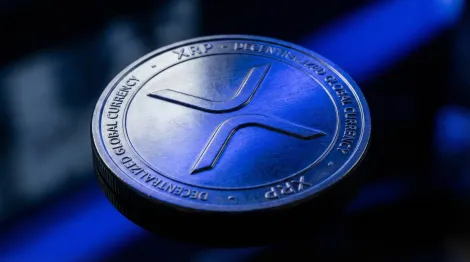
In a post published on platform X, Simpson acknowledged that XRP had achieved near-immediate and low-cost payment on XRP books, but he considered that the token lacked a strong mechanism to capture the value of Ripple ' s business growth.
XRP has made it possible to make quick, low-cost payments on the XRP books.
My problem with XRP is that it's “value capture.” When a business grows, I want to see how this success benefits the tokens that I hold. In this case, no.
Ripple can increase its income, but the holder cannot obtain it... - Ben Simpson (@bensimpsau) November 22, 2026
His main concern is that Ripple’s business success does not necessarily translate into direct economic benefits for XRP holders. While the San Francisco-based company continues to expand revenues and scale up payments, investors do not receive a single piece of it.
In addition, he noted that Ripple did not use its business income to repurchase XRP, a mechanism that could create additional demand for tokens. For Simpson, the lack of profit-sharing schemes and buy-back mechanisms made it difficult to establish in the long run a direct link between Ripple’s growing business and the XRP price.
The weak activity of the Cardano network raises concerns about its high valuation
Simpson also expressed reservations about Cardano, who did not consider that its level of use was sufficient to justify its market valuation. While ADA supported a blockchain that was designed to support smart conformity and decentrized applications, he believed that the network generated relatively little economic activity compared to the overall market size.
In support of his argument, Simpson quoted Cardano’s cost-generated data, claiming that, despite the fact that the ADA market was about $7.5 billion, the network had incurred only $140,000 in transaction costs within 30 days. In his view, this discrepancy raised questions as to whether Cardano attracted enough users and developers to maintain its valuation.
Ultimately, Simpson’s concern is that Cardano needs to turn its technological ambitions and mature ecososystem into more real-world activity. Without a substantial increase in Internet usage, he does not seem to think that ADA is attractive for investment.
Polygon faces intense competition and its expansional advantages are challenged
Polygon is also known for its focus on growing competition in the Ethereum Extension ecology system. While POL supports a network that aims to speed up transactions and reduce costs, a growing number of competitive blockchain solutions make it difficult for Polygon to maintain its unique advantage.
Simpson’s concern is that emerging networks offer similar benefits, including lower transaction costs and faster processing, making it more difficult for Polygon to find a clear way to differentiate. As multiple projects compete for developers, users, and chain activities, POL faces the challenge of proving why it is better than competitors.
Sui, Ronin and Dogwifhat also failed to meet the target.
In addition to XRP, Cardano and Polygon, there are three types of cryptocurrency that do not meet Ben Simpson's investment criteria: Sui (SUI), Ronin (RON) and Dogwifhat (WIF). Unlike the first three encryption projects, his reservations about these tokens stem mainly from changes in investment beliefs, disappointing adoption rates and excessive reliance on market speculation.
Sui was a former project held by Simpson, but after changing his investment opinion, he eventually lost 20 to 30% of his SUI position. The high-speed blockchain was designed to support the decentrazed application and the transaction, but he did not provide details of the specific developments that prompted him to make the decision.
Ronin was another project he abandoned, because it grew less than he expected. Initially attracted by the potential of the blockchain game, the analyst bought a network using the coin for transaction fees and staking. However, the expected expansion of the game did not happen as he wished, prompting him to withdraw relatively quickly.
At the same time, WIF represents another type of investment error. Simpson admits that his decision to buy Solana’s base currency is driven mainly by fire, not fundamental. After his investment beliefs changed, he sold his hold to limit further losses. His experience with the WIF seems to reinforce his preference for crypcurrency, supported by stronger fundamentals, rather than speculative excitement.