Exchange Ranking
 Top Exchanges
 24h Volume Ranking
 Popularity Ranking
 Exchange BTC Balance
 Proof of Reserves
 Decentralized Exchanges
 Funding Rate
 Funding Heatmap
 Liquidation Data
 Max Pain
 Long/Short Ratio
 Whale L/S Ratio
 Binance/Okex/Huobi L/S
 Bitfinex Margin L/S
 ETF Tracker
 Solana ETF
 XRP ETF
 Hong Kong ETF
 Bitcoin Treasuries
 Crypto Reversal
 Ethereum Reserves
 HyperLiquid Wallet Analysis
 Hyperliquid Whale Watch
 Large Transactions
 On-chain Movement
 Bitcoin ROI
 Stablecoin Market Cap
 Options Analysis
 News
News Articles
 Economic Calendar
 Features
 Wallet
 Contract Calculator


 Security
 Collections
 Watchlist
 Following
 BTC
BTC Goldman Sachs revises Fed forecast: expects 25 basis points to raise interest rates at September meeting
Goldman Sachs has revised its interest rate forecast for the Fed and now expects policymakers to raise interest rates by 25 basis points after the September 15 - 16 meeting.
Currently, Goldman Sachs expects the Federal Reserve to raise interest rates by 25 basis points at Wednesday's policy decision meeting. The U.S. consumer price index (CPI) rose 0.4% month-on-month in August, while the overall annual inflation rate remained unchanged at 3.4%. Core CPI rose 0.3% month-on-month, but the annualized rate fell to a five-year low of 2.4%. After inflation data was released on Friday, interest rate futures showed an 87% probability of a September rate rise. The Federal Open Market Committee (FOMC) will release its decisions, economic forecasts and policy statements in Washington on September 16.
It has been previously reported that Goldman Sachs abandoned its previous forecast of "keeping interest rates unchanged" after consumer inflation data and interest rate futures strengthened in August to support the prospect of raising interest rates. The Federal Reserve will announce its decision at 2 pm EST on September 16 and hold a press conference at 2:30 pm.
A one-quarter percentage point rate increase would increase the federal funds target rate range from 3.50%-3.75% to 3.75%-4.00%. However, the Fed has not committed to making this decision, and futures pricing only represents market expectations rather than official instructions from policymakers. Goldman Sachs 'adjustment shows that the bank believes that raising interest rates is the most likely outcome based on existing economic data, policy communication and market pricing, but this does not mean that the bank knows the specific voting intentions of Fed officials.
Inflation data sends mixed signals
According to the U.S. Bureau of Labor Statistics, the seasonally adjusted U.S. consumer price index rose 0.4% month-on-month in August. Overall inflation over the past 12 months remained at 3.4%, unchanged from July. The core CPI, which excludes food and energy, rose 0.3% for the month, and its annualized rate slowed from 2.5% to 2.4%, the lowest level in five years.
Energy costs take on a different picture. The Bureau of Labor Statistics said the annual energy index rose 16.3% for the year to August, and food prices rose 2.7%. Communications services, accommodation, air fares, education and used car prices recorded monthly increases, while medical and motor vehicle insurance prices fell.
Diane Swonk, chief economist at KPMG, pointed out that despite the low annualized rate of core inflation, detailed data on the service industry still makes the Fed uncomfortable. She estimated that the services sector excluding housing grew 0.5% in August and 3% from the same period last year. "Revenue is mainly concentrated in services," Swonk said. She described the service industry data as evidence of continued stress, an economic assessment rather than a conclusion released by the Bureau of Labor Statistics or the Federal Reserve.
Swonk expects overall PCE inflation to rise 0.4% month-on-month in August, and core PCE to rise 0.3%. If this forecast is true, the corresponding annualized rates will be 3.8% and 3.4% respectively, but the U.S. Bureau of Economic Analysis has not yet released its August PCE report. The Fed targets the PCE price index (2%) rather than the CPI. Although the core CPI fell to 2.4%, Swonk's forecast for the core PCE was 3.4%, which explains why analysts came to different conclusions about the same CPI report.
Economists are divided on reasons for raising interest rates
James Thorne, chief market strategist at Wellington-Altus, questioned whether economic data would be enough to support a change in Wall Street's forecast. He believes Goldman's revision appears to be more related to market expectations than changes in the inflation outlook. "There is no material change in the inflation outlook, but the rate hike is to appease Wall Street." Thorne said. He pointed out that annual wage growth was 3.1%, and no confirmed wage-price spiral was observed. He believes that higher borrowing costs will not expand oil production or repair supply chain disruptions, while interest rates will reduce demand, investment and household purchasing power.
In contrast, Swonk came to a different conclusion. She expected three interest rate hikes by early 2027 and said the August report increased the possibility of a unanimous rate increase in September. "We now expect three rate hikes by early 2027." The forecast comes from KPMG and has not yet been recognized by the FOMC.
Bitcoin fluctuates in line with Federal Reserve expectations
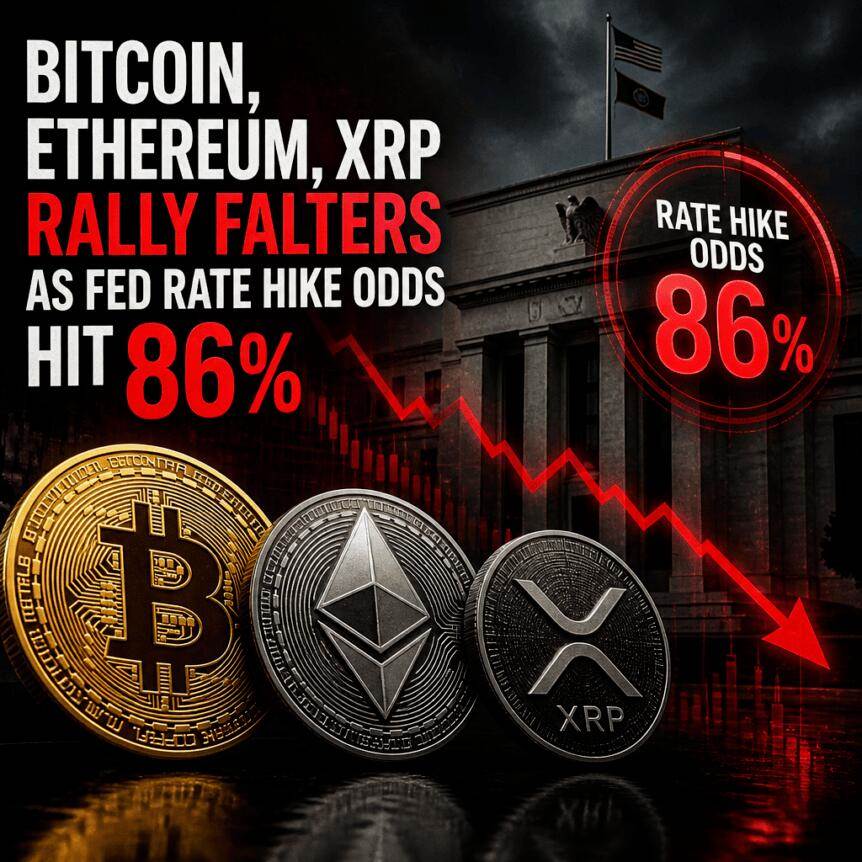
As expectations for interest rate hikes heat up, Bitcoin and other risky assets may come under pressure, as higher interest rates generally mean a tighter financial environment. On September 13, the price of Bitcoin fluctuated between $76,500 and $77,400, and the transaction price was around $77,000. As traders prepare for the Fed announcement, its price remains below the $80,000 mark.
According to the cryptocurrency news website, after the CPI data was released, Bitcoin briefly rebounded to above US$78,000 as the probability of a rate hike reached 81%. However, the Polymarket probability cited in the article is lower than the 87% futures estimate reported by The Wall Street Journal. Ahead of the inflation data, Bitcoin had been hovering around $79,500 as three major U.S. economic catalysts approached-including producer inflation, consumer inflation, and the September FOMC meeting.
Despite the continued inflow of cash bitcoin ETF funds, bitcoin still faced rising pressure from rising expectations of interest rate hikes in early September. Although ETF inflows can support demand, they do not eliminate the market's sensitivity to changes in interest rates, Treasury yields or the dollar. Because high interest rates can increase yields on low-risk assets, cryptocurrency prices typically respond to the Federal Reserve's decisions. Changes in individual markets can have multiple reasons, making it difficult to fully attribute Bitcoin's daily price changes to monetary policy expectations.
The Federal Reserve will release interest rates and forecasts on September 16
The two-day meeting of the FOMC will begin on September 15. Policymakers will issue policy statements, updated economic forecasts and their personal expectations for future interest rates at the end of the next day's meeting. Federal Reserve Chairman Kevin Warsh will speak to reporters 30 minutes after the announcement. Questions could involve energy-driven inflation, service prices, labor market conditions, and whether the September rate hike marks the beginning of a longer tightening cycle.
The Economic Forecast Summary will provide officials 'estimates of inflation, unemployment, economic growth and the federal funds rate. The interest rate forecast is not a binding commitment and may change as new data emerge. Markets will compare the policy statement with the Fed's previous wording to look for any changes in its assessment of inflation and employment. Investors will focus on whether Warsh describes the rate hike as a one-time adjustment or says further decisions depend on incoming data.
Unanimous approval by all employees is not guaranteed. The statement will identify any dissenting officials and specify whether they prefer to remain unchanged, larger rate hikes or other policy options. The FOMC will announce interest rate decisions and economic forecasts at 2 pm EST on September 16, followed by Warsh's press conference at 2:30 pm.