
 Exchange Ranking
 Top Exchanges
 24h Volume Ranking
 Popularity Ranking
 Exchange BTC Balance
 Proof of Reserves
 Decentralized Exchanges
 Funding Rate
 Funding Heatmap
 Liquidation Data
 Max Pain
 Long/Short Ratio
 Whale L/S Ratio
 Binance/Okex/Huobi L/S
 Bitfinex Margin L/S
 ETF Tracker
 Solana ETF
 XRP ETF
 Hong Kong ETF
 Bitcoin Treasuries
 Crypto Reversal
 Ethereum Reserves
 HyperLiquid Wallet Analysis
 Hyperliquid Whale Watch
 Large Transactions
 On-chain Movement
 Bitcoin ROI
 Stablecoin Market Cap
 Options Analysis
 News
News Articles
 Economic Calendar
 Features
 Wallet
 Contract Calculator


 Security
 Collections
 Watchlist
 Following
 BTC
BTC Bitcoin halved from October high, but MicroStrategy founders believe the correction is normal
Bitcoin has fallen by about half since hitting an all-time high in October and is currently well below the $100,000 mark. Still, MicroStrategy founder Michael Siler believes the current pullback is normal compared to the sharp sell-offs Bitcoin has experienced in the past. In Siler's view, while Bitcoin prices seem weak in the short term, the growth of institutional infrastructure has changed the long-term landscape.
Thaler warned that Bitcoin experienced a decline of as much as 75% between 2021 and 2022. He pointed out that since the company began buying Bitcoin in August 2020, it has witnessed five large declines, and the current correction is much smaller than before.
Why does Selle have different interpretations of Bitcoin prices?
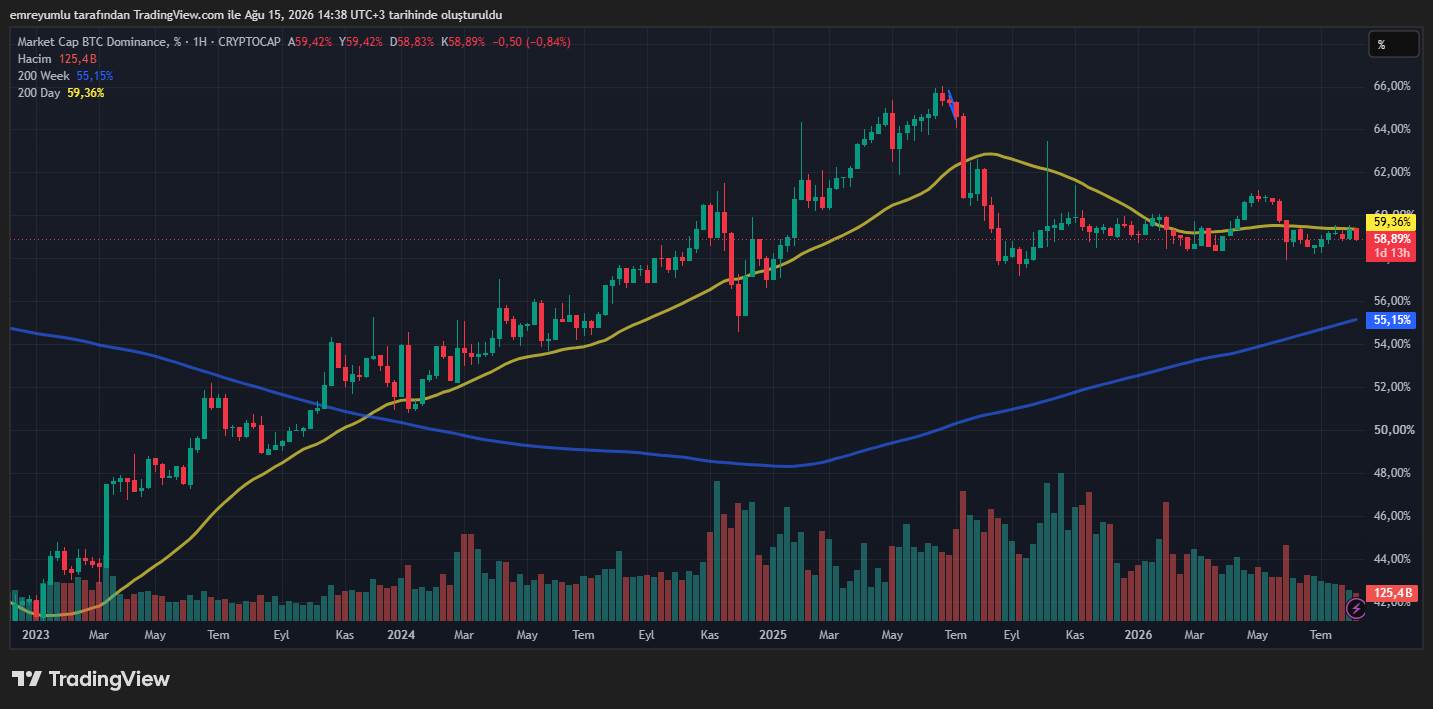
Thaler believes investors should focus on longer cycles rather than daily price fluctuations. In his view, it is more reasonable to adopt a four-year, preferably ten-year perspective for Bitcoin. In this method, the four-year moving average and the 200-week moving average are important reference indicators. Siler pointed out that sharp fluctuations on the daily chart are not enough to assess Bitcoin's long-term investment logic.
The real change that Selle emphasized is happening at the institutional structure behind prices. He said that two years ago, it was almost impossible for a U.S. president, Treasury secretary or banking regulator to make positive remarks about Bitcoin, but now support for Bitcoin from the White House, the Chairman of the Federal Reserve, the Securities and Exchange Commission and the Commodity Futures Trading Commission is increasing.
How much has Bitcoin's institutional attention increased?
According to Thaler, about 75% of large banks now support Bitcoin in some way, compared with almost zero in the past. The Bitcoin ETF market is also an important indicator of this change. Siler emphasized that there are currently about 100 Bitcoin ETFs with total assets under management exceeding US$100 billion, and this market does not exist before 2024.
These developments show that access to Bitcoin in the cryptocurrency market has become more institutionalized than in the past. Therefore, an important part of Thaler's argument is not the price of Bitcoin itself, but the strengthening of its position within the financial system.
Why is Bitcoin's dominance important?
One of the indicators that Thaler watches closely is Bitcoin dominance. This indicator shows that Bitcoin's share of the overall cryptocurrency market once fell to about 41% in 2021. At the time, the market generally believed that altcoins would overtake Bitcoin and that this leading crypto asset would lose its importance. However, Bitcoin's dominance subsequently rebounded to about 68%.
Thaler also pointed out that Bitcoin's code has been copied about 10,000 times, but Bitcoin has never been hacked, while other projects have encountered various attacks. He believes that this provides Bitcoin with important advantages in terms of network security and brand strength.
Can Bitcoin replicate the trajectory of Amazon and Apple?
Siler did not compare Bitcoin to gold or other crypto-assets, but instead compared it to Amazon's situation in 2010. He said that at the time, traditional investors were skeptical of Amazon's delivery-based retail model, but the company's success was beyond dispute over the years. Similarly, Siler recalled that in 2012, when he predicted that iPhone users would reach 1 billion, he was also seriously questioned. In his view, transformative technologies may initially seem meaningless or overly optimistic, but over time they will become widely accepted.
Thaler also cited Warren Buffett's investment in Apple as an example, pointing out that Buffett's approximately US$50 billion position in Apple shows that traditional capital often responds slowly to technological changes.
What factors may drive Bitcoin prices to rise again?
Selle did not make it clear that the current level is an absolute bottom, but listed potential catalysts for Bitcoin: the end of geopolitical conflicts, the shift from tight monetary policy to looser conditions, and the capital that flows to artificial intelligence investment eventually flows back to other assets. However, it should also be noted that this view is not entirely objective-Siler's company holds tens of billions of dollars in Bitcoin, and its past remarks may affect the market. The analogy between Amazon and Apple is also based on selected cases, where the past success of the two companies does not prove that Bitcoin will achieve the same results in the future.
Still, the growth of institutional infrastructure around Bitcoin is a quantifiable development. Therefore, when assessing whether Bitcoin is below $100,000, we must not only look at the price chart, but also focus on ETF positions, institutional attention, and long-term market structure.
This content in no way constitutes investment advice. There are high risks in the market, so please study it yourself before making an investment decision.
























