Exchange Ranking
 Top Exchanges
 24h Volume Ranking
 Popularity Ranking
 Exchange BTC Balance
 Proof of Reserves
 Decentralized Exchanges
 Funding Rate
 Funding Heatmap
 Liquidation Data
 Max Pain
 Long/Short Ratio
 Whale L/S Ratio
 Binance/Okex/Huobi L/S
 Bitfinex Margin L/S
 ETF Tracker
 Solana ETF
 XRP ETF
 Hong Kong ETF
 Bitcoin Treasuries
 Crypto Reversal
 Ethereum Reserves
 HyperLiquid Wallet Analysis
 Hyperliquid Whale Watch
 Large Transactions
 On-chain Movement
 Bitcoin ROI
 Stablecoin Market Cap
 Options Analysis
 News
 Articles
 Economic Calendar
 Features
 Wallet
 Contract Calculator


 Security
 Collections
 Watchlist
 Following
 BTC
 ETH
Grayscale claims Bitcoin's oversold, bear market has been running for 411 days
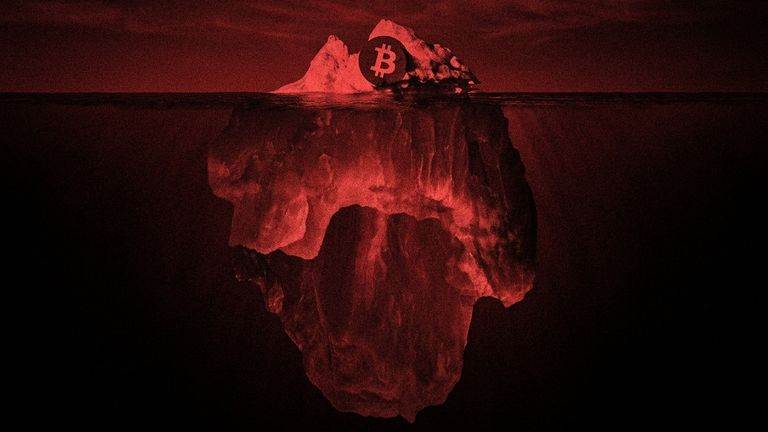
Grayscale, research director of Grayscale Investments, Zach Pandl, in a study published on 23 November, described the encrypted market as “oversale.” The report was published after Bitcoin fell to a low of US$ 55,254 on 21 November. Grayscale noted that this price level was about 56 per cent lower than the peak of US$ 124,824 in October 2025.
The report, originally published by Bitcoinist, contained an important precondition: Grayscale warned that uncertainty in the area of artificial intelligence (AI) could have a greater impact on the price of encrypted assets in the coming weeks than the blockchain fundamentals.
Grayscale states that after the longest 411 days since the record date, Bitcoin and other major cryptocurrency are now in oversold, and that the current valuation may be suitable for medium- and long-term investors. However, its short-term concern is that the uncertainty associated with AI may continue to discourage risk preferences.
Key facts
- Bitcoin ' s current downward cycle has lasted at least 411 days, the longest in the Grayscale historical comparison, at a price of about 56 per cent below its peak in October 2025.
- Bitcoin fell to the low of US$ 55,254 on the 21st November disk and then rebounded to around US$ 62,000 when Grayscale released its report.
- The Global Encrypted Exchange traded products (ETP) had more than $2 billion in outflows the previous week, and Bitcoin and Ethereum futures had fallen to summer levels.
- According to crypto.news, options traders pay higher premiums to purchase look-and-see protections, and the implied volatility of short-term futures is much higher than that of long-term futures.
- According to crypto.news, the iShares Bitcoin Trust Fund under the Beled flag recorded the largest single-day outflow of $544.7 million on 20 November.
Why Grayscale Focus on AI instead of blockchain
According to Pandl, the performance of the encrypted market in the short term may depend more on the dynamics of the technology market than on the activities of the public blockchain network. Grayscale points to a series of events that have obscured the investment prospects of AI since the beginning of November:
- The results of the midterm elections in the United States and the question of how future policy will affect the openness of data centre construction.
- The leadership of Nvidia (Engida) was volatile, and its co-founder, Hoang In-hoon, was removed from his post as Chief Executive Officer and subsequently reappointed.
The Corintelegraph report states that this incident in Nvidia directly affected the encryption market: after Huang was re-elected on 23 November, Bitcoin climbed to more than $64,000, but fell back to less than $60,000 for the next day’s Asian trading season due to weak demand for the spot. Grayscale also cited disruptions affecting the United States Federal Aviation Administration, Microsoft Outlook, major financial institutions, and the National Intelligence Agency as one of the factors that increased uncertainty.
The media have a slightly different view of how Grayscale views Anthropic's public listing. Bitcoinist describes it as the planned first public collection (IPO) and is accompanied by the company's Claude model, while crypto.news and Cindelegraph refer to it as an issue that has already taken place and Pandl as one of the largest in history. All media share the core argument: because cryptocurrency synchronizes with other risk-sensitive trading assets, the market can channel the emotional changes of AI to digital assets.
Financial flows and derivatives suggest that investors still take defensive positions.
Grayscale’s caution is supported by position data, not just price trends. Last week, the global encryption exchange traded more than $2 billion in product losses, stablecoin foreclosures, Bitcoin and Ethereum futures, falling back to summer levels – signs of investors reducing their exposures rather than increasing them.
A similar story is told by the options market. Dealers pay a large premium to buy a drop in their options in case prices fall further, and the short-term implicit volatility is much higher than the long-term futures, indicating a concern about recent price fluctuations. Bitcoinist points out that even if Bitcoin partially rebounded, these indicators remain, which is why Graysdale avoids determining the bottom of the market.
Marketshot
UTC Time 15:38, CoinPaprika data show that Bitcoin prices were $60,335 and fell by 3.8 per cent in 24 hours, by 5.9 per cent in 7 days, and $121 trillion in US$ 1.21 trillion in market caps.Etheneum transaction prices were $1,691, which fell by 4.4 per cent that day and by 5.3 per cent that week.
Why is this important?
The distinction made by Grayscale – which lasts a record time, but falls more sharply than in previous cycles – is crucial for anyone to judge whether this is a surrender or a slow saw-saw war. According to the company, the blockchain fundamentals are still solid, and current valuations provide attractive entry points for investors with longer holding periods, although it also points out that recovery requires not only cheap tokens, but also stability in the technology and technology markets and a return to institutional confidence.
For readers tracking the wider market, previous analyses of seven atcoins of interest in 2027 have shown that the issue of effectiveness and catalyst becomes more urgent when Beta-type assets are traded with risk sentiment rather than with their own fundamentals.
Matters of concern
The most direct signal is that ETF funds flow to the data – crypto.news notes that on the day Bitcoin fell by $60,000, the US put Bitcoin ETF had an additional $569.4 million per day net outflow. In addition, it is also important to see whether the drop-over premium and short-term implied volatility are mitigating. More AI headlines on Anthropic and Nvidia are another variable that Graysdale has identified as possible setting the tone.
Common Question Answers
Bitcoin, how long has the current bear market been going on?
Grayscale sets it at least 411 days, and claims it is the longest decline in its historical cycle analysis. Despite its long duration, it fell by about 56 per cent from its peak in October 2025, the smallest decline among the five major bear market reviews by the Agency.
Why does Grayscale think that AI is more important than the blockchain activity?
Zach Pandl argues that the development of the AI industry may have a greater impact on the price of encrypted assets in the coming weeks than the blockchain network performance. He cites the results of the US mid-term election, data centre policy, Nvidia leadership unrest, and service disruptions as sources of uncertainty.
What does the exchange market show for traded products and derivatives?
Global encryption exchange trades recorded more than $2 billion in money outflows in the previous week, while Bitcoin and Ethereum futures are not prepared to return to summer levels. The option traders pay a high downside protection premium, pointing to defensive positioning.
What's the price of Bitcoin's deal after the sale?
Bitcoin fell to a low of US$ 55,254 on the 21st of November and recovered to about US$ 62,000 at the time of Grayscale reporting. The authentication snapshot of November 24 showed that BTC was US$ 60,335 and fell by 3.8 per cent in 24 hours.