Exchange Ranking
 Top Exchanges
 24h Volume Ranking
 Popularity Ranking
 Exchange BTC Balance
 Proof of Reserves
 Decentralized Exchanges
 Funding Rate
 Funding Heatmap
 Liquidation Data
 Max Pain
 Long/Short Ratio
 Whale L/S Ratio
 Binance/Okex/Huobi L/S
 Bitfinex Margin L/S
 ETF Tracker
 Solana ETF
 XRP ETF
 Hong Kong ETF
 Bitcoin Treasuries
 Crypto Reversal
 Ethereum Reserves
 HyperLiquid Wallet Analysis
 Hyperliquid Whale Watch
 Large Transactions
 On-chain Movement
 Bitcoin ROI
 Stablecoin Market Cap
 Options Analysis
 News
 Articles
 Economic Calendar
 Features
 Wallet
 Contract Calculator


 Security
 Collections
 Watchlist
 Following
 BTC
 ETH
 ZEC
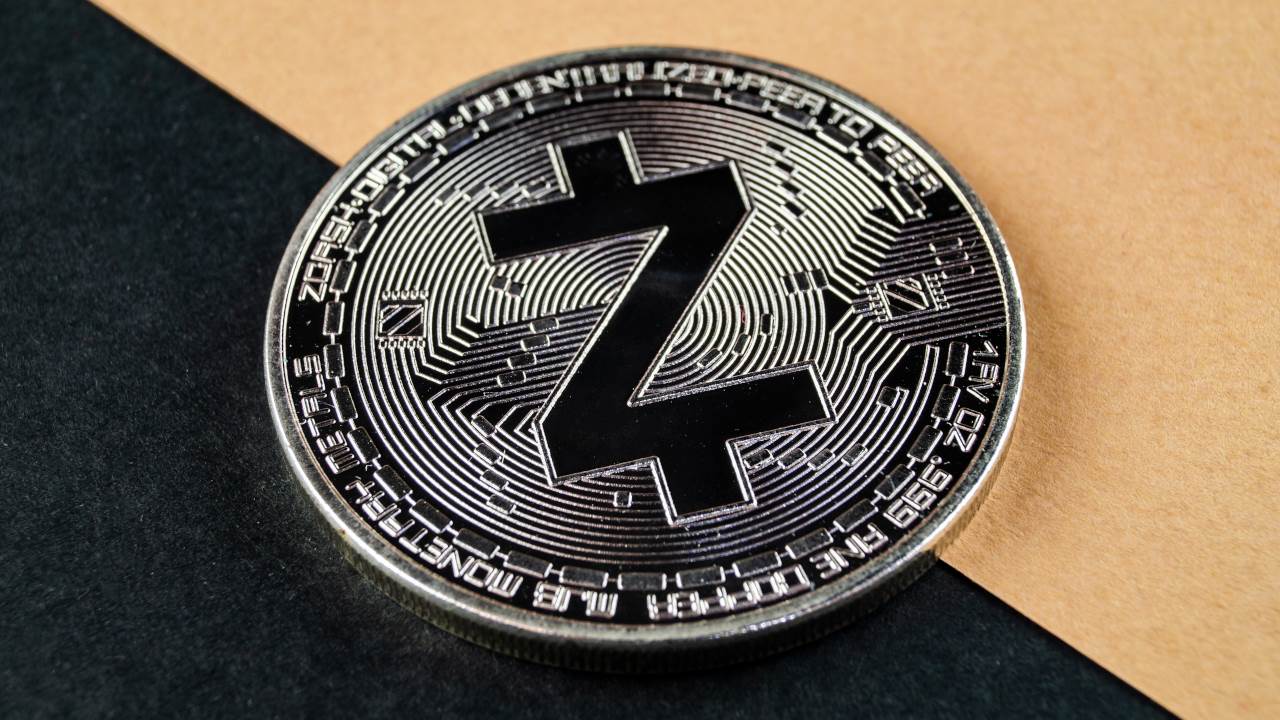
Zcash development team takes the lead in layout: Post-quantum signature function is expected to be introduced in January
Although most participants in the cryptocurrency market are still discussing the "defense model", a Zcash development team has formulated a clear plan. The Zakura team that built Zcash's full node said it expects post-quantum signature opcodes (opcodes) to be implemented in the Zcash network in January this year. Opcodes are underlying instructions that will allow the network to verify a new type of digital signature.
According to a technical article published by Roman Akhtariev, the goal of the project is to achieve a "post-quantum secure transparent pool of funds entirely based on hash signatures."
Dual defense mechanism to deal with potential threats
Zcash supports two types of payments: one is Shielded, which hides the sender, recipient, and amount; the other is transparent, which has public visibility similar to Bitcoin. The transparent address contains a hash value of a public key that remains hidden until the owner uses the funds and reveals the public key on the chain.
Zakura's plan combines two defenses:
- Address rotation : The wallet switches to a new address after each transaction, taking the public key out of sight.
- Hash-based backup signature : Add a hash-based backup signature called WOTS (One-Time Signature). Such solutions avoid elliptic curve mathematical operations, thereby avoiding researchers 'concerns about the risk of AI or quantum computers that may be cracked in the future.
Privacy protection and application of PIR technology
However, address rotation also brings privacy issues. When the wallet queries the server for balances from multiple addresses, the server may infer that these addresses belong to the same user. Zakura solves this problem through Private Information Retrieval (PIR) technology. PIR is a cryptographic technology that allows wallets to obtain records without revealing which record is being requested.
This feature will be launched in Vizor Wallet this week, and users have tested it by switching the "Private Query" option in settings.
Zakura wrote on Platform X (formerly Twitter):"While others are worried about the feasibility of transparent address rotation, we are already addressing connectivity issues."
Industry background and institutional interest
This move echoes a recent call from Justin Drake, a researcher at the Ethereum Foundation. Drake advised holders to calmly move funds to new addresses and warned that AI-driven computing power could undermine the ECDSA signatures on which Bitcoin and Ethereum rely before quantum computers emerged,"in the worst case, the time span could be months rather than years." Ethereum co-founder Vitalik Buterin later joined the discussion, arguing that within the next two years, AI-driven mathematical advances could break through encryption algorithms, a view that is "possible."
Zakura's plan currently only covers the transparent side of Zcash and does not say how or when opcodes will be activated on the network.
At the same time, Zcash is attracting growing institutional interest, including another U.S. ETF proposal by the Winklevoss twins and Europe's first Zcash ETP product. In addition, an upgrade was previously implemented to triple the efficiency of private payments.