Exchange Ranking
 Top Exchanges
 24h Volume Ranking
 Popularity Ranking
 Exchange BTC Balance
 Proof of Reserves
 Decentralized Exchanges
 Funding Rate
 Funding Heatmap
 Liquidation Data
 Max Pain
 Long/Short Ratio
 Whale L/S Ratio
 Binance/Okex/Huobi L/S
 Bitfinex Margin L/S
 ETF Tracker
 Solana ETF
 XRP ETF
 Hong Kong ETF
 Bitcoin Treasuries
 Crypto Reversal
 Ethereum Reserves
 HyperLiquid Wallet Analysis
 Hyperliquid Whale Watch
 Large Transactions
 On-chain Movement
 Bitcoin ROI
 Stablecoin Market Cap
 Options Analysis
 News
 Articles
 Economic Calendar
 Features
 Wallet
 Contract Calculator


 Security
 Collections
 Watchlist
 Following
 HBAR
 XLM
 XRP
 RLUSD
XRP, Stellar and Hedera: Who will banks choose in 2026?
When it comes to institutional adoption, XRP, Stellar (XLM) and Hedera (HBAR) are often discussed together. Each project has links to banks and large financial companies, but the number of partner announcements alone can lead to misleading conclusions.
A video on the BE CRYSTPTO SMART channel compares XRP, XLM and HBAR, focusing on which networks banks are actually testing or using. The interesting part is looking beyond the number of institutions associated with each project.
Some banks work with Ripple but do not use XRP directly. Others are testing Stellar or Hedera for specific tokenization and payment functions. This difference greatly changes the results of the comparison.
So, which project will have the strongest banking application case by 2026? The answer depends on what constitutes "adoption".
XRP has more major banking relationships, but direct use of XRP is more difficult to confirm
XRP ranks first because Ripple has established extensive relationships with the banking and financial services sectors over the years.
The BE CRYSTPTO SMART video points out several major institutions related to Ripple's broader ecosystem. These institutions include large financial institutions such as Bank of America, Bank of Santander, SBI, Bank of New York Mellon, and Standard Chartered Bank.
The important difference is what these relationships actually involve.
Ripple now operates a variety of institutional products that go beyond XRP. The company provides Ripple Payments, Ripple Custody and RLUSD, as well as infrastructure to connect to XRP ledgers. Therefore, banks that work with Ripple do not automatically become banks using XRP.
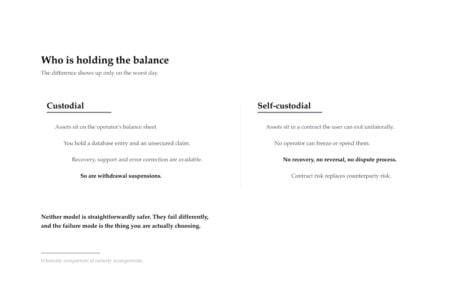
Bank of New York Mellon is a good example. Ripple selected Bank of New York Mellon as the primary custodian of its RLUSD reserves in July 2025. This represents an important institutional relationship, but the arrangement involves Ripple's stablecoin reserves rather than direct purchases of XRP.
RLUSD will also become larger in 2026. Ripple reported that as of August 20, RLUSD in circulation was approximately US$1.87 billion. The stablecoin can run on XRP ledgers and Ethereum, which provides Ripple with another way to enter institutional finance without requiring banks to hold the XRP itself.
Bank of America also explains why these differences are important. A U.S. Securities and Exchange Commission document dated February 3, 2026 confirmed U.S. banks 'institutional shareholding documents, but investment exposures disclosed through securities documents should not automatically be interpreted as operational use of XRP within banks.
This created an unusual situation for XRP. Ripple may have the broadest banking footprint of the three projects, but immediate XRP needs are more difficult to measure.
Therefore, XRP's banking case contains several separate parts:
Ripple has relationships with major financial institutions around the world.
Ripple's payment and custody products can operate if banks purchase XRP directly.
RLUSD provides organizations with another Ripple product that does not rely entirely on XRP needs.
XRP still benefits from the broader XRP ledger ecosystem, but infrastructure adoption and token adoption should be seen as separate measures.
This difference becomes important once Stellar joins the comparison.
Stellar XLM lists fewer banks, but a major U.S. bank is testing its network
Stellar's list of major banks is much shorter in the BE CRYSTPTO SMART comparison. However, its strongest cases provide a clearer link between banks and the Stellar network itself.
Bank of America, in partnership with PricewaterhouseCoopers and the Stellar Development Foundation, began testing the issuance of customized stablecoins on Stellar. The project aims to study whether regulated banks can issue programmable currencies via public blockchain.
Mike Villano, head of digital asset products at Bank of America, explains why Stellar is useful for experiments. Stellar provides features that allow issuers to freeze assets, undo certain transactions, and apply controls required for regulated financial services.
This is important because the bank is testing specific features on Stellar rather than maintaining a general relationship with the organizations behind the network.
In 2026, Stellar will also gain greater financial infrastructure connectivity.
DTCC announced on May 27 that its DTC tokenization service plans to connect with Stellar's public blockchain. DTC tokenized assets are expected to be available through Stellar in the first half of 2027.
DTCC is not a commercial bank. But its role may make the relationship more important than several individual bank pilots combined.
The company provides core post-trading infrastructure for the U.S. financial system. As a result, its decision to connect tokenized assets managed by DTC to Stellar provides the Stellar network with an institutional use case that goes well beyond the scope of a single bank.
As a result, Stellar XLM's performance varies significantly depending on the metrics used. The number of banks it lists remains small, but DTCC connectivity provides Stellar with one of the strongest institutional infrastructure cases of the three networks.
Hedera HBAR has strong bank engagement through real-life online pilots
Hedera presents another type of bank relationship.
HBAR's case relies less on a long list of ordinary partners and more on banks directly involved in building tests on Hedera.
Shinhan Bank and SCB TechX completed a proof of concept for stablecoin remittances on Hedera. The test enabled real-time settlement and foreign exchange integration between the tokenized version of the Korean won, Thai baht and New Taiwan dollar.
Shinhan Bank previously worked with Standard Bank to use Hedera to carry out an early international remittance project. Hedera now describes the two banks 'work as a series of pilots that use Hedera token service and Hedera consensus service for cross-border settlements.
Hedera's stablecoin studio also lists Shinhan Bank, SCB TechX and Standard Bank as institutions using its stablecoin infrastructure.
The governance structure provides Hedera with another institutional advantage. Shinhan Bank and Standard Bank have become members of the Hedera Board of Governors, so their relationship goes beyond testing a separate application. Hedera's network governance also includes large companies such as Google, IBM and Dell.
One constraint remains important. Many of Hedera's strongest banking cases remain proof-of-concept projects or pilots.
A successful pilot proved that banks can use the technology. But this does not prove that large amounts of commercial payments have been permanently migrated to Hedera, nor does it prove that banks need to accumulate large amounts of HBAR.
The same problem occurred in all three projects.
XRP, XLM and HBAR have advantages under different bank adoption measures
Simple comparisons make differences easier to understand.
XRP and Ripple: Banking advantages are broad relationships in the global financial sector; the main limitation is that Ripple adoption does not always create direct demand for XRP; the strongest argument in 2026 is the largest overall institutional ecosystem.
Stellar XLM: The banking advantage is the Bank of America stablecoin test plus DTCC connectivity; the main limitation is that there are fewer clearly listed commercial banks; the strongest argument in 2026 is the strongest financial market infrastructure relationship.
Hedera HBAR: Banking advantages are that multiple banks have directly tested Hedera services; the main limitation is that many projects are still in the pilot stage; the strongest arguments in 2026 are based on the strongest cases of direct banking network testing.
That's why it's so difficult to simply announce a winner.
When comparisons focus on institutional relationships and the breadth of financial products, Ripple leads.
Stellar becomes particularly competitive when infrastructure becomes more important than the number of banks. If DTCC tokenized assets are connected to the network in 2027 as planned, DTCC's plan to connect Stellar may become far more important.
Hedera performed better when the metrics focused specifically on banks testing services directly over the Internet. Shinhan Bank and Standard Bank provide well-documented examples, although production scale adoption remains the next big test.
Bank adoption does not automatically mean demand for XRP, XLM or HBAR
One lesson learned from the BE CRYSTPTO SMART comparison is more important than the final ranking.
Blockchain adoption and token demand are different things.
A bank can use Ripple technology without purchasing a large amount of XRP. A bank can issue stablecoins through Stellar without accumulating XLM as a reserve asset. A bank can test on Hedera by paying instead of buying HBAR enough to materially affect HBAR prices.
This makes the next phase much more important than the number of partners.
XRP needs more evidence to prove that Ripple's expanding institutional business has created measurable XRP usage. Stellar needs its DTCC connectivity to advance to launch in 2027 as planned. Hedera needed its banking pilot project to develop into recurring commercial transactions with measurable network activity.
As a result, banks chose parts of all three ecosystems, but for different reasons. XRP currently provides the broadest institutional infrastructure story, Stellar has prominent DTCC relationships, and Hedera has strong evidence of banks directly testing its network.