Exchange Ranking
 Top Exchanges
 24h Volume Ranking
 Popularity Ranking
 Exchange BTC Balance
 Proof of Reserves
 Decentralized Exchanges
 Funding Rate
 Funding Heatmap
 Liquidation Data
 Max Pain
 Long/Short Ratio
 Whale L/S Ratio
 Binance/Okex/Huobi L/S
 Bitfinex Margin L/S
 ETF Tracker
 Solana ETF
 XRP ETF
 Hong Kong ETF
 Bitcoin Treasuries
 Crypto Reversal
 Ethereum Reserves
 HyperLiquid Wallet Analysis
 Hyperliquid Whale Watch
 Large Transactions
 On-chain Movement
 Bitcoin ROI
 Stablecoin Market Cap
 Options Analysis
 News
News Articles
 Economic Calendar
 Features
 Wallet
 Contract Calculator


 Security
 Collections
 Watchlist
 Following
 BTC
BTC Core Points
Authorities have discovered a cryptocurrency mine located in a remote area. Theft of electricity remains the core charge. The hardware itself cannot identify the cryptographic assets being mined. Links to drug cartels and money laundering have not been confirmed. Wallet records can become key evidence in determining the direction of a case.
Authorities are investigating a suspected electricity theft operation
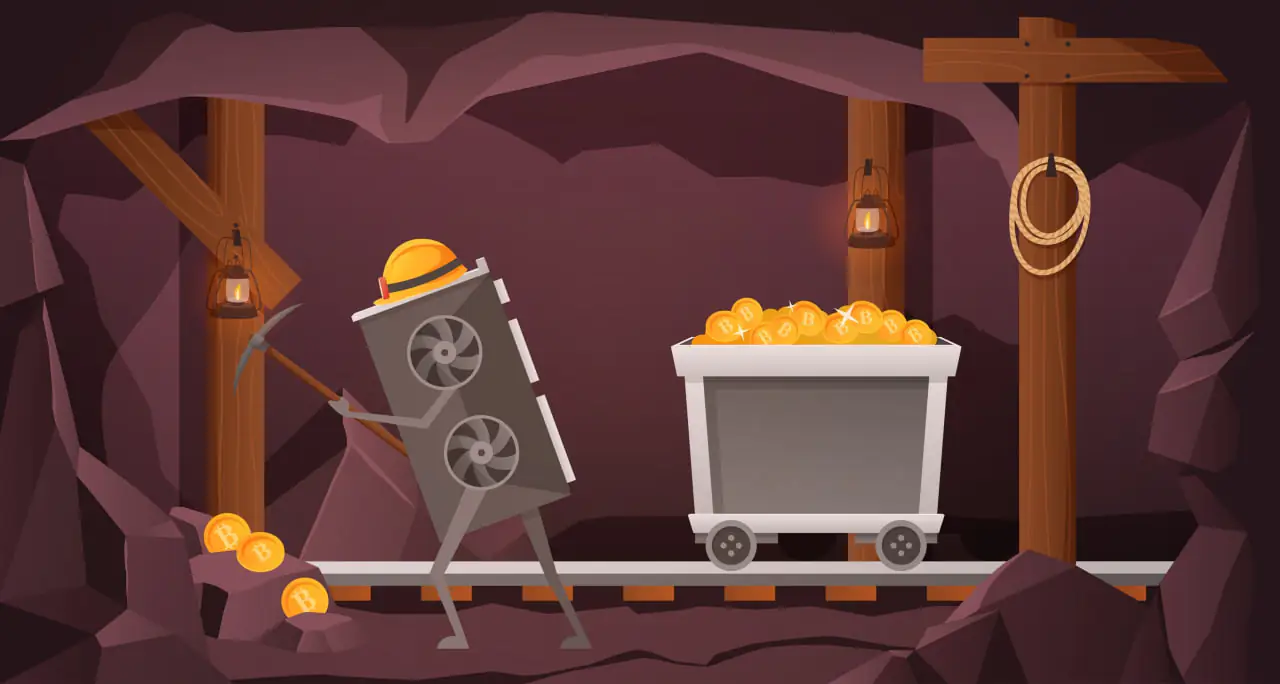
Law enforcement agencies in Puebla state have demolished a cryptocurrency facility near the Nueva Nexa Hydropower Station in the Sierra Norte. Reuters reported that the location contained about 300 graphics processing units (GPUs), medium voltage equipment and satellite antennas. Authorities are investigating whether the facility was illegally connected to nearby power infrastructure. If true, the stolen power will reduce machine operating costs, allowing operators to retain mining revenue without having to pay electricity bills, which is usually one of the largest recurring expenses.
In Mexico, mining for cryptocurrencies itself is not prohibited. According to authorities quoted by Reuters and El Pais, the focus of the investigation is on suspected theft of electricity. Reuters also reported that officials were reviewing possible organized crime and money laundering links, while Mexican federal prosecutors had not decided because the case was still pending.
Published evidence shows
Physical settings
Authorities found a sizable set of computing and electrical installation equipment at the site of an investigation into suspected illegal use of electricity.
Undisclosed details
Current reports do not specify the identity of the operator, the types of crypto assets mined, mining pool accounts, wallet addresses or exchange accounts.
The equipment list does not prove that Bitcoin was being mined.
The confiscation of machines only established computing power, not financial output. The published list does not show what assets were mined, how much was produced or who received the benefits. This omission is critical in this case because the hardware described is based on GPUs. GPUs can support different cryptocurrencies and computing loads. In contrast, Bitcoin mining has long been dominated by dedicated ASIC machines, which, according to data from the Cambridge Alternative Financial Center, have replaced GPU mining due to their efficiency with the Bitcoin SHA-256 algorithm.
Therefore, the GPU list cannot establish whether the facility is producing Bitcoin, producing other assets or running other types of high-intensity computing tasks. Reuters reported that it was the fourth cryptocurrency mine discovered near the dam since early 2025, giving authorities reason to investigate the area's power infrastructure. But this does not establish joint ownership or a single criminal network.
Mining itself does not constitute a money laundering trajectory
If the location does occur, the stolen power may reduce the cost of generating encryption rewards. This economic incentive helps explain why authorities review suspected illegal mining activities, but it does not prove that the Puebla location generated proceeds of crime or laundered money.
Independent miners receive rewards through blockchain block reward transactions-which have nothing to do with exchanges such as Coinbase. Miners who use mining pools receive payouts based on their calculated contribution share. Identifying an address or pool account will allow investigators to review subsequent transfers and seek records when funds are transferred to the exchange. Attribution analysis is the difficulty: the transaction itself does not reveal its owner, and intermediate wallets or pooled payouts may obscure the path of funds. However, once investigators determine the relevant address, each subsequent transfer can provide additional transaction history. This is crucial when authorities assess whether cryptocurrencies are simply an alleged output of stolen electricity or part of a broader money-laundering route.
The same problem exists with illicit funds traceable on the chain: Moving cryptocurrency between wallets does not necessarily eliminate records that investigators can analyze.

Electricity theft is often the first clue.
Legal mining must cover power, equipment, cooling, maintenance, and costs due to changes in mining difficulty. An operator suspected of bypassing the power grid may have avoided one of the biggest expenses, although it still has to bear equipment and maintenance costs. Remote locations can reduce visibility, but Reuters reported that Puebla's operations are still attracting attention due to unusual power use and mechanical noise. Electricity meter anomalies, transformer records, equipment purchases, satellite Internet accounts and property access can help establish who operated the site before investigators determine any wallets.
Similar raids point to energy theft patterns
Puebla is not the only isolated case of suspected theft of electricity involving cryptocurrency devices, although existing cases do not establish a common criminal network. In recent mining raids in Malaysia, the focus was also on suspected unauthorized connections to the power grid, rather than the mining itself.
The common incentives are simple: Passing on power costs to utilities or public grids can change the economic model of operations. At this point, the cryptocurrency element becomes a separate financial issue: what asset is generated, who controls it, and how it is transferred.
What evidence could link the raid to the broader financial network?
The next disclosure is more important than the number of machines confiscated. Ownership documents can connect the device to the carrier. Mining pool records or wallet addresses can identify the output, while exchange deposits, monetization activities or transfers related to known criminal entities can show whether the output entered the broader financial network.
The raid may show the day-to-day financing of the suspected operation: an attempt to avoid power costs.
Wallet, mining pool and withdrawal records will show whether the resulting cryptocurrency has become part of a provable drug cartel's financial or money laundering chain.