Exchange Ranking
 Top Exchanges
 24h Volume Ranking
 Popularity Ranking
 Exchange BTC Balance
 Proof of Reserves
 Decentralized Exchanges
 Funding Rate
 Funding Heatmap
 Liquidation Data
 Max Pain
 Long/Short Ratio
 Whale L/S Ratio
 Binance/Okex/Huobi L/S
 Bitfinex Margin L/S
 ETF Tracker
 Solana ETF
 XRP ETF
 Hong Kong ETF
 Bitcoin Treasuries
 Crypto Reversal
 Ethereum Reserves
 HyperLiquid Wallet Analysis
 Hyperliquid Whale Watch
 Large Transactions
 On-chain Movement
 Bitcoin ROI
 Stablecoin Market Cap
 Options Analysis
 News
News Articles
 Economic Calendar
 Features
 Wallet
 Contract Calculator


 Security
 Collections
 Watchlist
 Following
 XLM
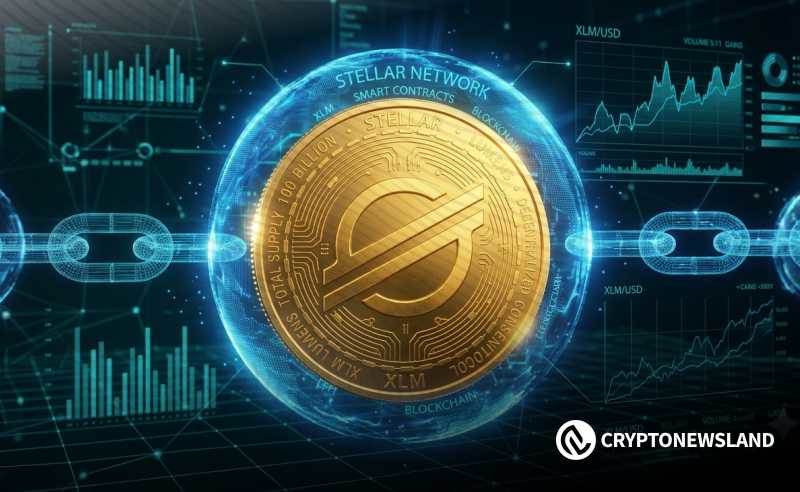
XLM Stellar Network Activity Expansion: Tokenized Assets, Stabilicoins and Banking Pilots Deep into Blockchain Settlement Infrastructure
Adoption of the Stellar Network is accelerating as banks, asset managers and payment institutions increasingly test blockchain infrastructure for regulated settlements in 2026. This trend covers both the payment sector and tokenized financial markets, marking a solid step forward for the network in integrating traditional finance and modern technology.
RWA (real-world asset) growth sets the macro context
X Finance Bullframed puts the latest developments in the context of Stellar's broader institutional expansion. According to its posts, as of early September, the value of real-world assets (RWAs) on Stellar was approximately US$4 billion. This figure reflects significant growth after multiple major milestones experienced since January:
- January: RWA value is approximately US$1 billion;
- April: reached approximately US$2 billion;
- June: increased to approximately US$3 billion; [TAG Early September: climbed to about $4 billion.
According to the data provided, this eight month period achieved approximately 300% growth, highlighting Stellar's rapid expansion results in 2026.
Bank of America's USBDC Cross-Border Pilot
U.S. Bank has added another financial institution use case to the Stellar network with its USBDC stablecoin pilot project. The bank successfully completed real-time cross-border transactions between North America and Europe. The transaction utilized Stellar network for settlement while retaining traditional banking industry risk and compliance controls.
The announcement issued by the bank described this as a completed online transfer. The announcement also mentioned the payment, redemption, freezing and recovery functions available to participants. These features combine blockchain settlement with established control mechanisms used in traditional regulated banking, achieving a balance between technological innovation and compliance requirements.
stablecoins expand payment connectivity
Franklin Templeton provides another institutional-level case through its BENJI fund. According to data, the BENJI Fund has been operating on the Stellar network since 2021, and currently approximately US$654 million in BENJI is circulating on the network.
BENJI supports point-to-point transfers, revenue allocation and collateral functions. These capabilities allow tokenized funds to go beyond basic investment holding arrangements, demonstrating how traditional financial products can gain additional functionality through blockchain infrastructure.
In addition, MoneyGram has enhanced its payment infrastructure by launching the native stablecoin MGUSD on Stellar. At the same time, USDT0 also went online on September 2, connecting Stellar to more than $180 billion in unified USDT liquidity across networks. According to the data provided, this mobility is distributed on more than 26 networks. This development adds another dollar-based channel to the USBDC and MGUSD, jointly expanding the range of stablecoin activity associated with the network.
Institutional infrastructure further broadened
The report also pointed out that it is planned to realize connection with the American Depository Trust and Clearing Corporation (DTCC) in the first half of 2027. DTCC's tokenization service is preparing to interface with Stellar, during which it is evaluating assets such as U.S. Treasury bonds, major exchange-traded funds (ETFs), and Russell 1000 Index securities.
The proposed connection would put traditional securities in line with existing tokenization instruments and potentially expand the range of assets that can flow through shared infrastructure. Although the timetable provided points to the future, the implementation target is set for the first half of 2027.
Nuvanté has also tested Stellar-based stablecoin clearing through the Bank of England Synchronisation Lab. This test adds another bank-related use case to the listed cases. The common thread running through all of these developments is settlement through blockchain-based financial infrastructure.
XLM's core position
Looking at the above developments, XLM has always been closely connected to Stellar's core operations. Trading requires XLM to pay fees, and accounts require XLM as reserves. Smart contract resources and path payments also connect native assets directly to network activities, ensuring their fundamental role in the ecosystem.