Exchange Ranking
 Top Exchanges
 24h Volume Ranking
 Popularity Ranking
 Exchange BTC Balance
 Proof of Reserves
 Decentralized Exchanges
 Funding Rate
 Funding Heatmap
 Liquidation Data
 Max Pain
 Long/Short Ratio
 Whale L/S Ratio
 Binance/Okex/Huobi L/S
 Bitfinex Margin L/S
 ETF Tracker
 Solana ETF
 XRP ETF
 Hong Kong ETF
 Bitcoin Treasuries
 Crypto Reversal
 Ethereum Reserves
 HyperLiquid Wallet Analysis
 Hyperliquid Whale Watch
 Large Transactions
 On-chain Movement
 Bitcoin ROI
 Stablecoin Market Cap
 Options Analysis
 News
News Articles
 Economic Calendar
 Features
 Wallet
 Contract Calculator


 Security
 Collections
 Watchlist
 Following
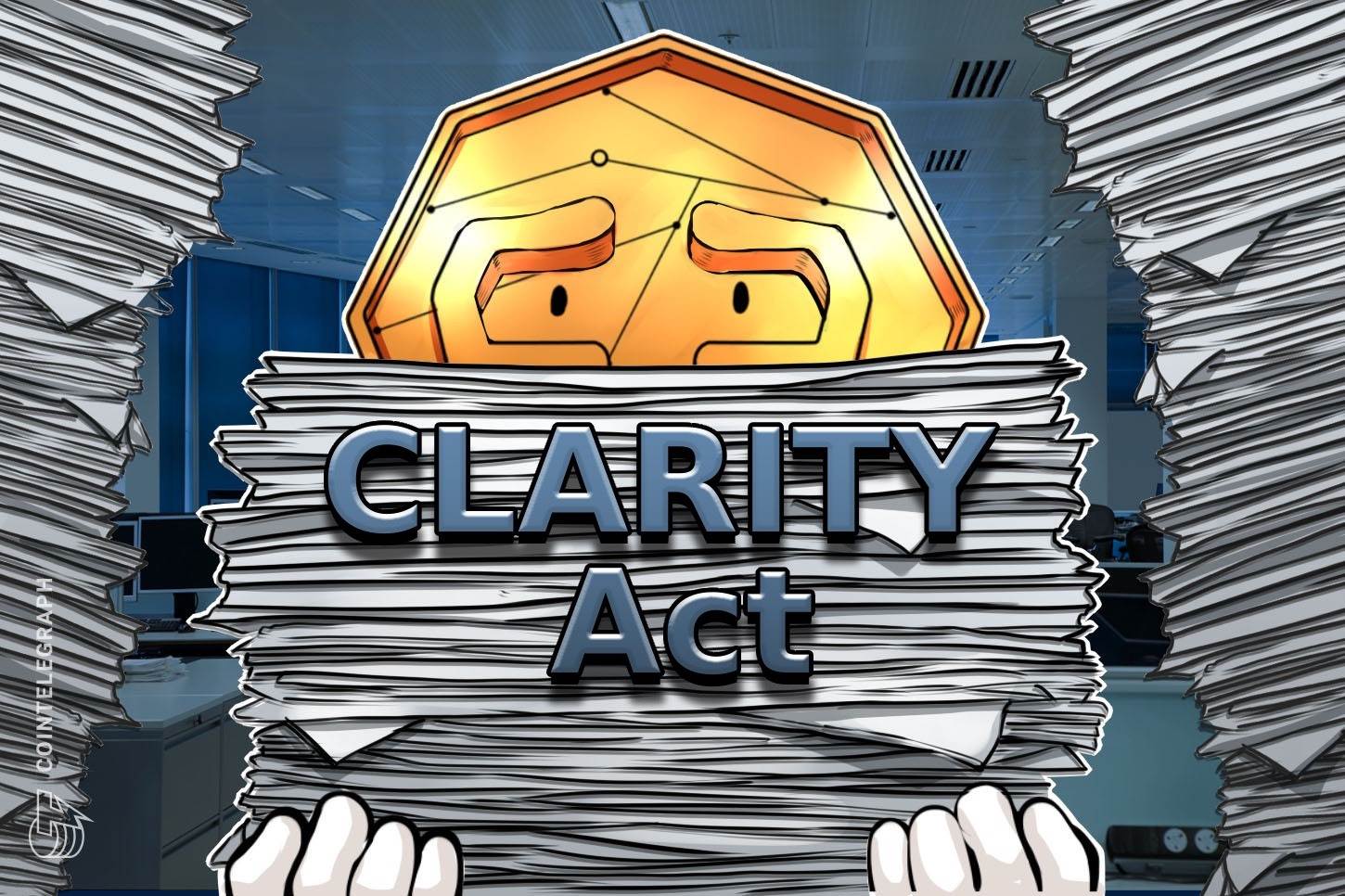
The CLARITY bill is about to usher in a key procedural vote in the U.S. Senate
According to multiple reports, the CLARITY bill, which clarifies a framework for regulating digital assets on blockchain, is about to face a key procedural vote in the U.S. Senate on Tuesday after President Donald Trump agreed to most of a bipartisan proposal to strengthen moral restrictions on public officials 'interests in crypto assets.
However, the latest compromise did not eliminate all opposition voices. Currently, a bipartisan group of national attorneys general is urging senators to veto the bill because they fear it will weaken state regulation of the crypto industry.
An alliance of 18 state attorneys general led by New York Attorney General Letitia James argued in a letter to Senate Banking Committee leaders that the CLARITY Act would make it more difficult for states to take action against crypto companies suspected of fraud or other misconduct.
"While the current draft of the CLARITY Act retains certain powers of states to prosecute fraud, its language is often vague, unclear or restricted, which either provides an opportunity to challenge states 'police powers or completely deprives states of their ability to continue to combat the wave of fraud," the letter said.
Their objections add another layer of complexity to the legislation. Although the revised bill gives state attorneys general a role in enforcing new ethical restrictions, the group believes other provisions would weaken their power to regulate the crypto industry.
<《CLARITY法案》被视为美国加密立法的里程碑式文件,它将建立数字资产的联邦市场结构,澄清加密资产何时属于证券法或商品法范畴,并界定证券交易委员会(SEC)和商品期货交易委员会(CFTC)之间的监管职责。
Earlier reports said Senate Majority Leader John Thune submitted a motion for closing debate on the CLARITY Act last month after failing to push the legislation through before Washington adjourns. A procedural vote on Tuesday will determine whether the bill goes to Senate debate.
Trump agrees with stricter rules of encryption ethics
These state attorneys general spoke out just as lawmakers were making progress on another major difficulty in the CLARITY Act. The Associated Press reported on Sunday that a senior Republican aide said Trump had agreed to "about 80%" of the proposals proposed by Republican Sen. Thom Tillis and Democrat Sen. Ruben Gallego.
The bill already prohibits federal elected officials, their spouses and federal judges from issuing digital assets, but the latest compromise goes further. Officials with a "significant" financial interest in a crypto issuer will be required to strip that interest or place it in blind trusts. The state attorney general will also play a role in enforcing these restrictions.
The concessions address some concerns raised by Democrats and Tillis, who has pointed out that early ethics clauses were insufficient to resolve potential conflicts involving Trump's crypto shareholding and business interests.
Crypto in America, a publication co-chaired by Eleanor Terrett, said the weekend's events triggered "renewed optimism" across the digital asset industry. Republicans described the revised legislation as the "last, best and final proposal" to Democrats before Tuesday's vote.
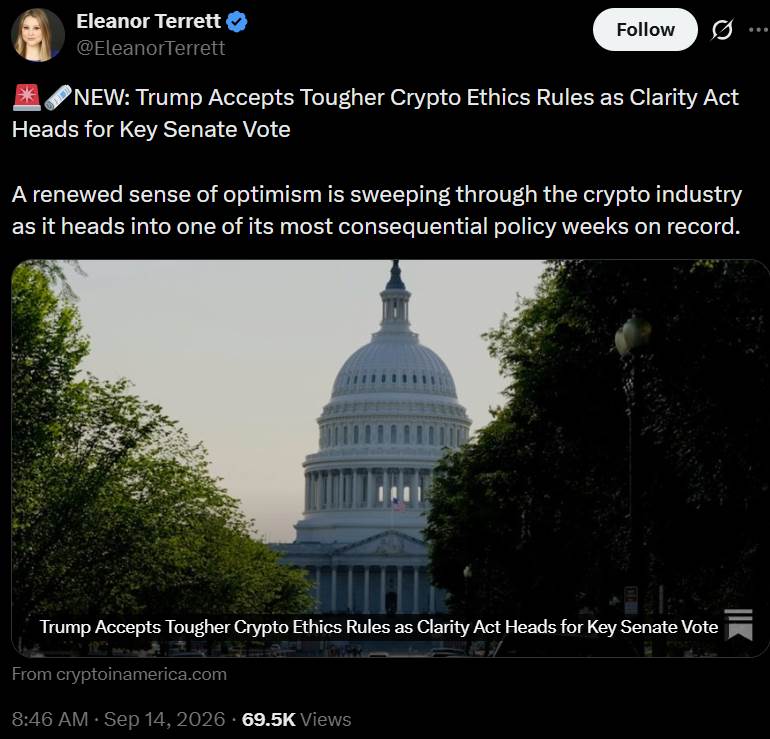
Source: Eleanor Terrett
The crypto industry has been pushing the CLARITY Act to establish a federal market structural framework for digital assets, including clarifying the boundaries between the regulatory roles of the SEC and CFTC.