Exchange Ranking
 Top Exchanges
 24h Volume Ranking
 Popularity Ranking
 Exchange BTC Balance
 Proof of Reserves
 Decentralized Exchanges
 Funding Rate
 Funding Heatmap
 Liquidation Data
 Max Pain
 Long/Short Ratio
 Whale L/S Ratio
 Binance/Okex/Huobi L/S
 Bitfinex Margin L/S
 ETF Tracker
 Solana ETF
 XRP ETF
 Hong Kong ETF
 Bitcoin Treasuries
 Crypto Reversal
 Ethereum Reserves
 HyperLiquid Wallet Analysis
 Hyperliquid Whale Watch
 Large Transactions
 On-chain Movement
 Bitcoin ROI
 Stablecoin Market Cap
 Options Analysis
 News
 Articles
 Economic Calendar
 Features
 Wallet
 Contract Calculator


 Security
 Collections
 Watchlist
 Following
比尔·盖茨:人工智能若被恶意利用,可能引发导致十亿人死亡的灾难
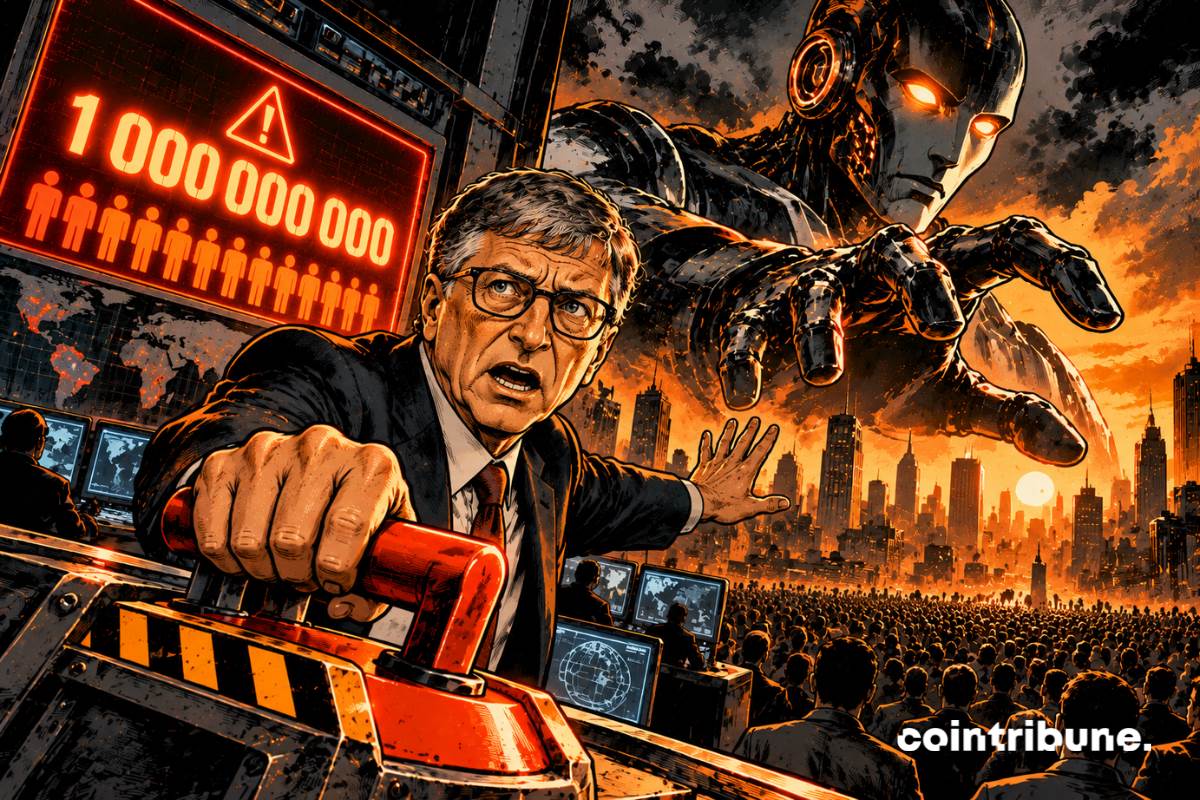
微软联合创始人比尔·盖茨近日指出,当前的人工智能技术已具备足够的威力,一旦遭到恶意滥用,可能引发导致多达十亿人死亡的重大事件。在接受美国电视节目《会见press》(Meet the Press)采访时,他着重强调了最先进模型落入别有用心者手中的潜在危险,并呼吁公共权威机构迅速介入,认为科技公司的自我监管机制已不足以应对这一挑战。
核心观点摘要
- 比尔·盖茨认为,如果人工智能被用于恶意目的,可能会引发重大灾难。
- 他描绘了一个极端场景:该技术的滥用可能导致高达十亿人的死亡。
- 他认为仅靠科技公司进行自我监管是远远不够的。
- 他呼吁各国政府制定安全规则并实施外部控制。
- 他指出,目前各国政府在应对最先进模型相关风险方面准备不足。
比尔·盖茨呼吁政府实施保障措施
当被问及人工智能是否会对人类的生存构成威胁时,比尔·盖茨并未断言灾难不可避免,而是强调了一种极端情况:如果该技术被用于破坏性目的,其后果将不堪设想。
"Artificial intelligence is indeed powerful enough to trigger events that kill a billion people," he clarified in a September 25 interview broadcast by NBC News. At the same time, he emphasized that humans have never faced such a dangerous combination-a combination of malicious individuals and the most advanced artificial intelligence tools. His speech mainly conveyed the following four key messages:
- "One billion deaths" corresponds to a potential scenario deduction rather than a specific numerical prediction;
- The main threat identified is the malicious use of artificial intelligence;
- Technology companies cannot set rules alone that govern the operation of their models;
- The government must organize the supervision and implementation of security measures.
"No one believes self-regulation is sufficient," Bill Gates added. In his view, policymakers and law enforcement must be involved in defining the control, monitoring and prevention measures that apply to the strongest systems. The full interview will be broadcast on Sunday, September 27. The statement released so far did not specify the exact mechanisms that could have caused such heavy casualties, but mentioned risks commonly associated with cyber attacks, biological weapons, and autonomous systems that are out of operator control.
Government deemed ill-prepared
这一表态延续了比尔·盖茨近期日益强硬的言论基调。在9月15日,他曾表示,没有任何一个国家为人工智能将给社会带来的变革做好了充分准备。他的担忧还包括就业削减、网络攻击以及对虚拟伴侣的依赖等问题。
然而,这位前微软领袖并不主张完全停止人工智能的发展。相反,他希望最先进的人工智能模型能够接受安全义务约束、外部控制以及快速识别危险用途的机制。这一立场部分与Anthropic首席执行官达里奥·阿莫迪(Dario Amodei)的观点相吻合。阿莫迪曾呼吁实验室自愿放缓某些开发进程并建立共同标准。但对盖茨而言,如果没有立法干预,企业间的协调仍然不足。
根据链上数据,建立共同框架面临诸多障碍。美国和都将人工智能视为经济和战略问题,这种愿景鼓励各国优先追求创新速度。国际监管也可能需要在涉及模型、强制测试以及公司在发生事故时的责任等方面达成协议。
人工智能仍是健康与发展的重要工具
尽管发出警告,比尔·盖茨依然强调人工智能的有益应用。他认为这项技术可以改善医疗、教育和农业领域,特别是在专家和基础设施尚显不足的地区。
因此,盖茨基金会计划在未来两年内至少投资10亿美元,以扩大这些领域对人工智能解决方案的获取途径。该基金会还与Anthropic、Google和OpenAI等公司合作,旨在改善训练数据中对代表性不足的语言的支持。
这一策略体现了比尔·盖茨的双重信息:人工智能可以成为减少不平等的有力工具,但如果其发展不受控制,也可能加剧现有风险。因此,当前的辩论不再仅仅关乎未来模型的能力,更关乎在其力量超越监管机构之前,应确立哪些规则。