Exchange Ranking
 Top Exchanges
 24h Volume Ranking
 Popularity Ranking
 Exchange BTC Balance
 Proof of Reserves
 Decentralized Exchanges
 Funding Rate
 Funding Heatmap
 Liquidation Data
 Max Pain
 Long/Short Ratio
 Whale L/S Ratio
 Binance/Okex/Huobi L/S
 Bitfinex Margin L/S
 ETF Tracker
 Solana ETF
 XRP ETF
 Hong Kong ETF
 Bitcoin Treasuries
 Crypto Reversal
 Ethereum Reserves
 HyperLiquid Wallet Analysis
 Hyperliquid Whale Watch
 Large Transactions
 On-chain Movement
 Bitcoin ROI
 Stablecoin Market Cap
 Options Analysis
 News
News Articles
 Economic Calendar
 Features
 Wallet
 Contract Calculator


 Security
 Collections
 Watchlist
 Following
 BTC
BTC Goldman Sachs CEO David Solomon told Politico on July 23, 2026 that he supported advancing the revised CLARITY Act, saying the cryptocurrency market structure legislation would create a "level playing field to enhance market stability."
This directly and publicly refutes JPMorgan CEO Jamie Dimon, who warned in May that the bill's stablecoin earnings provisions would "ultimately cause an explosion."
This confrontation is not just a personality conflict between two Wall Street giants, but a structural struggle accurately mapped to different balance sheet models. Solomon leads an investment bank whose fee income grows with institutional cryptocurrency trading volume and capital markets activity; Dimon leads a deposit-driven commercial bank whose financing costs will be compressed if interest-bearing stablecoins compete directly for retail deposits.
Republicans released a revised draft CLARITY bill on July 23, sparking divisions within hours. The bill is the most advanced attempt in the United States to unify the structural framework of the cryptocurrency market, building on the passage of FIT21 in the House (blocked in the Senate in 2024) and the years of failed Ramis-Gillibrand negotiations.
stablecoin gains clause: What the CLARITY Act allows and why deposit-driven banks view it as unregulated deposit solicitation
Sudden: Goldman Sachs CEO supports approval of the CLARITY Act  "I'm very supportive of moving the CLARITY bill forward so that we can build some market structures."-- David Solomon, CEO of Goldman Sachs, interviewed by Politico-Bitcoin Archive (@BitcoinArchive) July 23, 2026
The debate on the CLARITY bill focuses on the language that allows crypto platforms to provide benefits for stablecoins pegged to the U.S. dollar, a position that has been opposed by banking trade groups including the American Bankers Association for nearly a year.
The current draft allows such rewards, subject to capping payments and adding disclosure requirements. JPMorgan's Jamie Dimon expressed concern that the bill would allow crypto companies to pay interest on deposits without the necessary bank supervision, which he believed could cause major problems.
In addition, the bill clarifies the regulatory division of labor between the U.S. Securities and Exchange Commission (SEC) and the U.S. Commodity Futures Trading Commission (CFTC), designating certain digital assets as commodities and regulated by the CFTC. Proponents such as Solomon believe the move is crucial to market development.
Solomon's Support and Investment Banking Business Model: Why Goldman Sachs broke with Wall Street on regulatory issues
Solomon's support for the CLARITY Act breaks the unified stance of large banks and reflects Goldman Sachs 'cryptocurrency revenue model.
Unlike JPMorgan Chase, Goldman Sachs relies less on retail deposits and more on fee income from market-making, underwriting and digital asset planning. Clarity in cryptocurrency regulation may expand Goldman Sachs 'market reach.
This disagreement is noteworthy because the two banks have previously collaborated on blockchain projects, including a tokenized repurchase program. Salomon's position suggests that differences in business models in retail stablecoins outweigh their institutional cooperation.
He acknowledged the legislation was flawed, but emphasized that progress was more important than regulatory uncertainty, consistent with Coinbase CEO Brian Armstrong, who believed the bill was the result of a bipartisan compromise, although Senate Democrats soon later questioned the description.
Democratic Opposition is 60-vote gap: Why Gillibrand's absent dissent statement is noteworthy
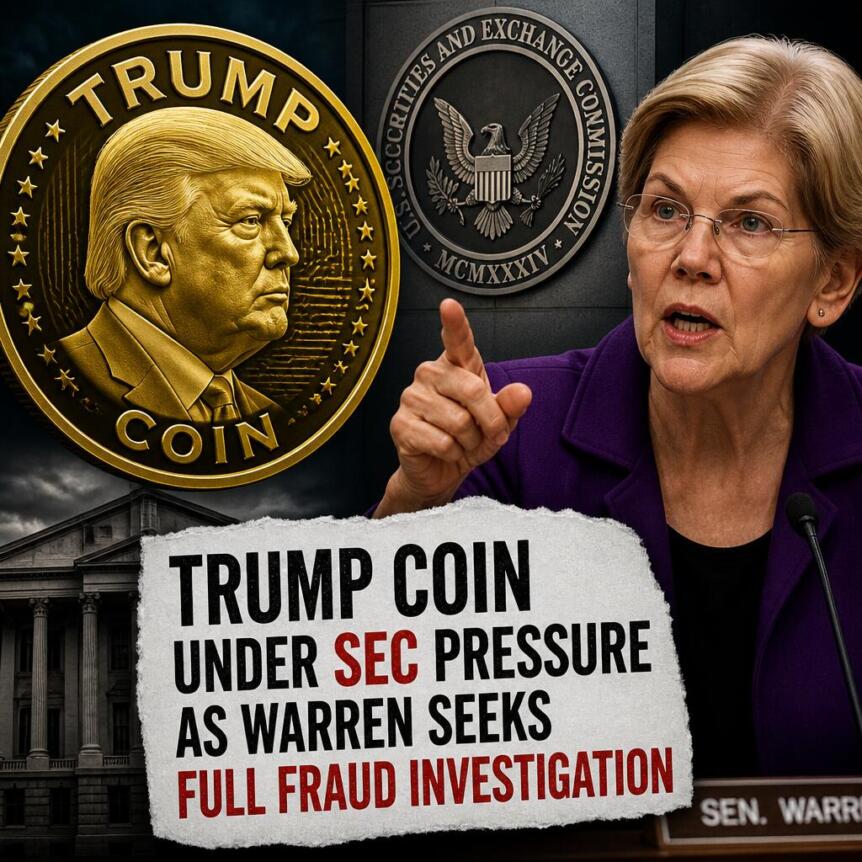
Seven Senate Democrats, including Angela Assobrooks, Cory Booker and Elizabeth Warren, criticized the revised Republican bill in a joint statement for insufficient ethics and consumer protection.
Booker emphasized the need for bipartisan support, while Warren declared the bill "dead on the ground" and emphasized that it failed to prevent conflicts of interest related to Trump and cryptocurrencies. Key demands by Democrats include giving state attorneys general shared law enforcement powers, but Republicans oppose them.
It is worth noting that key negotiator, Senator Kirston Gillibrand, did not appear on the dissent list, indicating that a 60-vote coalition is still possible. At the same time, Republicans such as Tim Scott argue the bill protects Americans and national security.
The Senate is expected to hold a full vote in the near future to resolve the ethics controversy and gain sufficient Democratic support before the bill is sent to the House. Gillibrand's upcoming statement will be crucial in assessing the possibility of passage of the bill.
Cryptocurrency expert report:
What are the next 10 cryptocurrencies to explode in 2026?