Exchange Ranking
 Top Exchanges
 24h Volume Ranking
 Popularity Ranking
 Exchange BTC Balance
 Proof of Reserves
 Decentralized Exchanges
 Funding Rate
 Funding Heatmap
 Liquidation Data
 Max Pain
 Long/Short Ratio
 Whale L/S Ratio
 Binance/Okex/Huobi L/S
 Bitfinex Margin L/S
 ETF Tracker
 Solana ETF
 XRP ETF
 Hong Kong ETF
 Bitcoin Treasuries
 Crypto Reversal
 Ethereum Reserves
 HyperLiquid Wallet Analysis
 Hyperliquid Whale Watch
 Large Transactions
 On-chain Movement
 Bitcoin ROI
 Stablecoin Market Cap
 Options Analysis
 News
News Articles
 Economic Calendar
 Features
 Wallet
 Contract Calculator


 Security
 Collections
 Watchlist
 Following
 BTC
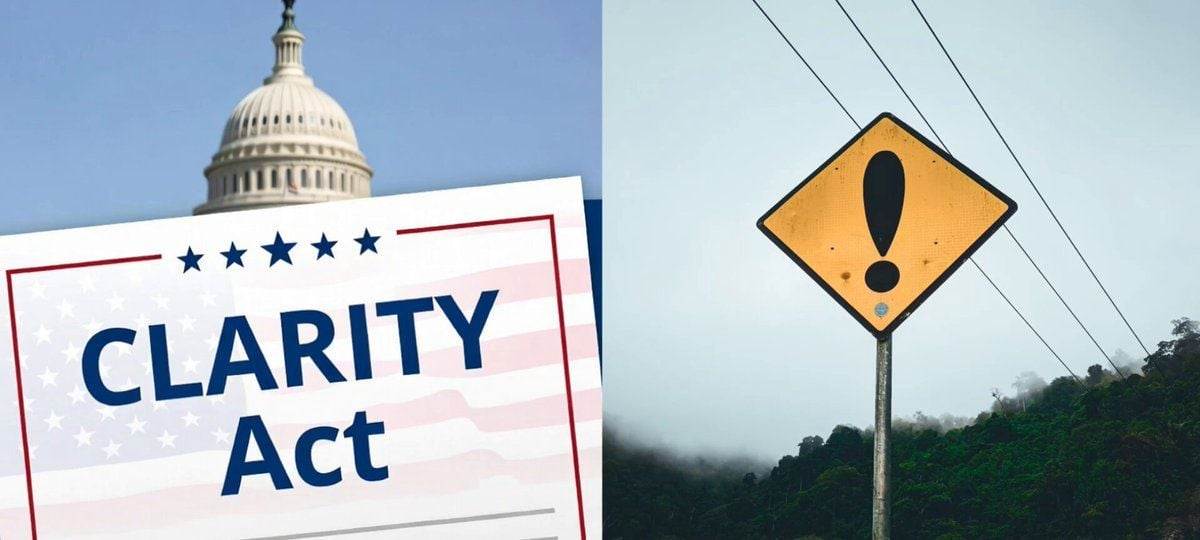
BTC The Clarity Act faces new threats: Republican senators warn of lack of 60 votes needed to move forward
Summary: The U.S. Senate has scheduled a procedural vote on the Clarity Act on September 15. If all 53 Republican senators vote in favor, the bill would still need the support of at least seven Democratic or independent senators to reach the 60-vote threshold required for passage. Senator Cynthia Loomis blamed the risks to market structure legislation on Democratic demands. Before the vote, disputes over ethics, stablecoin rewards and decentralized finance (DeFi) protections remained unresolved.
Clarity Act faces tough Senate vote
According to Semafor, Republican senators expect the Clarity Act to fail after failing to resolve disputes over ethics and other provisions after the Senate returns from a five-week recess. In response, Wyoming Republican Senator Cynthia Loomis responded on Platform X that if legislation fails to gain sufficient support, the responsibility lies with the Democrats, not ethics. Loomis has been one of the strongest supporters of federal digital asset regulation rules.
"If this bill fails, it will not be because of ethical issues, but because Democrats have not joined forces with Republicans to promote a bipartisan bill that protects consumers, consolidates U.S. leadership in digital assets, and gives law enforcement the power to crack down on illegal financial activities," Loomis wrote.
The Wyoming senator said Democratic negotiators continue to seek terms that would allow future governments to "kill the crypto industry." Although she acknowledged that remaining differences could still be resolved, Loomis believes the responsibility for further concessions lies with Democrats, not the Trump administration. "If we can bridge these gaps, I am confident that the Clarity Act will be passed, but it will require further compromises from Democrats, not the White House."
Senator Mike Ranges, Republican of South Dakota, told Semafor that the current situation "does not look optimistic." Senator Tom Tillis, Republican of North Carolina, gave a different assessment, saying the bill would fail if the White House showed any interest in narrowing differences over ethics provisions. A White House spokesman told Semafor that President Donald Trump remains committed to passing the legislation and has accepted what the administration calls a far-reaching ethics clause. However, Democratic negotiators questioned whether the proposed language adequately covered crypto businesses linked to the president's relatives.
Moral requirements remain a major obstacle
Democrats have been seeking to restrict senior government officials from promoting or profiting from digital assets while in office. A draft circulated in July contained new ethics provisions, but a group of Democratic senators said the changes were not thorough enough.
Part of their concerns focus on digital asset companies linked to Trump and his family. Trump-related projects include World Liberty Financial and Official Trump memecoin, with critics questioning whether the president should be able to profit from industries affected by White House policies. Previously, consumer advocacy group Public Citizen had called for rules that would require the current president and his immediate family to divest their investments in the crypto business, as covered in an August report by crypto.news. The group believes that excluding family-controlled businesses from restrictions would weaken proposed protections.
Loomis has previously said that she supports adding ethics clauses and is willing to put her relationship with Trump to the test in order to win bipartisan support. However, even after making the changes, Democratic senators continued to seek amendments that address consumer protection, illegal financial activity and the president's conflicts of interest.
The controversy is critical because Republican senators cannot move forward with the bill without the support of another party. Republicans have 53 seats, and a procedural vote requires 60 votes to start the debate. Therefore, if every Republican votes yes, supporters need the support of at least seven Democrats or independents.
There is also uncertainty about overall Republican support. Some Republican senators have raised separate concerns about stablecoin rewards and bank protections, which could increase the number of Democratic votes needed.
stablecoin rewards and DeFi rules increase pressure
In addition to ethical issues, senators remain divided on whether to allow exchanges and related companies to provide stablecoin balance rewards. Banks believe that payments like interest could draw deposits away from federal insurance agencies, while crypto companies oppose rules that would prevent third parties from offering rewards.
Even after the GENIUS Act of 2025 established federal requirements for issuers of payment stablecoins, the controversy continued. In market structure negotiations, lawmakers considered separating prohibited interest payments from incentives associated with transactions, payments or liquidity activities.
DeFi protection measures are another unresolved issue in the negotiations. Crypto industry groups support safeguards for unmanaged software developers, provided they do not control customer funds, while critics seek stronger tools to pursue illegal financial activity through decentralized protocols. Recent reports on Senate votes point to presidential ethics issues, DeFi developer responsibilities and stablecoin rewards as three major points of controversy that could prevent the bill from reaching the 60-vote threshold.
For U.S. crypto holders and companies, the bill will determine how the Securities and Exchange Commission (SEC) and the Commodity Futures Trading Commission (CFTC) divide jurisdiction over digital assets. Its framework will establish a process to determine whether a token falls under securities law or qualifies as a digital commodity. Trading platforms that handle digital commodities will be regulated by the CFTC, while the SEC will retain jurisdiction over digital securities and eligible token offerings. The proposal will also create registration, customer asset protection and compliance requirements for digital asset intermediaries.
House approval does not guarantee final passage
The House passed its version of the Digital Asset Market Clarification Act with bipartisan support in July 2025. Senators have since been drafting their own provisions, which means any revised bill will still have to go through multiple procedural and legislative steps before it takes effect. Senate Majority Leader John Thune filed a cloture motion before lawmakers left Washington for the August recess. The motion is scheduled to be submitted for consideration on September 15 at 2:15 p.m. Eastern Time, one day after the senator returns.
The first vote will determine whether the Senate opens debate rather than whether to grant final approval. If the measure passes cloture, senators can consider the amendment before voting on adoption. Any Senate approval text that differs from the House version will then require further action. The House could accept the Senate text, or lawmakers in both chambers could negotiate a common version that would need to be approved again before being submitted to President Trump for signature.
Time on the congressional calendar also poses another major obstacle. Based on an analysis of the timetable, the Senate had limited working days available before campaigning intensified ahead of the November midterm elections. Trump urged Congress to pass the bill in August, citing the fact that legislation was crucial for the United States to maintain its leadership in Bitcoin and crypto. The White House told Semafor that the administration has been working with lawmakers, and Loomis said passing the bill will require more concessions from Senate Democrats.