Exchange Ranking
 Top Exchanges
 24h Volume Ranking
 Popularity Ranking
 Exchange BTC Balance
 Proof of Reserves
 Decentralized Exchanges
 Funding Rate
 Funding Heatmap
 Liquidation Data
 Max Pain
 Long/Short Ratio
 Whale L/S Ratio
 Binance/Okex/Huobi L/S
 Bitfinex Margin L/S
 ETF Tracker
 Solana ETF
 XRP ETF
 Hong Kong ETF
 Bitcoin Treasuries
 Crypto Reversal
 Ethereum Reserves
 HyperLiquid Wallet Analysis
 Hyperliquid Whale Watch
 Large Transactions
 On-chain Movement
 Bitcoin ROI
 Stablecoin Market Cap
 Options Analysis
 News
News Articles
 Economic Calendar
 Features
 Wallet
 Contract Calculator


 Security
 Collections
 Watchlist
 Following
 BTC
BTC Core Points
Continued expansion of the influence of Iran's digital currency
Washington's 2026 enforcement action
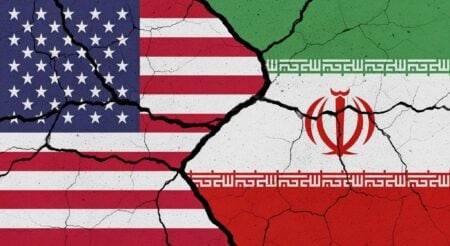
Iran officially approves Bitcoin and USDT for international business settlement
With the gradual relaxation of foreign exchange controls, The Central Bank of Iran has officially approved the use of Bitcoin and USDT in cross-border commercial transactions. The move marks a critical step for the country in responding to international financial pressures.
Data shows that the total amount of digital currency transactions conducted through Iranian networks in 2025 will be approximately US$10 billion. At the same time, Iran controls approximately 4.5% of the world's Bitcoin mining power, making it occupy an important position in the global crypto-asset landscape.
However, the U.S. anti-sanctions efforts have not weakened. In April 2026, the U.S. Treasury Department seized USDT worth US$344 million from wallet addresses related to Iran. In June of the same year, four well-known Iranian cryptocurrency platforms were sanctioned by the United States. By July, with the update of the OFAC (Office of Foreign Assets Control) sanctions list, Tether had tapped into a US$131 million funding channel related to Iran's central banking system. Throughout 2026, Washington has frozen or confiscated more than $1 billion in Iranian cryptocurrency assets.
Official policy shift: From questioning to standardization
Tehran has officially authorized Iran's Commercial Bank to use Bitcoin and Tether-issued USDT stablecoins for international payment operations. Recently, the country's central bank has actively encouraged the return of overseas capital through domestic cryptocurrency trading platforms.
According to a senior business leader with ties to the Iranian government, the central bank no longer strictly questioned the fund transfer mechanism. Receiving export revenue through cryptocurrency channels has become standard practice in Iranian commercial operations. The shift reflects Iran's urgent need to seek alternative financial channels in the face of severe economic sanctions.
In-depth analysis of Iran's digital currency ecosystem
In 2025, the total amount of digital asset transactions flowing through Iranian channels will be approximately US$10 billion. Calculations by blockchain intelligence provider Elliptic show that Iran controls approximately 4.5% of the world's Bitcoin mining capacity.
Analysis points out that the Islamic Revolutionary Guard Corps (IRGC) uses government-subsidized electricity resources to mine cryptocurrency. Security analysts believe that this strategy is essentially directly transforming energy resources into financial instruments that can withstand international sanctions.
Last year, Iran's digital asset infrastructure was valued at more than US$7.8 billion. Records show that in the fourth quarter of 2025, blockchain addresses related to the Islamic Revolutionary Guard Corps accounted for more than half of all on-chain transactions.
According to statistics, about US$4.18 billion in cryptocurrency capital left Iran in 2025, an increase of 70% over the previous year. Since 2019, approximately US$3.84 billion in funds have been transferred through the domestic platform Nobitex.
Confidential documents analyzed by Elliptic revealed that the Central Bank of Iran purchased USDT worth $507 million. These resources were used to intervene in foreign exchange markets and stabilize the rial exchange rate. Due to economic sanctions and ongoing inflation, the value of the rial has fallen by nearly 90% in the past few years.
Washington's strong enforcement action in 2026
This year, U.S. authorities have carried out multiple special operations against Iran's cryptocurrency activities.
- Action "Economic Anger" in April: Frozen $344 million USDT located in Iranian-linked Tron's online wallet.
- June Platform Sanctions: The U.S. Treasury Department imposed sanctions on four Iranian trading platforms-Nobitex, Wallex, Bitpin and Ramzinex. Among them, Nobitex handles about half of Iran's cryptocurrency transactions and has 110 million registered users.
- July extended sanctions: OFAC added to the sanctions list four cryptocurrency wallet addresses in Iran's Central Banking System that hold US$165 million in stablecoins. Tether subsequently froze $131 million of its assets.
- August Sector Designations: U.S. Treasury Secretary Yellen designated digital assets as a sanctionable economic sector in Iran. In addition, a Ukraine middleman suspected of assisting the Islamic Revolutionary Guard Corps in a cryptocurrency oil transaction of more than US$100 million has also been sanctioned.
In addition to oil sales and military equipment, Iran has reportedly used cryptocurrency to collect transit fees for ships sailing through the Strait of Hormuz.
At present, there are still more than 20,000 entities and individuals that have not remitted approximately 94 billion euros of export earnings back to Iran, and more than 100 billion US dollars in domestic income have not been declared. Washington continues to use Tether's asset freeze mechanism and blockchain intelligence services such as Chainalysis and Elliptic to identify and disable Iran-related digital wallets to curb its illegal financial activities.