
 Exchange Ranking
 Top Exchanges
 24h Volume Ranking
 Popularity Ranking
 Exchange BTC Balance
 Proof of Reserves
 Decentralized Exchanges
 Funding Rate
 Funding Heatmap
 Liquidation Data
 Max Pain
 Long/Short Ratio
 Whale L/S Ratio
 Binance/Okex/Huobi L/S
 Bitfinex Margin L/S
 ETF Tracker
 Solana ETF
 XRP ETF
 Hong Kong ETF
 Bitcoin Treasuries
 Crypto Reversal
 Ethereum Reserves
 HyperLiquid Wallet Analysis
 Hyperliquid Whale Watch
 Large Transactions
 On-chain Movement
 Bitcoin ROI
 Stablecoin Market Cap
 Options Analysis
 News
News Articles
 Economic Calendar
 Features
 Wallet
 Contract Calculator


 Security
 Collections
 Watchlist
 Following
 EURC
EURC The best stablecoins in 2026 include USDC, USDT, DAI, USDS, EURC, GHO and USDe. For most novices, USDC is the safest starting point. USDT is the most liquid choice for trading and exchange usage. DAI and USDS offer DeFi-native options based on collateral proceeds. EURC covers euro-denominated savings. GHO and USDe are more complex and deserve to be fully understood before investing real money.
A quick overview of the best stablecoins in 2026
rankings| stablecoins| best use| score| One sentence comment| Main precautions
1| USDC |Newcomer, payment, mainstream use| 5/5 |The clearest reserve model, best for novices| Centralized issuer
2| USDT |Exchanges and exchange liquidity| 4.5/5 |Unparalleled liquidity; reserve issues remain questionable| Reserve Review
3| DAI |DeFi and self-hosted learners| 4/5 |The most transparent mortgage models on the list| More complex than what is supported by fiat
4| USDS |Sky/Maker ecosystem users| 3.5/5 |Real-world earnings are attractive;Sky rebranding still confuses novices| Transition complexity
5| EURC |Euro users| 3.5/5 |If your life is denominated in euros, it's a good choice| Narrow support range
6| GHO |Aave users| 3/5 |Useful internally in Aave; limited external value| Ecosystem only
7| USDe |Revenue pursuers (advanced users)| 2.5/5 |Highest returns; highest complexity and market dependence| Non-cash alternatives
7 Best stablecoins (2026)
1. USDC
USDC is the easiest stablecoin to use. Issuer Circle explains the reserve model in plain language, and you can find USDC on almost all major exchanges and wallets. It is backed 1:1 by the dollar and short-term U.S. Treasury bonds, and its risk model is simple and easy to understand. Circle issues a monthly certificate of reserve. The main trade-off is that you rely on Circle to maintain support, which is a centralized risk, not a reason to avoid it, but worth understanding.
A useful external test comes from a CryptoCurrency Reddit post by a former insider who worked for Circle, Coinbase and Crossmint. The post explains the publisher model in plain language, which is exactly what novices need. 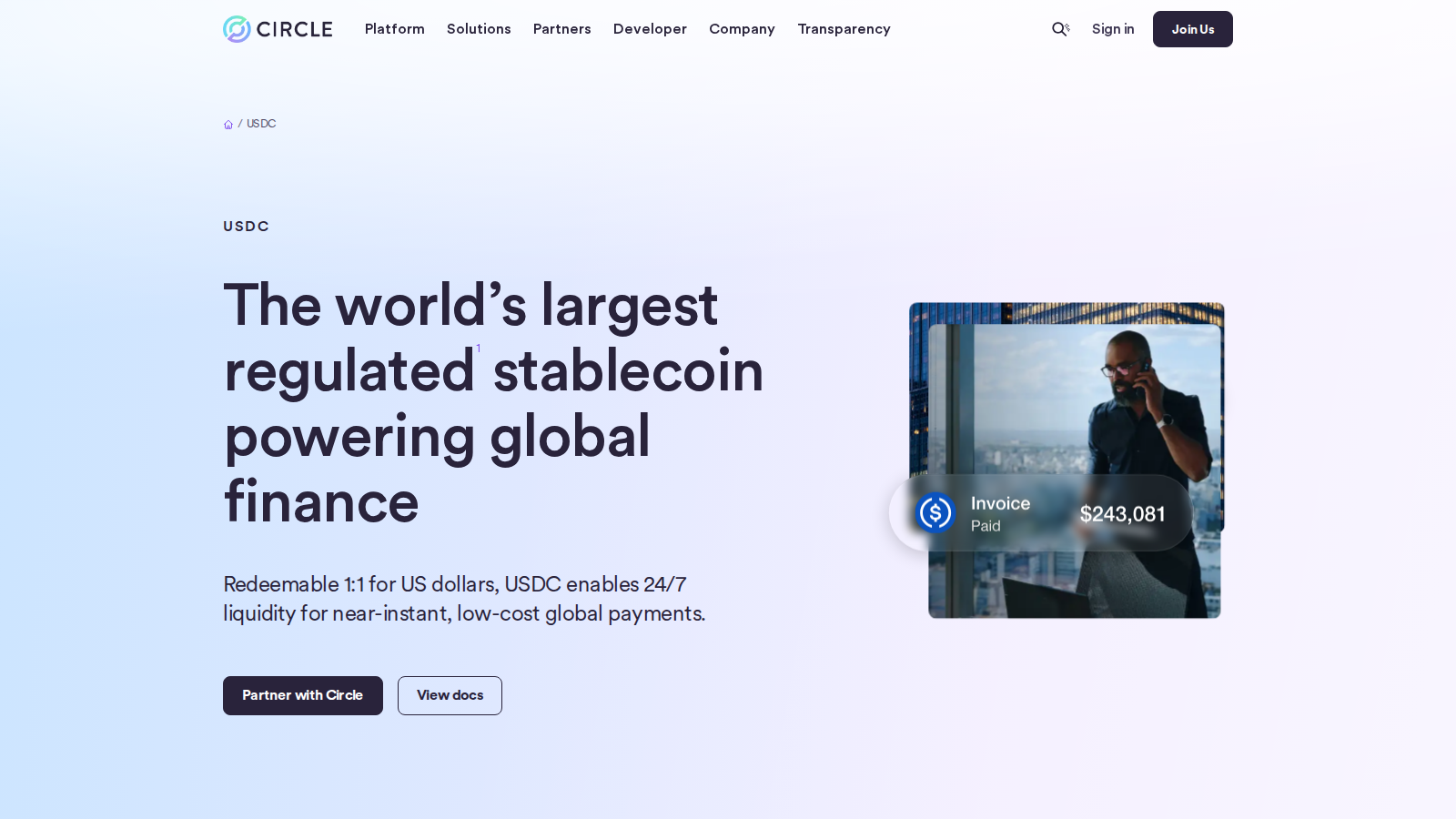
Circle USDC page, July 2026. Reserve transparency and broad exchange support make it the clearest starting point for a novice among U.S. dollar stablecoins.
For many Coinbase users, USDC is the first stablecoin they encounter. It is the platform's default stablecoin in many common processes. It also often appears on the low-risk side of DAO payments and many DeFi pools. The actual difference from USDT is not performance, but the trust framework. USDC feels like the kind your accountant would accept, while USDT feels like the kind your trader friends prefer.
A crypto insider who has worked at Circle, Coinbase and Crossmint for eight years wrote in the same CryptoCurrency Reddit post: "Almost none of the original theories have been implemented. But something else happened. "What happened was infrastructure, and the USDC became the stablecoin running on it.
Best use: first-time users of stablecoins, payments, mainstream wallet use.
Not applicable: Users who want to fully decentralize the stablecoin model.
2. USDT
USDT has the deepest liquidity of all stablecoins. If you trade on an exchange, it is likely to have the most trading pairs. Issuer Tether has long faced problems with its reserves. These issues have not led to significant decoupling, but they are real and the reserve model is not as transparent as the USDC. For transactions, USDT is inevitable. For long-term savings, USDC is a cleaner alternative.
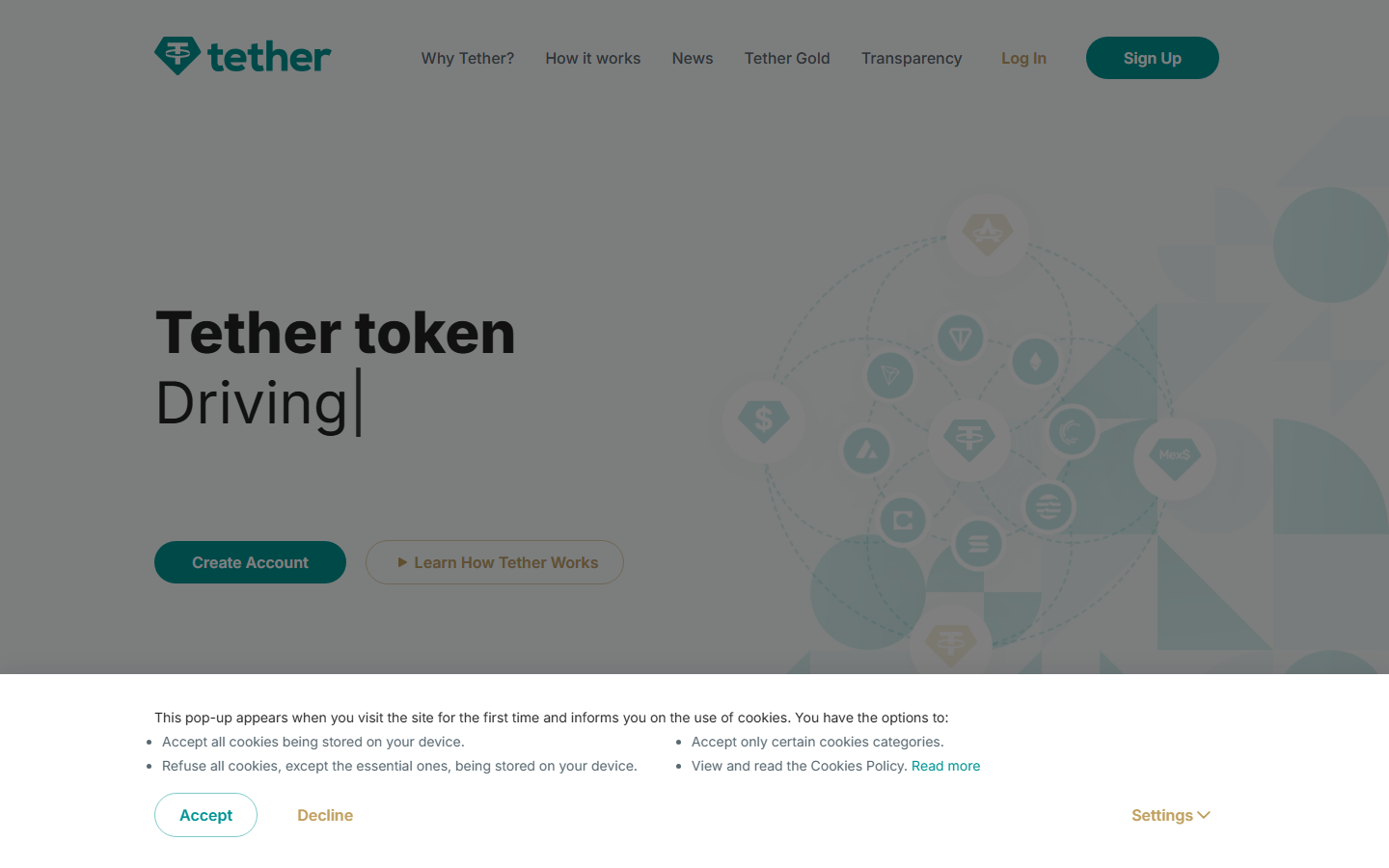 Tether homepage, July 2026. USDT is positioned as global liquidity and exchange coverage. Reserve documentation is visible, but not as detailed as Circle.
Here is the actual way most people use USDT on a daily basis: You don't want to withdraw cash immediately after completing a transaction, nor do you want to hold a volatile currency, so you convert it to USDT and leave it on the exchange. This is the most common use case around the world: idle funds between transactions. The second use case is transfer money. In Vietnam, Indonesia , Nigeria and Turkey, USDT is faster and cheaper than bank wire transfers. When someone in Lagos transfers money to a supplier in Dubai, a bank transfer takes three days and costs 3-5%, while USDT transfers money on Tron take two minutes and costs less than one dollar. This gap is why USDT dominates emerging markets.
A user in the same Reddit Nigeria stablecoin post made it clear: "When your currency depreciates by 20-40% every year, stablecoins become a practical way to protect savings. "This is not a crypto trader, but a person who manages real financial risk.
Best use: Active traders, transfer value across exchanges.
Not applicable: Users who want the clearest reserve story.
3. DAI
DAI is a stablecoin you learn when you want to understand how DeFi actually works. It is not backed by bank deposits, but by crypto collateral locked in Ethereum smart contracts. This makes it more complex, but also more natively part of the blockchain foundation of encryption. If you want a simple alternative to the U.S. dollar, USDC is easier. If you want to understand how DeFi works for users to lock in crypto assets to create stablecoins, DAI is the right place to start.
This also emerged in CryptoCurrency Reddit's discussion that the GENIUS Act revenue ban may drive demand for DeFi stablecoins such as DAI. The regulatory shift makes DeFi-native stablecoins more relevant rather than the other way around. 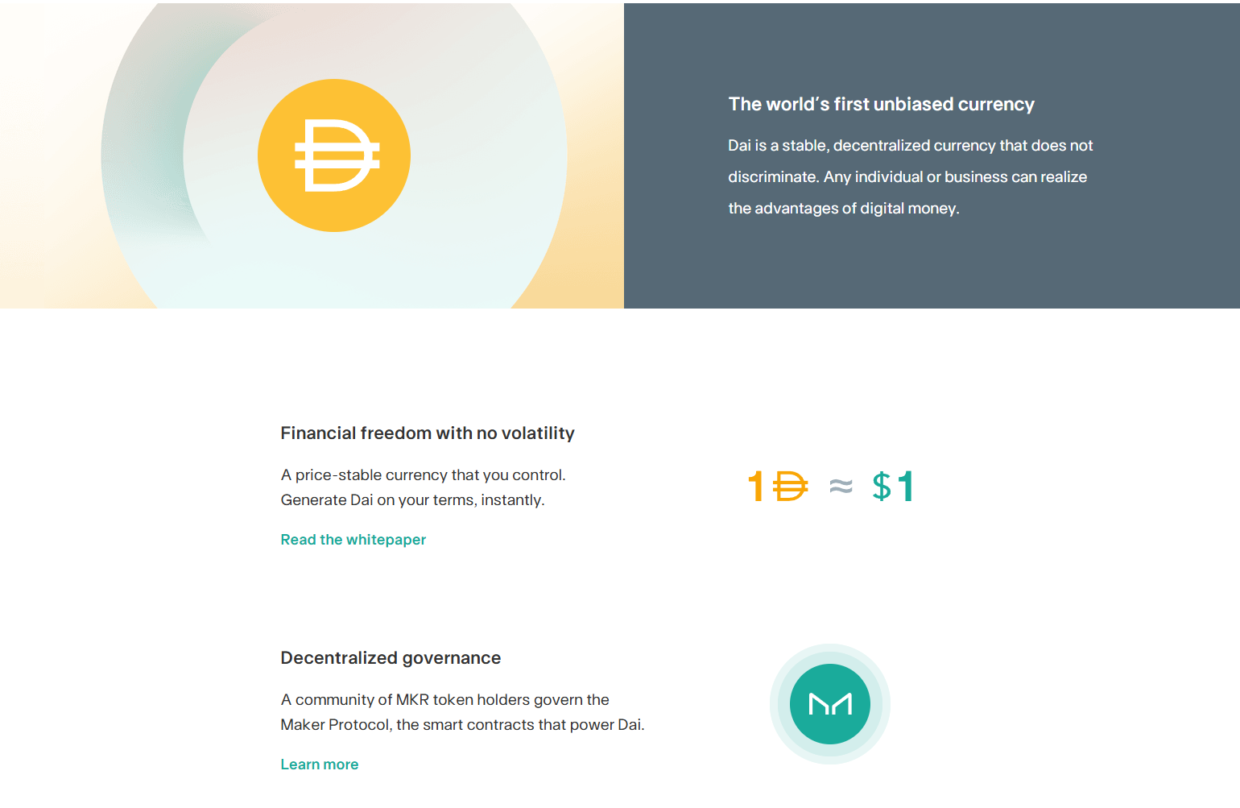
DAI is governed by MakerDAO. DAI is something you discover when you go deep into DeFi, not at the beginning. After using USDC for a few months, you learn that a company in San Francisco controls whether or not that dollar exists. This bothers you, so looking for alternatives, and someone mentioned DAI. DAI is backed by crypto assets locked in smart contracts, with no banks, no companies. Codes hold collateral, not individuals. This makes it more complex and makes it the most trusted liquidity stablecoin for the DeFi protocol.
A recurring argument in the Reddit Ethereum community's discussions about better decentralized stablecoins is simple: People still want a U.S. dollar stablecoin that doesn't rely on companies to deposit money in the bank. DAI is not perfect, but it is the most mature answer to this need.
Best use: DeFi learners, users beyond the exchange base.
Not applicable: Beginners who just want to simply stabilize the dollar.
4. USDS
USDS is a newer stablecoin launched by Sky (formerly MakerDAO). Think of it as a redesigned DAI for the next phase of the Maker ecosystem. If you are already using DAI or following Sky/Maker governance changes, USDS is the natural next step. If you are new to stablecoins, start with USDC. The governance transition from MakerDAO to Sky is still underway, adding some complexity to ordinary users.
 Sky Money homepage, July 2026. The agreement behind DAI and USDS shows real-time savings rates. This is the core appeal of the USDS relative to ordinary U.S. dollar stablecoins, but it also makes it more complex.
Best use: Existing Sky or Maker ecosystem users.
Not applicable: Beginners who need a simple first stablecoin.
5. EURC
EURC is a euro-backed stablecoin issued by Circle, from the same issuer as USDC. Most stablecoin guides are denominated in U.S. dollars by default. If your daily life is carried out in euros (savings, income or expenditures), EURC is important. The scope of support is narrower than USDC or USDT, but the reserve model is transparent and follows the same Circle framework.
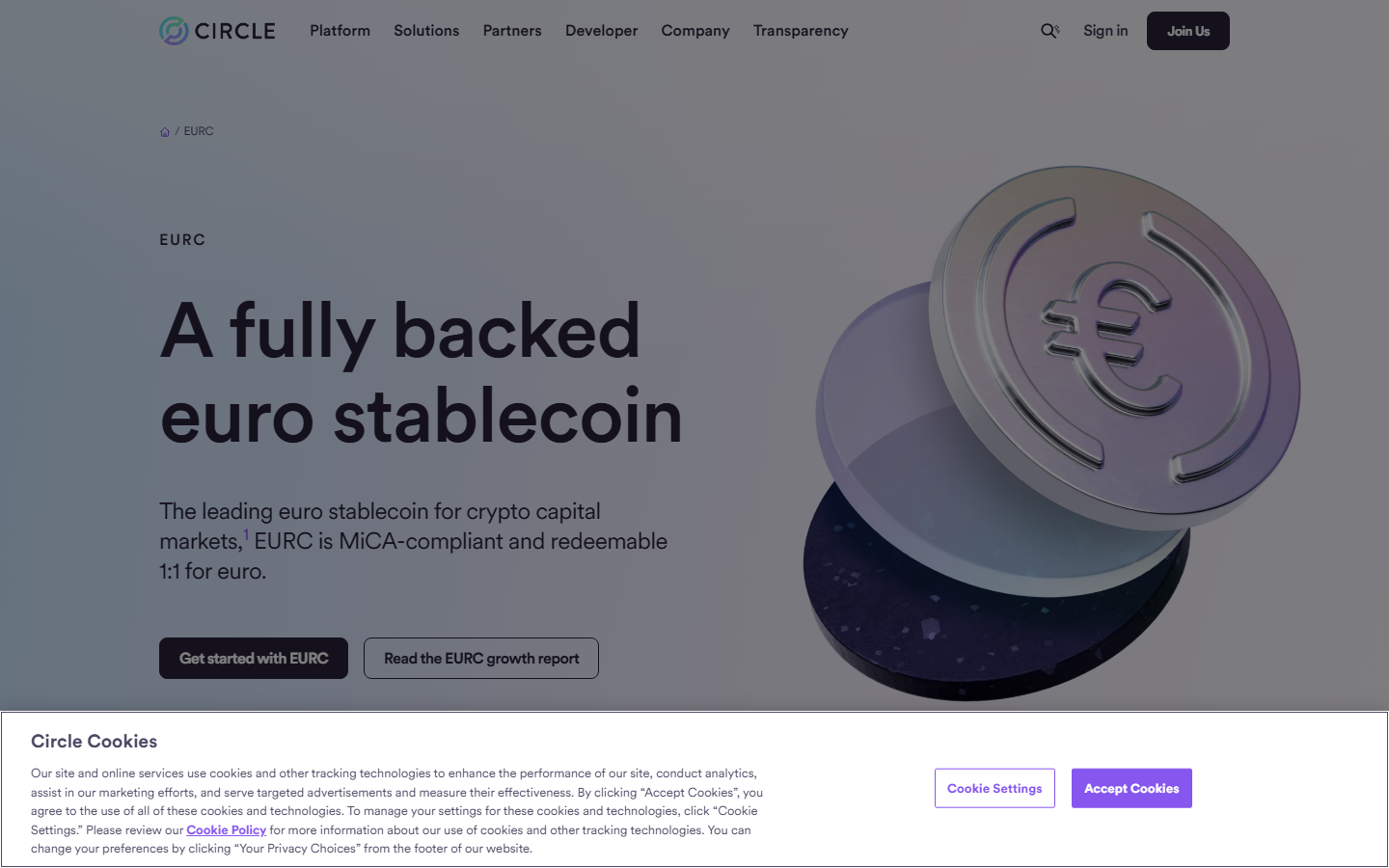 Circle EURC page, July 2026. Euro-backed stablecoins adopt the same reserve transparency model as the USDC. This is useful if your base currency is the euro.
Best use: Euro users, Euro-denominated payments.
Not applicable: Users requiring extensive global exchange pairing.
6. GHO
GHO was created by the Aave protocol. It is a decentralized stablecoin that can be minted by depositing collateral in the Aave lending market. This is not a beginner stablecoin. It is designed for users who already understand how Aave works and want to borrow assets in a DeFi-native way. If you are new to stablecoins, skip GHO for the time being. Come back after you understand what DeFi borrowing means.
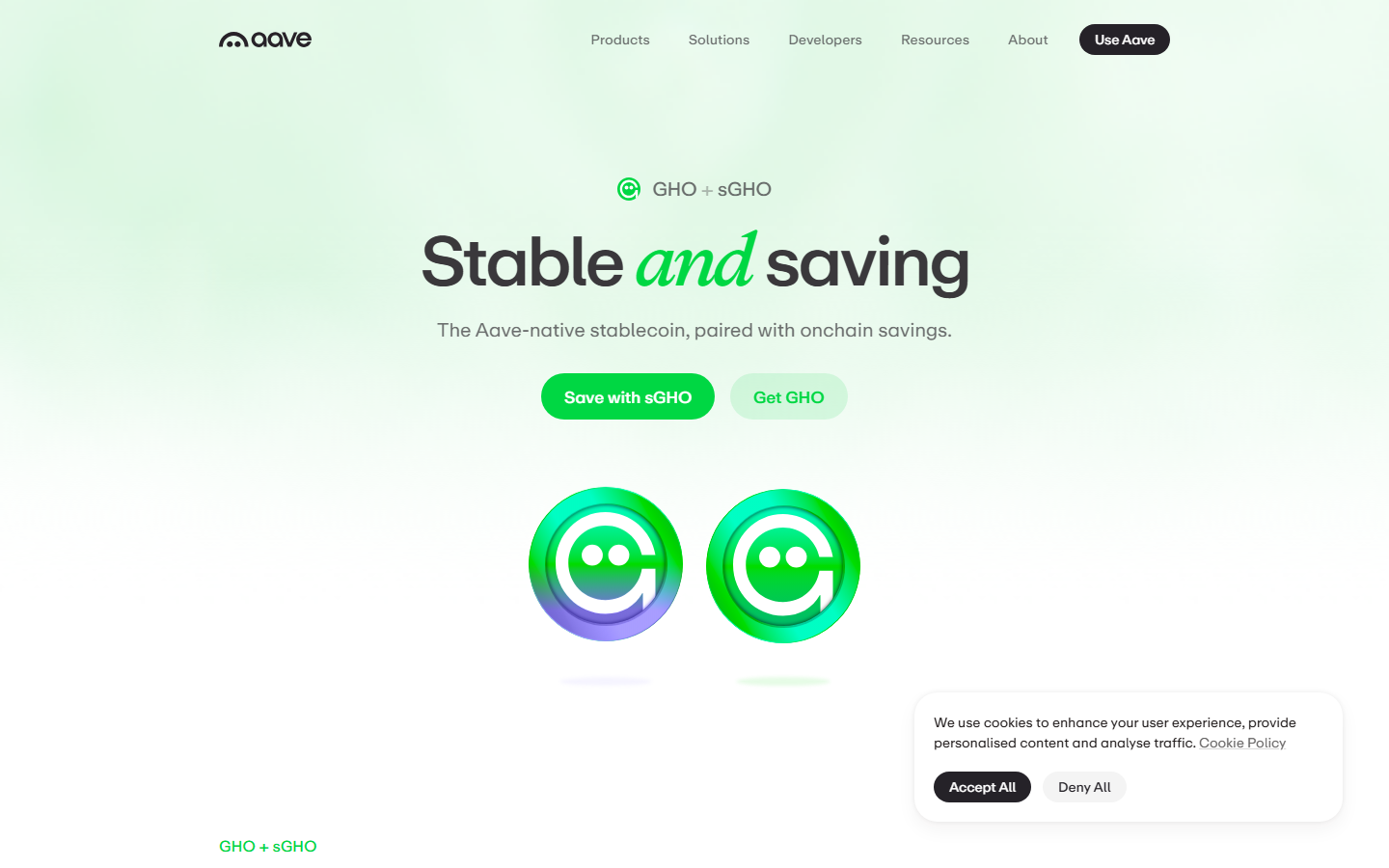 Aave GHO page, July 2026. The stablecoin is built into Aave's lending market. The product assumes that you already understand mortgage lending.
Best use: Active Aave users, DeFi borrowers.
Not applicable: Anyone who is still a stranger to the realm of encryption.
7. USDe
USDe is Ethena's synthetic stablecoin. Instead of relying on dollar reserves in banks, it uses hedging trading strategies to stay close to $1. This strategy generates benefits and has attracted much attention. But the gains come from payments in the perpetual futures market. Models come under pressure when these payments are bad for transactions. USDe is different from holding cash. It should be understood more as a more complex income product, trading just around $1.
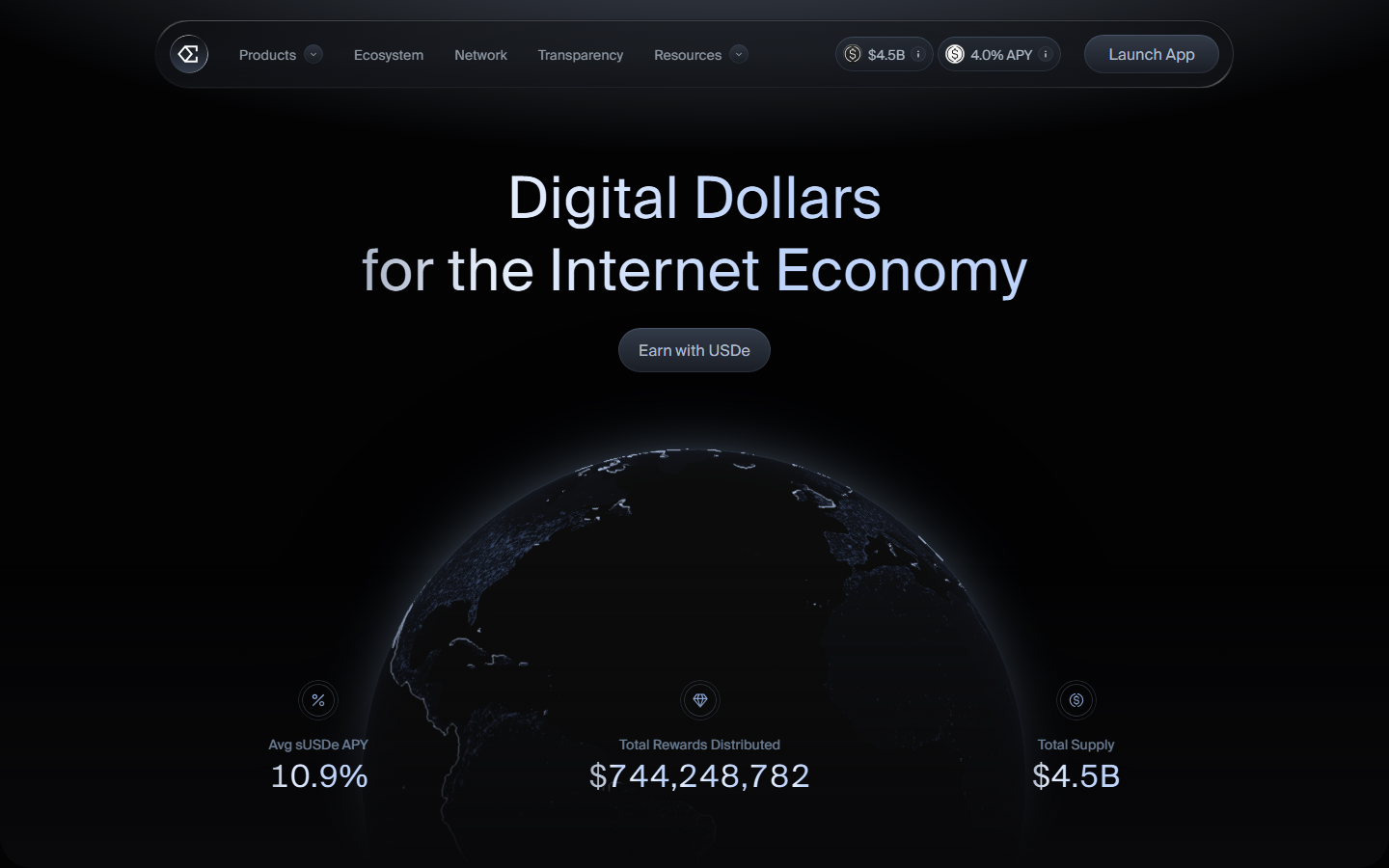 Ethena USDe page, July 2026. A synthetic stablecoin that generates revenue. The product language honestly explains the model supported by derivatives, so read it carefully before using it.
The honest version is: USDe pays you in return. This is the whole reason why people use it. It is popular on trader platforms such as Bybit and income-based DeFi markets such as Pendle. Crypto-native users hold it precisely because it generates revenue. Ordinary bank savings accounts generate almost no income. USDe aims to earn more, but involves more variables. But the gains come from derivatives strategies. When the derivatives market is unfavorable to the strategy, earnings fall or disappear completely. This is not a flaw they forgot to fix, but how the product works.
In a CryptoCurrency Reddit post about bank savings underperforming inflation, one user bluntly said: "My bank gives me 4%. Inflation is 7%. How can this be good? "This frustration is why USDe is getting the attention. Savings accounts are also underperforming inflation. The question is which risk you prefer.
Best use: Advanced users who understand the risks of synthetic stablecoins.
Not for: Anyone looking for a simple, safe and stable dollar.
How do we rate these stablecoins
stablecoins| safety| ease of use| liquidity| DeFi access| newbie friendliness| Total score
USDC| 9 | 10 | 9 | 8 | 10 | 46
USDT | 7 | 9 | 10 | 7 | 8 | 41
DAI | 8 | 6 | 7 | 9 | 5 | 35
USDS | 7 | 5 | 5 | 8 | 4 | 29
EURC | 8 | 7 | 4 | 5 | 6 | 30
GHO | 7 | 4 | 3 | 7 | 3 | 24
USDe | 5 | 4 | 5 | 6 | 2 |22
The maximum score is 10 points in each item, and the total score is 50 points. Security measures the clarity and credibility of a reserve or mortgage model. Ease of use measures how easy it is to buy, hold, and send. Liquidity measures the convenience of trading on major exchanges. DeFi Access measures the number of DeFi apps that accept the stablecoin. Novice friendliness measures the level of knowledge required for safe use. USDC leads because it scores the highest on the two things that novices need most: security and ease of use.
Which stablecoins are the most widely used in the world?
Most people believe that the United States is leading the use of stablecoins. This is not the case. Nigeria ranks first in global USDT and USDC holdings, not the United States, the United Kingdom or Singapore. The reason is simple: When your local currency depreciates by 30% within a year, the dollar stablecoin is not a crypto product, but a savings account you can actually open.
This background is important before looking at any usage data tables.
stablecoin| market share| Leading area| Main Use Cases
USDT| ~62% |Asia, Africa, emerging markets| Trading, P2P transfers, fighting local currency inflation
USDC| ~25% |US, Europe, DeFi protocol| Payments, Institutional Use, DeFi Mobility
DAI / USDS| ~2-3% |Global DeFi| Mortgage lending, income farming
USDe| ~2% |Crypto native revenue pursuers| Delta-neutral yield strategy
EURC|<1%| European| Euro-denominated payments and savings
GHO|<1%| Aave Ecosystem| DeFi Lending in Aave
Data source: CoinGecko / Tiger Research stablecoin issuance report, July 2026. Figures are approximate and change from month to month.
USDT dominates markets (Africa, Southeast Asia, Latin America) where people need to quickly escape weak local currencies. The USDC dominates areas where regulation and institutional trust are more important (the United States, Europe, the DeFi Agreement). Both are dollar stablecoins, but serve very different groups of people.
In a CryptoCurrency Reddit post about Nigeria leading global USDT and USDC holdings, one comment summed it up well: "Holding is partially effective. But the consumption component still forces people back to the same broken track. "This gap-holding U.S. dollar stablecoins versus actually consuming them-is the current frontier.
This interpretation is also consistent with another CryptoCurrency Reddit discussion that the stablecoin market grew from US$100 billion to US$300 billion in one year. The main gain is not only growth, but also regulation and mainstream trust are shaping which stablecoins are growing fastest.
How do we rank these stablecoins
We rank them based on five aspects that beginners really care about: Exchange support (whether it is easy to buy and hold), transparency (whether reserve or mortgage models are clearly explained), DeFi practicality (whether common DeFi tools are connected), hook history (whether it remains close to $1), novice friction (how difficult it is to understand the risks). Scale helps, but a clear risk story is more important.
Most common stablecoin errors for beginners
The problem with most stablecoins lies not in choosing the wrong currency, but in the steps after selecting the currency. Wrong network: USDC is sent on Ethereum, but the recipient expects to receive on Solana, causing funds to reach a chain that the recipient cannot access. No Gas fees: You need a small number of native tokens (ETH, SOL, etc.) to pay the transfer fee, and stablecoins do not cover your own Gas fees. Suppose all stablecoins are equally safe: USDC and USDe are both called stablecoins, but the risk models are completely different. Ignore token contract checking: Always make sure you receive the real contract address, not a fraudulent copy with a similar name.
What stablecoins should you start with? [TAG
If you are new: USDC. Issuer clear, reserve transparent, everywhere available. If you are actively trading: USDT, used for trading depth, but understand its reserves. If you learn DeFi: DAI, it can teach you more than any other stablecoin. If your life is based on euros: EURC is the cleanest euro option. If you already use Aave: GHO is worth exploring as the next step. If you want benefits and understand risks: USDe, but read the documentation first.
How to buy your first stablecoin
If you choose USDC, the actual process is as follows: Open a crypto exchange account (Coinbase is the easiest starting point for beginners). Authentication is completed (usually in a few minutes). Search USDC, click Purchase, enter the amount, and confirm. In this way, USDC immediately appears in your exchange wallet. When you're ready to send it somewhere (a friend, a DeFi app, another wallet), you need to choose the network. This is the most confusing step for beginners.
Which network should I use?
Network| Cost of sending USDC for $100| speed| Best Use
Solana| ~$0.01| second-level| Cheapest option for small transfers
Base| ~ US$0.01 -0.05| second-level| Coinbase Ecosystem, Low Costs
Tron (TRC-20)|~1 dollar| minute-level| Popular in Asia and P2P markets
Ethereum| ~$1 -3| minute-level| The widest support, but the higher cost
If you transfer money between friends or to the DeFi app, Solana or Base will save you the most. If the recipient explicitly requests to use Ethereum or Tron, use that network. Always make sure that the recipient supports the same network you send. USDC on Solana cannot reach wallets that only support Ethereum-only.
What happens if stablecoins are decoupled?
This is a question that most beginners are afraid of but rarely see a clear explanation. In March 2023, after the collapse of Silicon Valley Bank, USDC fell to US$0.87. Circle holds US$3.3 billion in USDC reserves at SVB. Within about 48 hours, the market priced the risk that these reserves might be lost. But they were not lost. Banking regulators stepped in and the USDC recovered to $1 in two days. What this means for you: If you had $1000 USDC that weekend, your balance temporarily showed up to about $870. If you don't sell, you have nothing to lose. If you sell for $0.87 in a panic, you lock in a 13% loss on the stablecoin. Practical lesson: For well-supported stablecoins (USDC, USDT), decoupling is usually temporary. The risks are real but short-lived in history. The worst thing to do is to sell in panic.
Can I earn income on stablecoins?
Yes, but understand the source of income before investing. Low-risk options: Coinbase offers an annualized rate of return of approximately 4-5% on USDC held in the account. This comes from Coinbase lending your USDC to institutional borrowers. The risk is Coinbase's counterparty risk, not stablecoin risk. Moderate risk options: DeFi loan agreements such as Aave allow you to deposit into USDC to earn variable interest (typically 3-8%, depending on demand). The risk is smart contract risk, where a vulnerability in your code could affect your funds. Higher risk options: Ethena's USDe pursues higher returns through derivatives strategies. The benefits are real, but the mechanisms are complex and market-dependent. The easiest path for beginners: Hold USDC on Coinbase and earn the base interest rate. Only after understanding how DeFi works, then turn to DeFi for loans.
Why you can trust this guide
This guide is based on a review of real-time token issuer pages and protocol documents in July 2026. We loaded each product surface directly before writing. We personally checked the public goods page, reserve instructions and visible positioning. Any content that relies on complete real-time transfers, login to the exchange workflow, or deeper blockchain testing will still require final verification.
What did we check for ourselves before ranking these stablecoins
For this article, we reviewed the following real-time public product surfaces of stablecoins and issuers so that comparisons do not rely on duplicate summaries. This direct review is no substitute for a complete real-time transfer test on every network, but it quickly reveals some important information: which products are designed to make people feel simple, which assumes users have DeFi knowledge, and where are the real friction for beginners. The screenshot below shows the public good surface that shapes these judgments, and even a full real-time transfer test is beyond the scope of this article.
FAQ
Which stablecoin is the safest for beginners? USDC。The issuer model clearly explains that reserves are proven monthly and available on almost all major exchanges and wallets.
Will USDT still be one of the best stablecoins in 2026? Yes, for liquidity and trading. It has the deepest exchange support of all stablecoins. The reserve story is not as transparent as the USDC, which is more important for savings than for transactions.
Is DAI better than USDC? This is not the case in all cases. DAI is better when you want to understand DeFi or avoid centralized publishers. When you want the simplest and friendliest starter start, USDC is better.
Is an income-based stable currency? It's only worth it if you understand the source of the revenue. USDe's gains come from payments in the perpetual futures market, which has real failure conditions.
What is the difference between DAI and USDS? Both come from the same agreement (now called Sky, formerly MakerDAO). USDS is a relatively new product that will replace DAI as the main stablecoin in the Sky ecosystem.
























