Exchange Ranking
 Top Exchanges
 24h Volume Ranking
 Popularity Ranking
 Exchange BTC Balance
 Proof of Reserves
 Decentralized Exchanges
 Funding Rate
 Funding Heatmap
 Liquidation Data
 Max Pain
 Long/Short Ratio
 Whale L/S Ratio
 Binance/Okex/Huobi L/S
 Bitfinex Margin L/S
 ETF Tracker
 Solana ETF
 XRP ETF
 Hong Kong ETF
 Bitcoin Treasuries
 Crypto Reversal
 Ethereum Reserves
 HyperLiquid Wallet Analysis
 Hyperliquid Whale Watch
 Large Transactions
 On-chain Movement
 Bitcoin ROI
 Stablecoin Market Cap
 Options Analysis
 News
News Articles
 Economic Calendar
 Features
 Wallet
 Contract Calculator


 Security
 Collections
 Watchlist
 Following
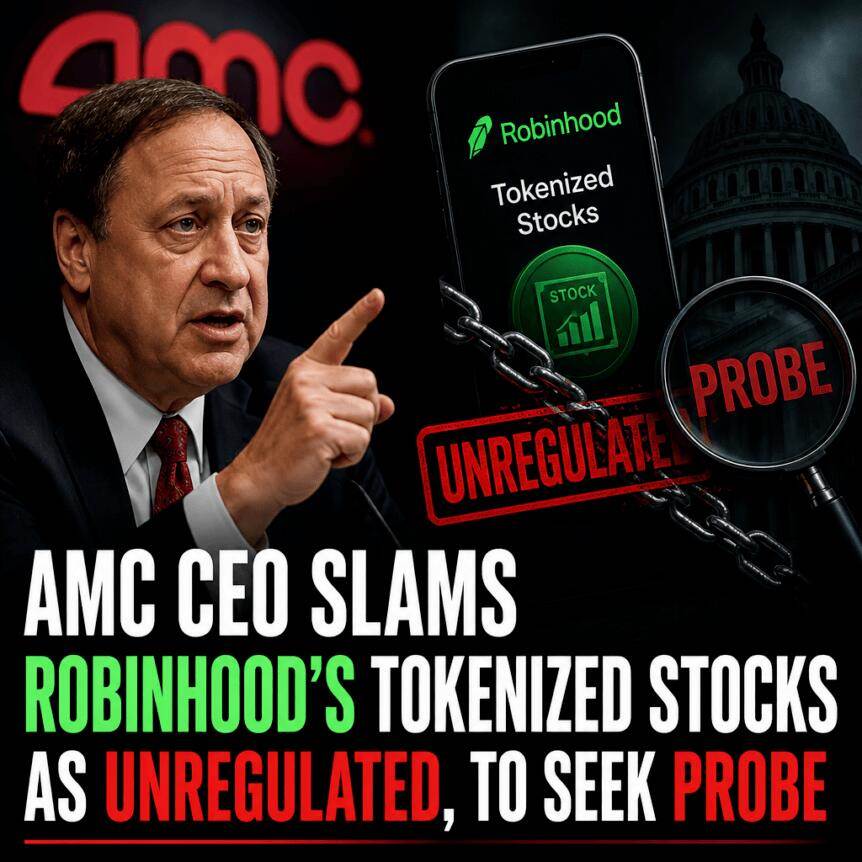
AMC CEO Alan publicly criticizes Robinhood's tokenized stock products
AMC Entertainment CEO Adam Aron publicly challenged Robinhood's tokenized stock products, calling them "shocking" and making clear that AMC has no connection to the platform's products. Allen said Robinhood would seek an investigation from outside securities legal advisers. Allen's comments have intensified attention to tokenized stock products-blockchain-based tools designed to track the value of traditional stocks. The dispute comes against the backdrop of a previous retreat from cryptocurrency platforms due to blocked tokenized IPO activities, highlighting ongoing legal and operational issues in the field.
Core Points
1. Adam Allen said AMC had nothing to do with Robinhood's tokenized stock offers, calling them "shocking."
2. Allen noted that Robinhood would request a review from its external securities counsel and suggested that investors in the U.S. and other jurisdictions could face restrictions.
3. According to Allen, Robinhood's tokenized stock offers are not registered under U.S. securities laws.
4. The broader review of tokenized stocks follows recent cancellations related to tokenized IPO visits, including SpaceX-related activities.
Allen questions Robinhood's AMC tokenization exposure
In a post on social media platform X on Friday, Adam Allen criticized Robinhood's offer of tokenized stock offers, which provides investors with economic exposure to AMC shares. Allen said the company was "not associated" with the product and characterized the product as "shocking." He added that Robinhood's external securities counsel will investigate the matter.
Allen also hinted that the tokens may not be available to U.S. investors and are subject to restrictions in other jurisdictions, including Canada, Switzerland and the United Kingdom.
These remarks are remarkable not only because of their directness, but also because they frame the dispute as a regulatory and compliance issue rather than a simple brand or business disagreement. These concerns could quickly escalate if tokenized securities are marketed or structured in a way that investors believe are related to the underlying issuer.
Background, tokenized stock products are often designed to mirror the price fluctuations of traditional stocks through blockchain-based representations. However, Allen's comments highlighted how issues about registration status, investor qualifications and issuer connections are at the heart of the legitimacy and reputational impact of these offers.
Rbinhood responded and asked for specific details
Rbinhood co-founder and CEO Vlad Tenev responded on the X platform, asking Allen to share his specific concerns about tokenization offers. The platform did not issue a broader public statement about the criticism.
According to media reports, Robinhood was contacted to comment on Allen's statement and the regulatory status of the tokenized stock offers.
This back-and-forth interaction illustrates the recurring tensions in tokenized securities: Traditional executives may view these tools as misleading or under-authorized, while token issuers and platforms often argue that they are built within a specific legal framework. The next step-whether Allen's concerns translate into formal investigations or law enforcement action-is likely to determine the extent of the dispute.
Review of tokenized stocks follows past business pullbacks
The Allen and Robinhood incident comes as tokenized stocks face a new round of review after early market turmoil. Earlier this year, some crypto exchanges canceled their tokenized SpaceX IPO allocations and promised refunds.
Platforms including Bybit, Binance, Bitget Wallet and MEXC reportedly withdrew from their tokenized SpaceX IPO activities after SpaceX went public on Nasdaq. Several participants blamed Kraken's inability to deliver the underlying assets.
While the SpaceX incident mainly revolves around delivery and execution rather than issuer associations, the underlying theme is similar: tokenization offers depend on the complex relationship between blockchain intermediaries and traditional market infrastructure. When any link breaks, user trust and regulatory scrutiny often intensify.
From this perspective, Allen's insistence on disassociation and his emphasis on securities counsel investigations reflect how tokenized products trigger a quick response from the companies where they cite stocks, even if the platform believes that economic exposure is being handled appropriately.
Rbinhood's tokenization push has surpassed debt-like instruments
Rbinhood's tokenized stock initiative did not emerge overnight. The first generation of Rbinhood stock tokens will be launched in July 2026. Tokenized debt securities issued by Rbinhood Assets in Jersey are distributed in the form of ERC-20 tokens. These tokens are designed to provide economic exposure to underlying assets such as U.S. stocks and exchange-traded funds.
Rbinhood has been building infrastructure to support tokenized assets. In February, the company launched Robinhood Chain's public testnet, an Ethereum layer 2 network built using Arbitrum technology to host tokenized assets.
Previous reports have also mentioned further expansion. In October 2025, Rbinhood shared plans to tokenize nearly 500 U.S. stocks and ETFs on Arbitrum. In July 2026, Bernstein analysts raised their target price for Rbinhood Markets, believing that the next phase of growth will be driven by tokenized stocks and forecast markets, rather than traditional cryptocurrency trading.
Taken together, this moment across the industry shows that tokenized securities are moving from the experimental stage to wider promotion-while regulators, issuers and exchanges are still testing how to build, market and deliver these products.
For investors and market participants, Allen's comments are a reminder that tokenization does not eliminate the legal and compliance layers that govern securities markets. Even if the platform believes that the product is compliant under a certain framework, the issuer's objection may still raise practical questions about the authorization, disclosure and qualifications of different investor regions.
Readers should pay close attention to whether Rbinhood clarifies the exact legal basis for its tokenized stock offers, and whether Allen's complaint leads to formal regulatory involvement or other enforcement steps. Equally important, the industry is watching to see whether previous delivery-related issues in tokenized IPO activities will be repeated in other tokenized stock products-or whether platforms will strengthen operational and compliance controls to reduce the risk of sudden cancellations.