Exchange Ranking
 Top Exchanges
 24h Volume Ranking
 Popularity Ranking
 Exchange BTC Balance
 Proof of Reserves
 Decentralized Exchanges
 Funding Rate
 Funding Heatmap
 Liquidation Data
 Max Pain
 Long/Short Ratio
 Whale L/S Ratio
 Binance/Okex/Huobi L/S
 Bitfinex Margin L/S
 ETF Tracker
 Solana ETF
 XRP ETF
 Hong Kong ETF
 Bitcoin Treasuries
 Crypto Reversal
 Ethereum Reserves
 HyperLiquid Wallet Analysis
 Hyperliquid Whale Watch
 Large Transactions
 On-chain Movement
 Bitcoin ROI
 Stablecoin Market Cap
 Options Analysis
 News
News Articles
 Economic Calendar
 Features
 Wallet
 Contract Calculator


 Security
 Collections
 Watchlist
 Following
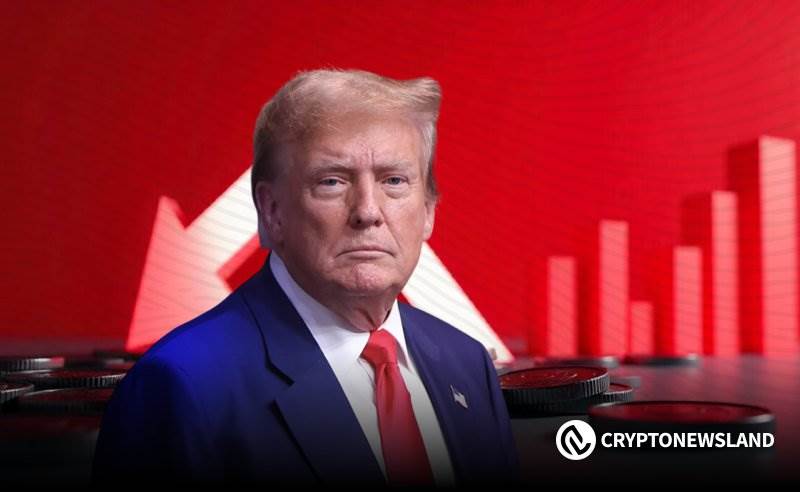
Trump links trade policy to Federal Reserve interest rate decisions and threatens to suspend trade with deficit countries
President Donald Trump said he would consider stopping trade with countries with trade deficits in the United States if the Federal Reserve refuses to cut interest rates. According to relevant media reports, the remarks marked an unusual attempt to link trade policy with the monetary policy decisions of an independent central bank.
During his tenure, Trump repeatedly pressured the Federal Reserve to lower interest rates. He argued that lower borrowing costs would boost economic growth and enhance U.S. competitiveness. However, the Fed has historically resisted political pressure, insisting that its dual mission of maintaining price stability and maximizing employment is independent of the White House's guiding principles for interest-rate decisions.
The specific mechanism described by Trump is to link trade relationships to the Federal Reserve's policy outcomes, but the report did not elaborate on which countries might be targeted or what deficit thresholds would trigger action. A trade deficit refers to the situation in which a country imports more goods and services than it exports, and Trump has long cited this indicator as evidence of unfair trade behavior by partner countries.
This is not the first time Trump has used trade measures as leverage in broader economic disputes. During his previous administration, he imposed tariffs on a number of trading partners, often viewing them as a tool to correct imbalances or gain concessions on unrelated policy issues. Clearly linking trade actions to the Federal Reserve's interest rate decisions would extend this approach to the area of monetary policy that has traditionally been separated from executive trade powers.
The Fed's independence from politics is regarded as the cornerstone of modern central banking. Economists generally believe that this separation prevents short-term political motivations from distorting long-term monetary stability. Publicly threats to link trade actions to interest rate cuts could raise questions about that independence, even if the threats have not been immediately implemented.
Given that such statements could affect expectations about the future path of interest rates, market participants have closely followed Trump's comments on the Fed throughout the presidency. Interest rate expectations affect a wide range of asset classes, including stocks, bonds and cryptocurrencies, all of which respond to changes in borrowing cost forecasts.
It is unclear when such trade action might be implemented, nor whether it is a formal policy proposal or a rhetorical pressure device designed to influence the Fed's upcoming interest rate decision. This ambiguity leaves the question of how seriously the threat should be assessed to distinguish it from similar rhetorical examples in the past that have not led to concrete action.
The report comes as public debate continues over the Fed's interest rate trajectory as the central bank balances inflation concerns with signs of slowing economic momentum. Trump's comments added another variable to the debate, introducing clear trade consequences into discussions that have traditionally been limited to inflation data and employment data.
Market Impact
Statements linking trade policy to Fed decisions could affect market expectations even before any formal action takes place. Traders tend to respond to perceptions that central bank independence is threatened because such threats can change assumptions about the future path of interest rates and currency stability.
Cryptocurrency markets are sensitive to changes in interest rate expectations and a strengthening of the US dollar. If traders interpret these remarks as increasing pressure on the Fed, markets could fluctuate. However, in the absence of confirmed policy actions, the immediate actual impact on trade flows or monetary policy remains uncertain.
These comments highlight the continuing tensions between the administration and the Federal Reserve over interest rate policy. Whether the trade threat translates into practical measures or remains at the level of rhetorical pressure is likely to depend on the Fed's next move and the market's response in the interim.
FAQs
What advice does Trump make on trade and the Federal Reserve?
Trump said that if the Federal Reserve does not cut interest rates, he may suspend trade with countries with trade deficits in the United States.
Which countries will be affected by this proposal?
None of the sources specified which countries might be targeted or what deficit thresholds would trigger such actions.
What is the Fed's response to this statement?
Existing reports on the matter did not include the Fed's response.
Why is it important to link trade policy to Fed decisions?
The Fed's independence from political pressure is considered crucial to maintaining stable monetary policy, so the threat to explicitly link trade actions to interest rate decisions raises questions about this separation.