
 Exchange Ranking
 Top Exchanges
 24h Volume Ranking
 Popularity Ranking
 Exchange BTC Balance
 Proof of Reserves
 Decentralized Exchanges
 Funding Rate
 Funding Heatmap
 Liquidation Data
 Max Pain
 Long/Short Ratio
 Whale L/S Ratio
 Binance/Okex/Huobi L/S
 Bitfinex Margin L/S
 ETF Tracker
 Solana ETF
 XRP ETF
 Hong Kong ETF
 Bitcoin Treasuries
 Crypto Reversal
 Ethereum Reserves
 HyperLiquid Wallet Analysis
 Hyperliquid Whale Watch
 Large Transactions
 On-chain Movement
 Bitcoin ROI
 Stablecoin Market Cap
 Options Analysis
 News
News Articles
 Economic Calendar
 Features
 Wallet
 Contract Calculator


 Security
 Collections
 Watchlist
 Following
 BTC
BTC Bitcoin News Today: Strategy's big move, BTC positions firm
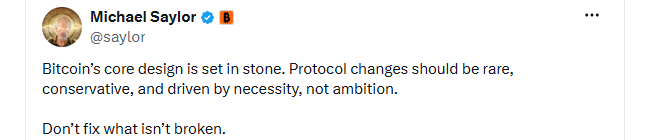
Michael Saylor posted a sharp post today about a new proposal called BIP-110, triggering the biggest Bitcoin news. He said Bitcoin's core design should remain "unchanged" and called the plan another example of people rushing to "fix" something that already works.
 Source:X Official Account
Michael Saylor's Bitcoin Review: Refusing to Fix Undamaged Things
Saylor writes that the basic design of BTC should change very little and only when it is really needed, not because someone is ambitious.
He described BIP-110 as an outbreak of the "I just heard about Bitcoin, I'm here to fix it" syndrome, targeting newcomers to the network who are driving rapid change.

One user responded to Saylor's comment, pointing out that a small $5 buy order of $31,000 can still affect the price of Bitcoin. For Saylor, this sensitivity stems directly from the long-term retention of the agreement and predictability, rather than from any issue that requires immediate repair.
What is BIP-110? Why this Bitcoin protocol proposal is important now
BTC's BIP-110 proposes a one-year soft fork that limits the amount of arbitrary data that can be included in BTC transactions. The goal is to reduce Ordinals inscriptions and similar content that some in the community call spam data. Simply put, arbitrary data refers to additional information added to a transaction that is not related to sending or receiving Bitcoin.
The plan requires a 55% miners 'signal threshold to move forward and sets an enforcement window in early August 2026. As of now, miners have only provided limited computing power support, far below the level required for full activation.
Bitcoin News Today: Insider on the debate over BIP-110 and BTC protocol changes
BIP-110 has evolved into a larger debate about how BTC should make decisions, not just about spam data. Two schools of opinion have been formed, and they see different risks with the same proposal.
Critics, including Saylor, are more worried about the method than the goal. They believe that using network-wide consensus rules to block certain transactions sets a precedent for determining what counts as valid Bitcoin activity, and they say this decision should be the responsibility of individual node operators rather than a single rule built into the protocol.
Supporters have different views. They believe Ordinals-style data has filled block space and pushed up regular transaction fees, so they view size limits as basic maintenance rather than review.
Critics 'concern: Consensus layer rules could prevent effective transactions and centralize decisions that should be handled by node policies.
Proponents 'argument: Unlimited data use will crowd out regular payments and raise fees for everyone.
Core question: How much should the Bitcoin protocol change and who should decide.
Strategy sells MSTR shares, Bitcoin position remains unchanged
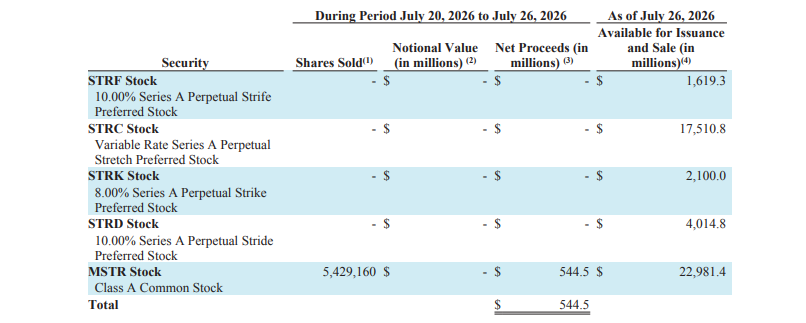
Just as Saylor publicly opposed changing the BTC agreement, his company Strategy also carried out its own operation in the market this week.
 Source:Strategy Official Filing
sold 5.43 million MSTR shares between July 20 and July 26, with a net income of $544.5 million.
Repurchased 288,930 STRC preferred shares during the same period at a cost of US$25 million.
No new BTC was purchased this week.
still holds 843,775 BTC units, with a cumulative purchase cost of US$63.69 billion and an average price of US$75,476.
US dollar reserves increased to US$3.75 billion.
This latest Bitcoin ecosystem update shows that Strategy is accumulating cash and adjusting stock volumes rather than increasing its BTC position, although its founder still strongly advocates protecting the BTC protocol from changes.
Today's Bitcoin News: Real-time price, market capitalization and trading volume data for BTC
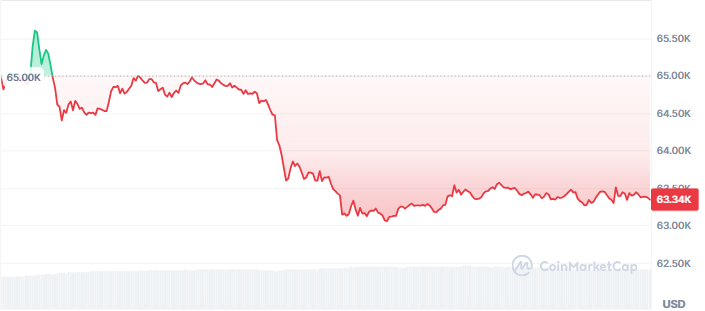
BTC's current trading price is US$63,340, down 2.56% in the past 24 hours, with a market value of US$1.27 trillion. Trading volume rose 23.87% to $25.91 billion, with a fully diluted value of $1.33 trillion.
 Source:CoinMarketCap Official
The overall cryptocurrency market fell today as South Korea's KOSPI index plunged 8-10% and spread safe-haven selling sentiment to cryptocurrencies.
The main driver: Asian stock market rout led by the KOSPI slump.
Secondary driver: A leveraged BTC long position of $145.6 million was forced to close.
Focus on trigger: The Federal Reserve policy statement expected to be released on July 29.
The debate on BTC prices and Bitcoin protocol on how to go next
The Federal Reserve's July 29 meeting was the clearest catalyst in recent times, regardless of the impact on BTC prices.
In terms of protocols, BIP-110 's early August 2026 implementation window has kept the debate over changes to the BTC protocol alive, especially as miners 'signal support is currently limited. Anyone following today's Bitcoin news should pay attention to the Fed's rhetoric and miners 'reaction to BIP-110 before August, as both could trigger price swings without much warning.
























