Exchange Ranking
 Top Exchanges
 24h Volume Ranking
 Popularity Ranking
 Exchange BTC Balance
 Proof of Reserves
 Decentralized Exchanges
 Funding Rate
 Funding Heatmap
 Liquidation Data
 Max Pain
 Long/Short Ratio
 Whale L/S Ratio
 Binance/Okex/Huobi L/S
 Bitfinex Margin L/S
 ETF Tracker
 Solana ETF
 XRP ETF
 Hong Kong ETF
 Bitcoin Treasuries
 Crypto Reversal
 Ethereum Reserves
 HyperLiquid Wallet Analysis
 Hyperliquid Whale Watch
 Large Transactions
 On-chain Movement
 Bitcoin ROI
 Stablecoin Market Cap
 Options Analysis
 News
News Articles
 Economic Calendar
 Features
 Wallet
 Contract Calculator


 Security
 Collections
 Watchlist
 Following
 ETH
ETH  LINK
LINK How to study cryptocurrency projects in 2026: Fundamental analysis tool
Understand how to study cryptocurrency projects in 2026, covering token economics, lock-up mechanism, team background and financing situation. The data comes from CryptoRank. "Do your own research"(DYOR) is the most mentioned advice in the cryptocurrency space, but few people really explain what it contains. Good research is not just about gathering as much information as possible, but it's more important to know which signals are critical, how to interpret them, and where the main risks may be hidden.
Think of studying a cryptocurrency project as doing due diligence on a business before investing. You need to understand who is running it, what its profit model is, who has supported the project, and what problems may arise. The ultimate goal of research is not to persuade yourself to buy, but to challenge the original investment argument through research. Strong branding, ambitious roadmap and positive narrative can make any project seem extremely attractive at first glance. Fundamental research goes beyond superficial phenomena and looks for weaknesses, risks, and assumptions that may not be true.
This guide breaks down cryptocurrency research into clear steps and shows how to use CryptoRank to find the data needed for each step.
Three types of cryptocurrency analysis
Before seeing any charts, you need to clearly study the three main categories:
- Technical Analysis : Study the past performance of token prices. By observing price movements and trading patterns over time, try to spot trends and find the best time to buy and sell.
- Sentiment analysis : Pay attention to the market's views on a certain project, mainly through social media and news. It is difficult to quantify and easy to manipulate, but it can indicate how much attention a token receives.
- Fundamental analysis : Study the actual project behind the token: the problems it solves, the team that built it, the economics of the token, the investors who supported the project, and the progress of the project. The purpose is to understand whether a cryptocurrency project has real, lasting value, rather than just short-term price fluctuations. Anyone with the right data can perform this part of the analysis, which is the focus of this guide.
These three analysis methods work best in combination, and each method provides a different perspective on the project. Fundamental analysis is the foundation because it first shows whether a project has real value, and is therefore the focus of this guide.
How to start researching cryptocurrency projects
The fastest way to quickly understand a project is to summarize key data in one view, rather than jumping between websites, blockchain browsers, and social feeds. Start with a macro overview of the project, development progress and its current position in the market. This provides you with the background information necessary to evaluate all aspects of the project more effectively.
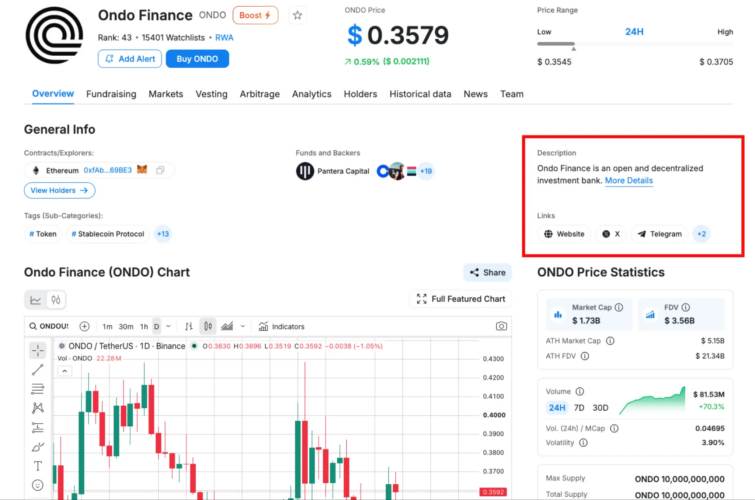
Research projects and their use cases
在查看财务指标之前,首先要了解项目正在构建什么、针对什么问题,以及其产品预期如何运作。
从项目的网站、文档和白纸或轻量级白皮书开始。寻找对问题、拟议解决方案、背后技术以及目标用户或市场的清晰描述。详细的技术文档很有用,但缺乏它并不自动构成红色警报——有些项目通过文档和其他技术资料来传达其产品信息。
例如,以太坊提供了一个用于运行智能合约和去中心化应用程序的通用区块链,而 Chainlink 提供了连接区块链与外部数据和计算的 decentralized oracle(去中心化预言机)基础设施。
检查团队背景和资历
项目背后的团队与想法同样重要。有丰富经验且有过成功交付真实产品记录的创始人是一个好迹象。没有可验证历史的匿名团队则承担更大的风险。
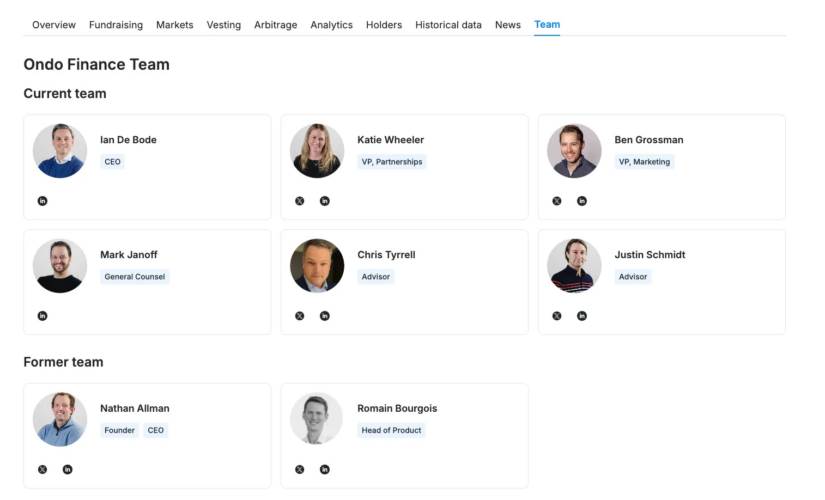
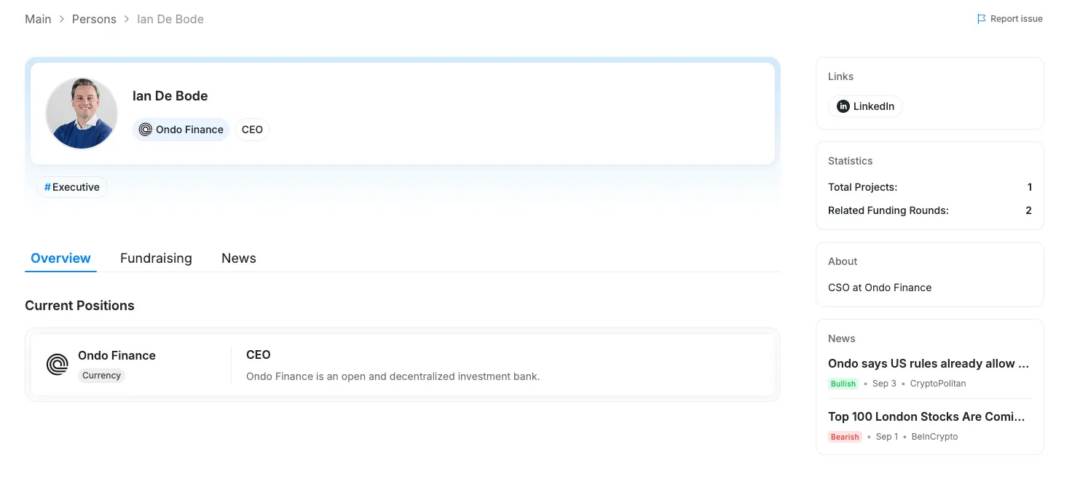
CryptoRank 对项目背后的个人和团队以及基金进行了档案记录,展示了他们的角色、背景和与其个人资料的链接。你还可以打开单个团队成员的个人资料,查看他们在加密项目中的职位及其社交媒体账号链接。这使得更容易验证谁实际上参与了项目,并评估他们的相关经验。
审查项目的加密融资历史
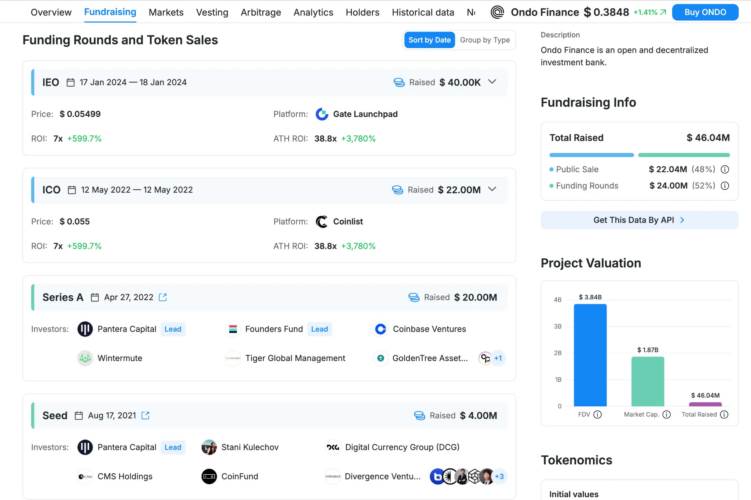
First, look at the financing history of the project from an overall perspective: how much money was raised, how many rounds of financing were completed, and when those rounds occurred. Most projects where capital is raised in a single round have a very different financing history than projects that return to the market over time and raise additional capital. Multiple rounds of financing also allow you to see whether new investors have joined the project or whether existing supporters continue to participate. This helps you demonstrate the project's ability to continue to attract money before evaluating the investors themselves.
More importantly, see which participants entered these rounds. The presence of well-known investors is often a positive sign, especially when reputable funds appear in multiple rounds. CryptoRank divides funds into different tiers, which adds another reference point when evaluating project backers. Projects backed mainly by Tier 1 funds may be more worthy of attention than projects backed mainly by smaller or immature investors, although the reputation of an investor itself does not guarantee success.
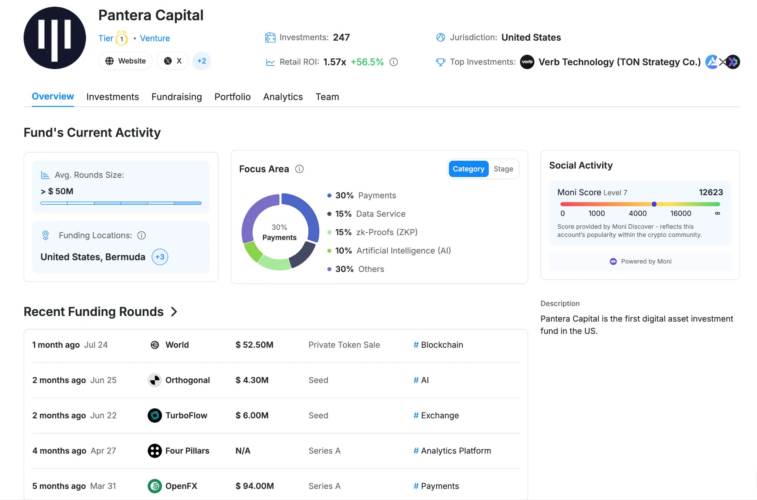
You should also review the fund's profile to understand its typical investment direction, level of activity, and past investment performance. The profile includes the chronology of financing transactions and Retail ROI-a measure of the return received by retail investors in IDO, IEO and ICOs backed by the fund.
How to analyze cryptocurrency tokens
一旦了解了项目、团队和融资历史,下一步就是审视代币本身。这意味着要超越价格,评估其估值、供应结构、分配情况以及未来的稀释风险。
从市值(Market Cap)和完全稀释估值(FDV)开始。市值计算的是目前流通中的代币价值,而 FDV 估算的是在当前价格下整个代币供应的价值。两者之间的巨大差距可能意味着未来存在显著的稀释,因此了解剩余供应量何时以及如何进入流通非常重要。
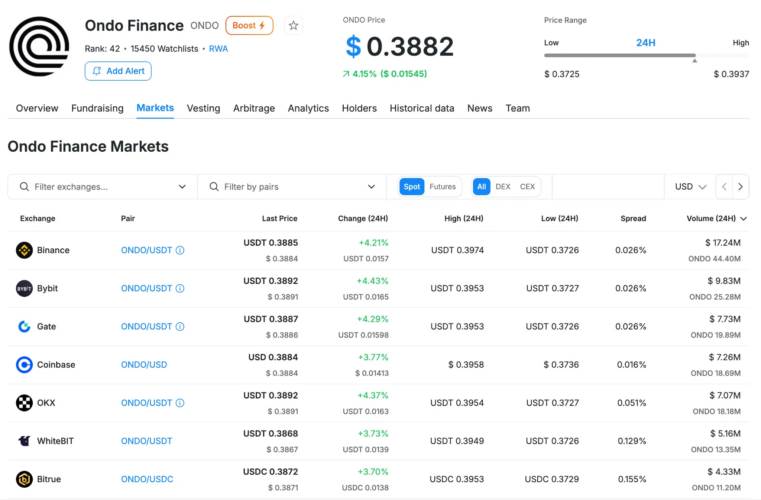
交易活动和持有者分布增加了另一层背景信息。首先检查代币在何处上市,以及是否在 major exchanges(主流交易所)上交易,因为通过成熟渠道获得的更广泛访问权限可以提高市场深度,使大额头寸更容易进出。然后查看这些交易所的交易量和流动性,看看实际活动集中在哪里,而不是仅依赖上市数量的多少。
持有者数据可以显示代币供应的集中程度以及最大钱包控制了多少份额。高集中度可能会增加风险,即少数持有者可以通过大额交易显著影响流动性或价格。如果代币存在于多个网络上,请主要关注其原生或主网络,因为不同链上的持有者分布可能会有很大差异。
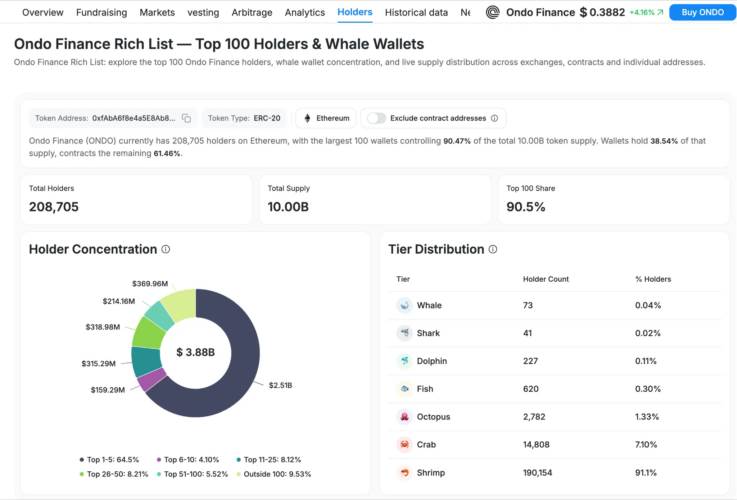
如何理解代币经济学
代币经济学有助于解释代币供应如何随时间变化,以及谁对这种供应拥有最大的影响力。从流通量、总量和最大供应量开始。如果流通量占总供应量或最大供应量的比例较低,意味着未来可能有相当一部分代币进入市场,从而增加稀释风险。重要的问题不仅仅是还剩多少供应,而是预计释放的速度有多快。
接下来,查看供应的分配情况。向团队或私人投资者的大量分配并不自动成为负面因素,但当这些代币面临短期锁定期或大规模悬崖解锁时,它们就显得更为重要。高度集中的分配可能导致在特定时期内,相对较小的群体一次性获得大量新流动的供应。
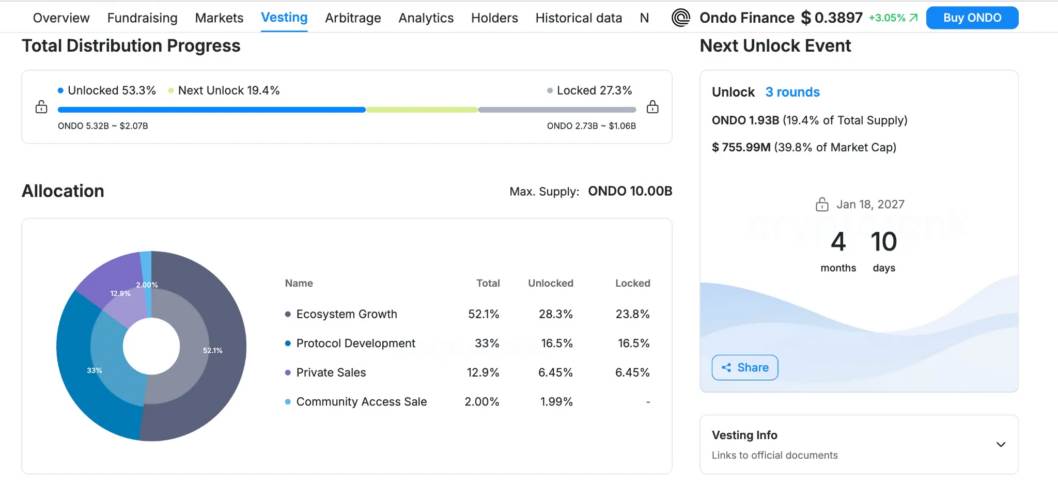
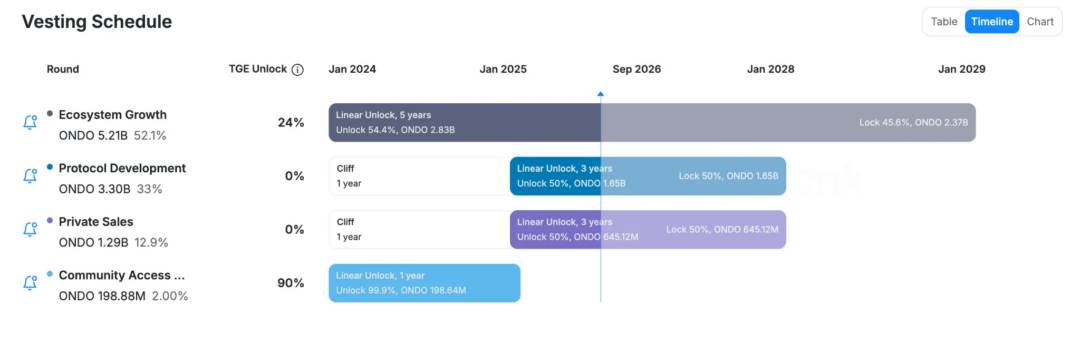
锁仓时间表有助于显示这些供应何时可用。请注意 upcoming unlocks(即将到来的解锁)、谁将获得代币,以及每次释放的规模相对于流通量的大小。逐渐线性锁仓产生的供应曲线与大规模悬崖解锁截然不同,后者可能会引入可用代币的突然增加和潜在的抛售压力。
结论
研究加密货币项目并不是为了找到一个指标来判断它是好是坏。目标是构建一个全面的画面,涵盖几个领域:项目正在构建什么、背后是谁、它是如何融资的、代币如何估值和交易,以及其供应如何随时间变化。
每个部分回答不同的问题。强大的团队不能弥补糟糕的代币经济学,声誉良好的投资者不能消除执行风险,如果前方仍有重大稀释,那么诱人的估值也毫无意义。这些因素相互支持的程度越高,整体投资论点就越强。本文不构成财务建议。在进行投资决策之前,请务必做你自己的研究并考虑风险。